Spinal Cord Injury Increases Risk for Mental Health Disorders

A new study finds adults with traumatic spinal cord injury are at an increased risk of developing mental health disorders and secondary chronic diseases compared to adults without the condition.

10:51 AM

Author | Kylie Urban

Drawing of brain
Image by Stephanie King

In a new study, published in Mayo Clinic Proceedings, researchers from Michigan Medicine find adults with spinal cord injury are at a higher risk of developing mental health disorders, including depression and anxiety, compared to adults without the condition.

The research team examined insurance claims data for adults, both with traumatic spinal cord injury and those without the condition, enrolled in a health insurance plan for at least three consecutive years and their diagnosis of a mental health disorder. In particular, they found adults with spinal cord injury had a higher incidence of anxiety disorders (19.3% vs 14.1%), depressive disorders (29.3% vs 9.3%), and psychological multimorbidity, or having more than two mental health conditions (37.4% vs 23.9%), as compared to adults without spinal cord injury.

"We also found that individuals with spinal cord injury had an increased risk of developing other chronic diseases, including cardiovascular and pulmonary diseases, diabetes, liver disease, cancer, arthritis, circulatory conditions and electrolyte disorders," says Mark Peterson, Ph.D., M.S., FACSM, the Charles E. Lytle, Jr. Research Professor in physical medicine and rehabilitation at Michigan Medicine and the lead author of the study. "Which makes sense, as patients with spinal cord injuries have extreme sedentary behavior including prolonged bed rest after injury."

Denise Tate, Ph.D., ABPP, FACRM, a professor of physical medicine and rehabilitation at Michigan Medicine and the senior author of the study, notes that much of the past research regarding spinal cord injury focuses on physical health outcomes. She says this study highlights the need for understanding this patient population's mental health and clinical care needs, as they're critical to overall quality of life and well-being in patients with spinal cord injury.

Peterson agrees, "Clinicians caring for adults with spinal cord injury need to be aware of the increased risk of developing mental health disorders in this patient population. This may be particularly important during these recent times of social distancing due to COVID-19, as these patients often already experience social isolation."

Paper cited: "Psychological Morbidity and Chronic Disease Among Adults With Traumatic Spinal Cord Injuries," Mayo Clinic Proceedings. DOI: 10.1016/j.mayocp.2019.11.029


More Articles About:

Lab Notes Demographics anxiety Depression Brain and Spine Physical Medicine & Rehabilitation Spine, Back & Neck Mental Health
Health Lab word mark overlaying blue cells

Health Lab

Explore thousands of health news & research stories by visiting the Health Lab homepage for more.

Media Contact

University Hospital at U-M Health in the spring with flowering trees in foreground and Survival Flight helicopter visible

Public Relations

Department of Communication at Michigan Medicine

[email protected]

734-764-2220

Stay Informed

Want top health & research news weekly? Sign up for Health Lab’s newsletters today!

Subscribe

Featured News & Stories

Well-Being at Michigan Medicine with Dr. Elizabeth Harry
Well-Being at Michigan Medicine

Small Pauses, Bigger Impact: Mindfulness in Action

What if well-being was built into the places where we live, learn and work? In this episode, Dr. Elizabeth Harry, is joined by three guests: recent past AMA president Dr. Bobby Mukkamala, who is board-certified in otolaryngology (head & neck surgery); Lauren Holaly-Zembo, CEO of the Crim Fitness Foundation; and Dr. Lisa Sancrant, Assistant Vice Chancellor for Health and Well-Being at UM-Flint, about how Flint, Michigan, is making mindfulness a community-wide priority. From classrooms to workplaces, they explore how small, accessible practices can support mental health, reduce stress, strengthen organizational cultures and help create healthier, more compassionate communities.
Health Lab Podcast in brackets with a background with a dark blue translucent layers over cells
Health Lab Podcast

Major Changes to Medicaid

With eligibility rules for people with lower incomes changing in every state, it’s important to stay up to date, seek trustworthy sources and not fall for misinformation. Read the full article here. The article this episode showcases was originally published Sept. 30 and updated Nov. 6 of 2026. The article will be kept up to date as more details become available, and the link to the full article will be included in the episode description.
Man in blue shirt stands ready with racquet on a tennis court, with net at the bottom in the foreground.
Health Lab

Tennis devotee with rotator cuff tear is back on the court

Tennis champion bounces back after rotator cuff injury with surgery, physical therapy.
College student betting on sports on phone while holding basketball
Health Lab

Sports gambling on the rise among college students

Betting on sports by college and university students, which has risen since most states legalized online gambling, raises potential addiction risks and needs more research and attention, experts say.
Minding memory above a microphone on a blue background
Minding Memory

Giving Voice to Lived Experience in Dementia Research
In this episode, Lauren & Matt talk to Brenda Roberts and Steven Barbieri from the National Council of Dementia Minds. The National Council of Dementia Minds is the first national not-for-profit organization founded and governed by people living with dementia. Its work focuses on education, advocacy, peer support, and changing public perception of what it means to live with dementia. Brenda and Steven talk about the National Council of Dementia Minds, the importance of peer support and education for people living with dementia. They focus on how better understanding the lived experiences of people living with dementia can help shape research, policy, and advocacy.
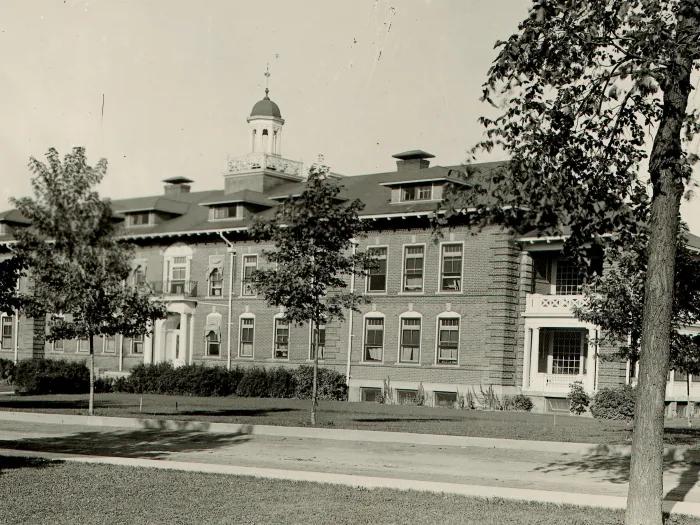
1906 psychopathic hospital
News Release

Exploring the mind’s mysteries: 130 years of mental health care & innovation at U-M

When it opened in 1906 on Catherine Street near the University of Michigan’s main hospitals, the stately brick State Psychopathic Hospital meant something new in the world of mental health.