Cholesterol-carrying protein found to help suppress immune response in pancreatic tumor microenvironment
ApoE has known roles in cardiovascular disease and Alzheimer’s, but was not previously implicated in pancreatic cancer.
11:10 AM
Author |
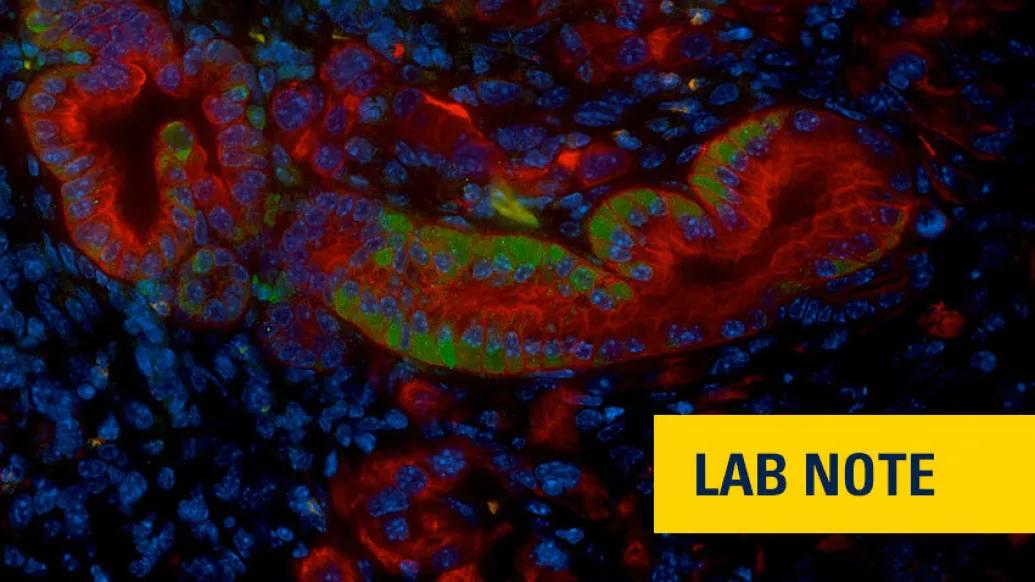
A protein involved in cholesterol metabolism plays a previously unknown role in suppressing the body's natural immune defenders in and around pancreatic tumors, research led by the University of Michigan Rogel Cancer Center finds.
ApoE, an apolipoprotein known to play roles in cardiovascular disease and Alzheimer's, is elevated in the blood of people with pancreatic adenocarcinoma, with higher levels of ApoE correlating with poorer survival, according to the team's findings, which appear in Cancer Research.
Few effective treatments are available for pancreatic cancer and the five-year survival rate still hovers around 10%.
Pancreatic cancer is characterized by dense fibrous tissue that comprises the bulk of the tumors. Immune cells associated with pancreatic tumors, called tumor-associated macrophages, show elevated expression of ApoE in both human patients and mouse models.
Experiments in mice that lacked the ability to produce ApoE showed reduced tumor growth and more cancer-fighting T cells around the tumors. The researchers also found that ApoE helped drive the production of two immunosuppressive proteins via the low-density lipoprotein (LDL) receptor, a key player in cholesterol metabolism.
"Not only does our study point to blood levels of ApoE as a possible prognostic biomarker in pancreatic cancer, the findings point toward ApoE as a potential target for improving the effectiveness of chemotherapy and immunotherapy," says study first author Samantha Kemp, Ph.D., who recently graduated from U-M and is now pursuing a postdoctoral fellowship at the University of Pennsylvania. "But there's still a lot we don't know. In pancreatic cancer, it remains to be determined which cell types are targets of ApoE and what functional role it plays in different types of cells."
The co-senior authors on the study are Marina Pasca di Magliano, Ph.D., a professor of surgery and of cell and developmental biology at the U-M Medical School, and Howard Crawford, Ph.D., who recently moved from U-M to the Henry Ford Health System.
Paper cited: "Apolipoprotein E promotes immune suppression in pancreatic cancer through NF-B mediated production of CXCL1," Cancer Research. DOI: 10.1158/0008-5472.CAN-20-3929

Health Lab
Explore thousands of health news & research stories by visiting the Health Lab homepage for more.
Media Contact

Public Relations
Department of Communication at Michigan Medicine
Stay Informed
Want top health & research news weekly? Sign up for Health Lab’s newsletters today!
Featured News & Stories

Pumping iron: inhibition of key pathway promotes iron-dependent cell death in pancreatic cancer cells

New questionnaire aims to improve understanding of demand avoidance in children, teens
Timing is of the essence for RNA during stress

New anti-cancer strategy shows promise in preclinical studies

More babies with hypoplastic left heart syndrome surviving critical period between surgeries