To Provide Better Eye Care, Ask More Questions in Advance
Quick surveys before eye health appointments could help clinicians target care and improve record-keeping, a Michigan Medicine study finds.
11:00 AM
Author |
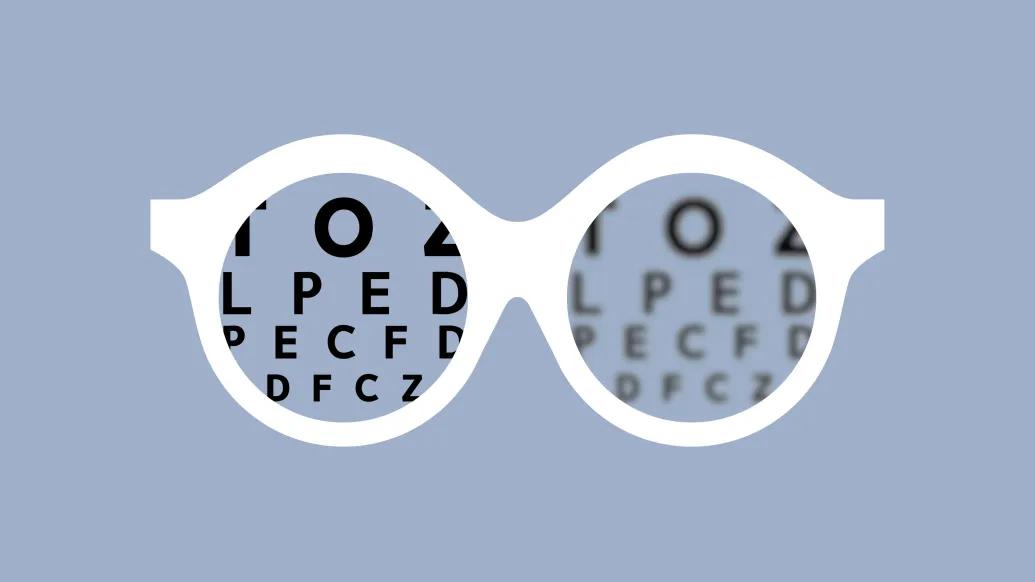
Compare a patient's self-reported eye symptoms with his or her electronic medical record, and clear discrepancies can be seen.
MORE FROM THE LAB: Subscribe to our weekly newsletter
A study from the University of Michigan Kellogg Eye Center revealed wide disparities in the content of pre-appointment patient questionnaires and what a clinician wrote down to document the visit.
"We found pretty noticeable differences between the two," says Maria Woodward, M.D., M.S., an assistant professor of ophthalmology and visual sciences at U-M. "I think certainly the biggest takeaway is when people are presented things in different ways, they tell you different things."
The study, published Jan. 26 in JAMA Ophthalmology, analyzed the symptoms of 162 Kellogg patients. Each completed a 10-point survey while waiting to see a physician; questions came from sources including the National Institutes of Health Toolbox.
The doctors treating these patients weren't told about the surveys, or that their record-keeping would be reviewed for comparison.
The contrast was stark: Of the study's group, "exact agreement" between an individual's survey and what appeared on his or her medical record occurred in only 38 patients.
The concern highlighted by this research is that important symptoms may be overlooked. If a patient has severe symptoms, all of those symptoms should be documented and addressed.
A need for focus
Symptom reporting drove the inconsistencies between surveys and medical records, the study found.
SEE ALSO: Expanding Targeted Therapies to Rare Eye, Orbit Cancer
The top discordant issue: glare. Of patients reporting concern about glare on their surveys, 91 percent didn't have it on their medical records.
Eye redness was second-most common (80 percent had no medical record mention), followed by eye pain (74.4 percent). Blurry vision was the only symptom to tilt the scales — with more instances of inclusion in medical records than in questionnaires.
As a result, other doctors treating the same patient in future visits could have an incomplete picture of the patient's symptoms.
Perhaps riskier: Because digital medical records are increasingly used to guide clinical practice and research, the collective data may be shortsighted or misleading in some scenarios, Woodward says.
"Many parties in health care use the electronic health records now, and they expect the data to accurately reflect the interaction with the doctor," says Woodward, also a member of the Institute for Healthcare Policy and Innovation.
Explanations for the doctor-patient disconnect on medical records are understandable, she adds, with neither party at fault. The doctor-patient relationship is more nuanced than what is reflected in the medical record. Patients might not choose to mention all of their symptoms. Doctor dialogue may follow a conversational path versus a point-by-point checklist.
Time constraints of record-keeping in the electronic chart can also be an issue. And not every detail of an appointment — particularly minor concerns — is necessarily worth documenting.
Still, notes Woodward: "The concern highlighted by this research is that important symptoms may be overlooked. If a patient has severe symptoms, all of those symptoms should be documented and addressed."
Gaining greater clarity
The study highlights an opportunity to improve lines of communication between patients and doctors.
For example, implementing pre-appointment eye symptom questionnaires similar to those in the study could be simple and effective, Woodward says. A similar pilot program is underway in her clinic. "This is definitely a pathway I see as very feasible to resolving this disconnect in the near future; the infrastructure is already there," she says.
The concept also could help bring more clarity to what ends up on a patient's medical record.
Because the surveys Woodward and her team used asked participants to assess the severity of their conditions on a numeric scale, results could help practitioners better evaluate the depth of a patient's symptoms — and even identify concerns that might have gone unnoticed.
The use of a self-report system before seeing the doctor could "really change the conversation between the doctor and the patient," says Woodward. Rather than spending time to identify symptoms, doctors and patients could be talking about how to manage severe symptoms.

Health Lab
Explore thousands of health news & research stories by visiting the Health Lab homepage for more.
Media Contact

Public Relations
Department of Communication at Michigan Medicine
Stay Informed
Want top health & research news weekly? Sign up for Health Lab’s newsletters today!
Featured News & Stories
Innovative children’s vision research gets a boost from the Knights Templar Eye Foundation

Digital alerts support timely treatment decisions of critically ill cardiac patients

Nerf gun accident causes retinal detachment in pediatric patient

Kellogg care inspires gift to vision research

Mediterranean diet can slow progression of age-related macular degeneration