Bias against older organ donors may be leading to smaller organ supply for transplants
Organ procurement organizations and transplant centers were about 5% less likely to choose organs from 70-year-old donors compared to those who were just a year younger.
5:00 AM
Author |
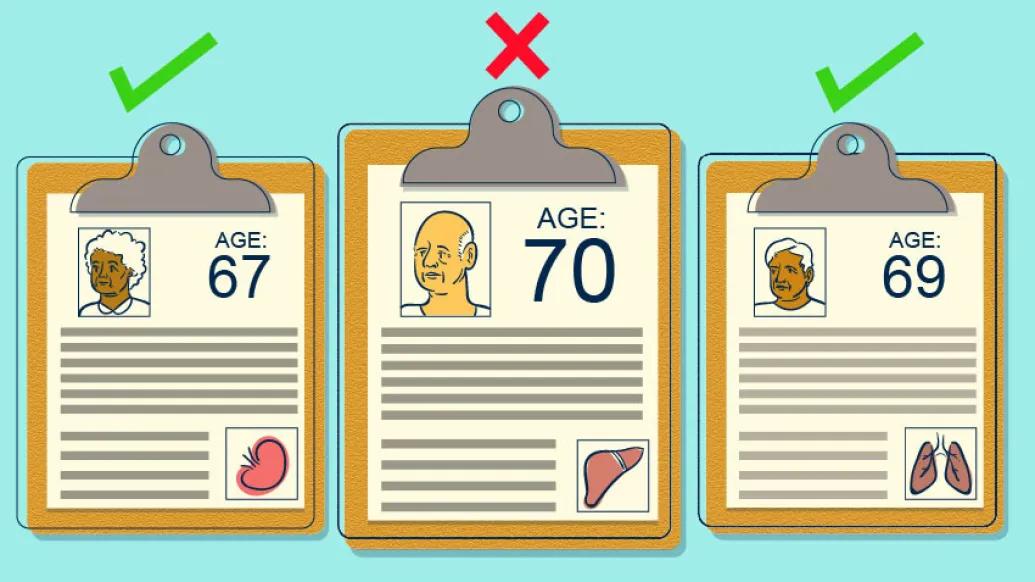
American transplant centers as well as organ procurement organizations, the groups responsible for recovering organs from deceased donors in the United States, were less likely to accept or select organs from donors who were 70 years old when they died compared to those who were 69, new research found.
This is an example of left digit bias, a common type of unconscious bias that involves placing value based on the first digit in a number and thus is often linked to ageism.
Like Podcasts? Add the Michigan Medicine News Break on Spotify, Apple Podcasts or anywhere you listen to podcasts.
A previous study had revealed this type of bias is present when organizations decide whether or not to discard donor kidneys. Clare E. Jacobson, M.D., a general surgery resident at University of Michigan Health, was curious about whether the bias would still exist if the research encompassed all organ types.
"Donated organs are a lifesaving resource, but there are many more people on the waiting list than there are available organs," said Jacobson, the co-first author of this study. "We were interested in looking at how we could make small changes to optimize our current supply of deceased donor organs, with the goal of both serving the patients on the waiting list and honoring the gift of life these donors are providing."
In our role as stewards of these gifted organs, interventions must target every step in the transplantation process to overcome our prejudiced thinking.Clare E. Jacobson, M.D.
Using data from the United Network for Organ Sharing, the nonprofit that manages the nation's organ transplant system, Jacobson and her research team found that both OPOs and transplant centers were about 5% less likely to choose organs, regardless of their type, for those aged 70 versus 69. The results suggest that about 1 in 18 donors who are age 70 or older will have no organs selected for transplant, Jacobson said.
"This demonstrated bias is not limited to a single transplant center, OPO or even step in the transplant process and is seen across organ types," Jacobson said. "In our role as stewards of these gifted organs and for all patients waiting for a transplant, interventions must target every step in the transplantation process to overcome our prejudiced thinking."
Of note: Left hand bias was not significant when organ acceptance and selection rates were compared for donors who were 60 versus 59, the researchers found. This may be because, in younger organ donors, age is less heavily weighted compared to metrics like weight, bloodwork and other health problems in the donor, Jacobson said.
Additional authors include Craig S. Brown and Seth A. Waits, both of Michigan Medicine, and Kyle H. Sheetz of the University of California, San Francisco.
Paper cited: "Left digit bias in selection and acceptance of deceased donor organs," The American Journal of Surgery. DOI: 10.1016/j.amjsurg.2022.03.039
Live your healthiest life: Get tips from top experts weekly. Subscribe to the Michigan Health blog newsletter
Headlines from the frontlines: The power of scientific discovery harnessed and delivered to your inbox every week. Subscribe to the Michigan Health Lab blog newsletter

Health Lab
Explore thousands of health news & research stories by visiting the Health Lab homepage for more.
Media Contact

Public Relations
Department of Communication at Michigan Medicine
Stay Informed
Want top health & research news weekly? Sign up for Health Lab’s newsletters today!
Featured News & Stories
Be A Hero returns to the Big House on Sunday, November 1
Immune system protein is a cancer killer on its own, new study shows

Top 7 tips for choosing Medicare prescription drug coverage for 2027
Comprehensive DNA sequencing reveals hidden drivers of cancer

Many older adults make Medicare decisions quickly and most don’t change plans, poll finds