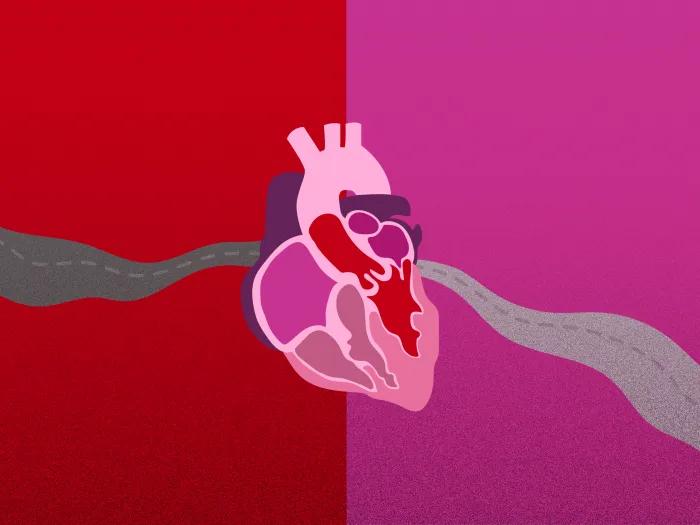
‘Not Just a Man’s Disease’: Why Women Need to Care About Heart Health
Heart disease is the top killer of women — with many gender-specific risks at work. Yet just 1 in 5 women considers it her greatest risk.
7:00 AM
Author |

Heart disease is 10 times more likely than breast cancer to kill a woman. In fact, it is the No. 1 cause of death in women worldwide, claiming a life in the United States every minute.
Many people know this, but the message isn't broad enough, says Elizabeth Jackson, M.D., M.P.H., an associate professor of medicine at Michigan Medicine and a director of the Women's Heart Program at the University of Michigan Frankel Cardiovascular Center.
After all, only 1 in 5 women view heart disease as their greatest health threat, according to the American Heart Association.
"It's not just a man's disease," says Jackson. "Fortunately, more women than ever understand they may be at risk for heart disease. But there are still gaps in knowledge among some groups of women.
"Women should ask themselves: 'What can I do to prevent heart disease?'"
That question is crucial, Jackson says. And it shouldn't come up only in the later years.
The biology of women's bodies produces different risks than men's. In some circumstances, the distinctions are subtle or less widely known, making awareness and action all the more important.
"A woman can start early in life by understanding her risk factors and looking for ways to live a heart-healthy lifestyle," says Jackson, who discussed several aspects of cardiovascular health that may affect women differently than men.
Heart Health Concerns
Heart attacks
Like men, women might realize they're having a heart attack with the onset of chest pain. But other associated symptoms are far more common in women: fatigue, nausea and sweating, among others. Because those signs appear less dire on the surface, a woman might downplay her condition and delay medical care, raising risks and hurting recovery.
Pregnancy complications
Gestational diabetes, pre-eclampsia or high blood pressure during pregnancy could signal future heart trouble, including stroke. Although "the association is not completely understood," Jackson says, women should discuss such long-term risks with a physician — and use them as further motivation for healthful lifestyle choices.
Blood pressure and cholesterol
Birth control, which can contain the hormone progesterone, can increase blood pressure in some women. As a woman ages, she may also have increases in blood pressure or cholesterol. Regular checkups with a health care provider can help detect hypertension (elevated blood pressure) and abnormal cholesterol levels.
Ethnicity
Notes Jackson: "African-American women have some of the highest rates of hypertension in the world." This places them at increased risk of stroke and heart attack. According to the American Heart Association, black women are less aware of their risk of heart disease and stroke than women of other ethnic groups.
Age and family history
Women typically develop heart disease about a decade later than men. So knowing whether family members have had premature heart disease is important. Survey your first-degree relatives (parents, siblings and offspring) — of both genders — to find out if anyone has had problems early in life: younger than 55 in men or younger than 65 in women.
Lifestyle habits
Eating healthfully has significant benefits. For people with diabetes and prediabetes, dietary changes can significantly improve glucose control. That's important because women with diabetes can have a higher risk of heart disease than men. Smoking also is associated with a dramatic increase in heart disease risk among women. Finally, regular physical activity and reduced time spent sitting can reap big rewards: lower blood pressure as well as improved glucose and cholesterol.

Health Lab
Explore thousands of health news & research stories by visiting the Health Lab homepage for more.
Media Contact

Public Relations
Department of Communication at Michigan Medicine
Stay Informed
Want top health & research news weekly? Sign up for Health Lab’s newsletters today!
Featured News & Stories

More babies with hypoplastic left heart syndrome surviving critical period between surgeries
Mobile health app improves heart failure medication use, dosing after hospitalization
Distance, insurance, social factors may hinder access to lifesaving heart monitoring for children
Could a diabetes medication be the next wonder drug?

Young father survives aortic dissection after delayed diagnosis