How Cancer Treatment and Heart Disease Are Connected
Some cancer medications can also pose dangerous cardiovascular risks. Trained specialists can help patients find the safest treatment and monitor for side effects.
7:00 AM
Author |
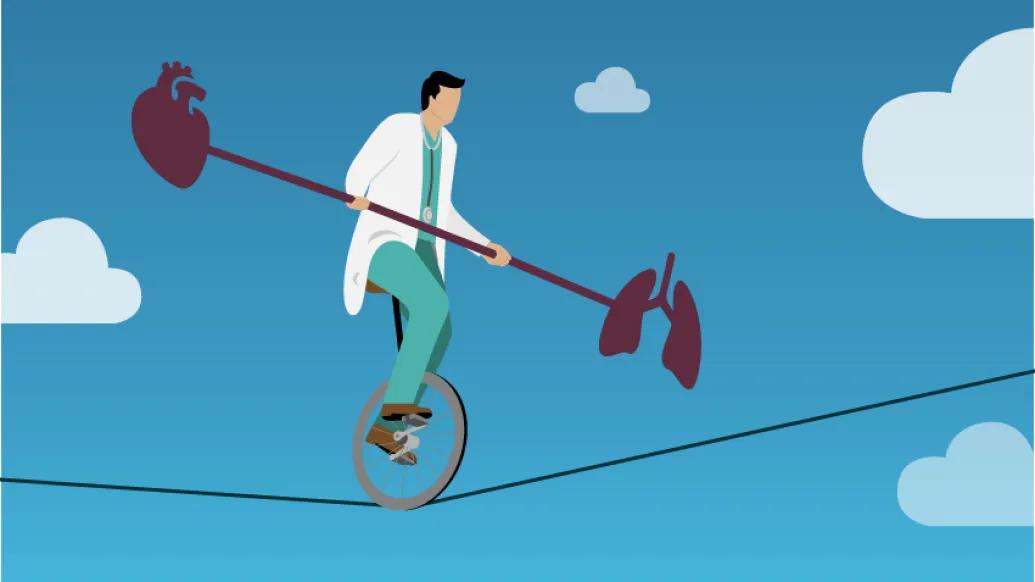
After a cancer diagnosis, most patients and providers have one goal: treat the disease at hand.
But an unexpected and equally serious complication can arise when doing so.
"We are seeing more and more patients undergoing treatment for cancer who are experiencing cardiac complications of their therapy," says Salim Hayek, M.D., a cardio-oncologist at Michigan Medicine's Frankel Cardiovascular Center.
LISTEN UP: Add the new Michigan Medicine News Break to your Alexa-enabled device, or subscribe to our daily audio updates on iTunes, Google Play and Stitcher.
Those complications affect patients with no known risk factors for heart disease — as well as individuals with other health issues unrelated to cancer.
In either case, the connection is gaining more attention from researchers and specialists.
Cardio-oncologists focus on preventing and minimizing heart damage caused by chemotherapy and radiation, an effect known as cardiotoxicity.
And they work as part of a larger cancer team.
"Our role is to advise our oncology colleagues on their patients' risk of experiencing cardiovascular side effects of cancer treatment, recommend preventive measures, address cardiac complications, and monitor them closely throughout the course of their therapy," Hayek says.
Preventing heart problems after cancer treatment
Making lifestyle adjustments and addressing risk factors for heart disease can help lessen the odds of cardiac complications, a measure that cardio-oncologists actively promote.
Much like doctors advise patients to "train" their bodies to get in optimal shape before surgery, cancer patients should strive to keep other conditions in check where possible.
MORE FROM MICHIGAN: Sign up for our weekly newsletter
"Patients come into my clinic all the time with high blood pressure or cholesterol levels, and I ask them: 'Are you receiving treatment for your blood pressure or cholesterol?'" Hayek says.
"Often, the response I get is: 'My physician told me we need to treat the cancer first.' I completely disagree with that approach."
That's because some common cancer drugs can dramatically worsen pre-existing cardiac risk factors and heart disease.
For cancer patients with diabetes, high doses of steroids often given with chemotherapy can exacerbate the diabetes, Hayek says. Certain cancer medications such as dasatinib can dramatically raise blood pressure. Radiation causes hardening of the coronary arteries, while other regimens may alter lipid profiles.
"Controlling these tremendous fluctuations can be a challenge," Hayek says. "It affects your immediate and long-term prognosis."
Which is why cancer patients with existing cardiovascular risk factors face an even greater risk of heart attack, stroke or arrhythmia due to the side effects of a given medication.
Preventive strategies include a healthy diet, gentle exercise, and quitting smoking — a vice that Hayek says is "the strongest shared risk factor between cancer and cardiovascular disease."
What we want to do is catch any problems early in order to institute cardioprotective therapy and minimize the long-term impact.Salim Hayek, M.D.
Working with a cardio-oncologist
Still, some treatments can cause heart disease in patients who were otherwise healthy before their cancer diagnosis.
Immune checkpoint inhibitors, for instance, have dramatically improved cancer-related outcomes by harnessing a patient's immune system to attack the disease.
SEE ALSO: The Best Diets for Cancer Patients and Cancer Survivors
"But now we've noticed some people get horrible myocarditis, which is an inflammation of the heart muscle" after receiving immunotherapy, Hayek says.
Among other risks a cardio-oncologist may examine:
-
Anthracyclines, a class of drugs used in chemotherapy to treat many cancers — including breast, ovarian, lung and leukemias — have been linked to an elevated risk of weakened heart muscle, arrhythmia and heart valve problems.
-
Another type of chemotherapy, Herceptin (trastuzumab), has a 2 to 10 percent likelihood of causing cardiac impairment, Hayek says, but adds that resulting injuries in this case are "usually reversible with appropriate treatment."
-
Patients already on blood thinners to treat or prevent a heart problem also face a high risk of bleeding when Imbruvica (ibrutinib) — a medicine used to fight chronic leukemia — is added to the mix. Imbruvica has also been associated with many abnormal heart rhythms.
Says Hayek: "For every decision, we have to weigh risks and benefits."
Planning for the future
Because resulting damage from a medication might not surface for years, cardio-oncologists can help monitor patients and guide their doctors in determining the safest course of treatment and appropriate dosage.
They're also able to provide analysis and a possible Plan B if problems arise.
"We are not here to tell them to stop treatment, but rather shepherd patients through therapy as safely as possible to obtain the best outcome" says Hayek, who notes that the course of action might involve reducing a dosage or switching medications.
SEE ALSO: How Physiatrists Help Cancer Patients During Recovery
The specialists also work to offer perspective. A patient's heart failure could be triggered by coronary disease rather than a cancer treatment, Hayek says.
Going forward, patients may opt to see a cardio-oncologist on a regular basis to monitor any changes in their health.
"Sarcoma patients, for example, receive a high dose of anthracyclines known to cause heart failure even years later, so we typically follow them yearly even after completing treatment" Hayek says.
"What we want to do is catch any problems early in order to institute cardioprotective therapy and minimize the long-term impact."

Health Lab
Explore thousands of health news & research stories by visiting the Health Lab homepage for more.
Media Contact

Public Relations
Department of Communication at Michigan Medicine
Stay Informed
Want top health & research news weekly? Sign up for Health Lab’s newsletters today!
Featured News & Stories
Could a diabetes medication be the next wonder drug?
Intuition pushed mom to keep checking for breast cancer
Online resources and coaching helped people seek genetic testing for cancer
Liver cancer can be preventable. Do you know the treatable risk factors?
Many hospitals still don’t do enough to prevent UTIs from catheters