Catheter Ablation Helps Homebody Return to Adventure-Seeking Ways
Atrial tachycardia and atrial fibrillation patient Mike Penskar is back to enjoying life, a recent trip to Greece shows.
7:00 AM
Author |

Mike Penskar was holding back.
Episodes of a racing heart, lightheadedness and hot flushes were just some of the things that made the once-active 62-year-old feel hesitant, unsettled and worried.
SEE ALSO: Cardiac Rehab Myths: Why Some Patients Don't Go (and Why They Should)
The symptoms began in 2011 but took until 2014 to diagnose. That's when Penskar found out that a condition known as atrial tachycardia was causing the symptoms that made him tentative to do the things he loved.
Atrial tachycardia, also known as supraventricular tachycardia (SVT), is a fast heart rate that starts in the upper chambers of the heart. Electrical signals in the heart's upper chambers fire abnormally, which interferes with electrical signals coming from the sinoatrial (SA) node, the heart's natural pacemaker.
A series of early beats in the atria speeds up the heart rate. The rapid heartbeat does not allow enough time for the heart to fill before it contracts, compromising blood flow to the rest of the body.
Unpredictable episodes
Penskar couldn't attribute his "episodes" to anything specific.
"They weren't caused by triggers like caffeine (I had eliminated all caffeine) or smoking (I was not a smoker), so it was difficult to know when they would happen," he says.
So difficult, in fact, that it took many attempts by doctors to catch one via electrocardiogram (EKG) and determine its cause.
In 2011, Penskar's primary physician referred him to University of Michigan Frankel Cardiovascular Center cardiologist David Bach, M.D. He was given an event monitor in an attempt to record an occurrence.
"The monitor caught short spates of premature ventricular contractions with occasional premature atrial contractions, but no telling episodes," Penskar says.
When his symptoms worsened in 2014, he was scheduled again to see Bach.
"I woke up the morning of my appointment with an episode, the tail end of which was caught via EKG in the office and immediately diagnosed as atrial tachycardia." Penskar was given an antiarrhythmia medication, which didn't sufficiently eliminate his symptoms.
Catheter ablation as the answer
Eventually, Penskar saw U-M Frankel CVC electrophysiologist Hakan Oral, M.D., who diagnosed atrial fibrillation (Afib), an irregular heartbeat that affects blood flow to the heart muscle and the rest of the body.
SEE ALSO: What You Need to Know About TAVR
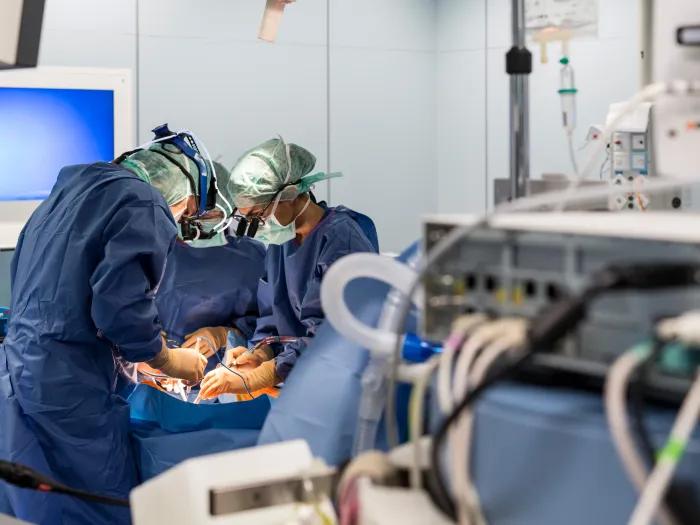
Oral recommended a catheter ablation, when a series of catheters are put into a blood vessel in the arm, groin or neck and are guided into the heart through the blood vessel. After careful mapping, a special machine sends energy to the heart through one of the catheters to cauterize the "short circuits" in the heart that are generating the atrial fibrillation. In Penskar's case, atrial tachycardia was originating from a pulmonary vein and initiating atrial fibrillation.
Ablation successfully eliminated Penskar's atrial tachycardia and Afib and helped restore his confidence in getting back to an active life.
Enjoying life again
The 66-year-old recently returned from a trip to Greece with his wife, Maureen.
"The most significant thing about our trip was that I felt great and didn't have the cloud of my arrhythmia hanging over my head. It was a total relief from the worry, and something I consider a gift," he says.
"Atrial tachycardia and Afib highly reduce a person's quality of life. It's not just an inconvenience," Penskar says. "Now, I'm able to enjoy some small human pleasures again, like drinking good British tea, hiking and just enjoying life. It's such a good feeling."

Health Lab
Explore thousands of health news & research stories by visiting the Health Lab homepage for more.
Media Contact

Public Relations
Department of Communication at Michigan Medicine
Stay Informed
Want top health & research news weekly? Sign up for Health Lab’s newsletters today!
Featured News & Stories

After Catheter Ablation for Afib, Recovery — and a Return to the Water

Second Time’s the Charm with Catheter Ablation

Treating Afib: AV Node Ablation a ‘Last Resort’

Digital alerts support timely treatment decisions of critically ill cardiac patients

Is the United States Lagging Behind Europe in Memory Improvement?