After TAVR, Prize-Winning Chicken Farmer Back at Work
A minimally invasive heart procedure for Gilbert Corss, 84, improved his quality of life — and possibly saved it.
7:00 AM
Author |
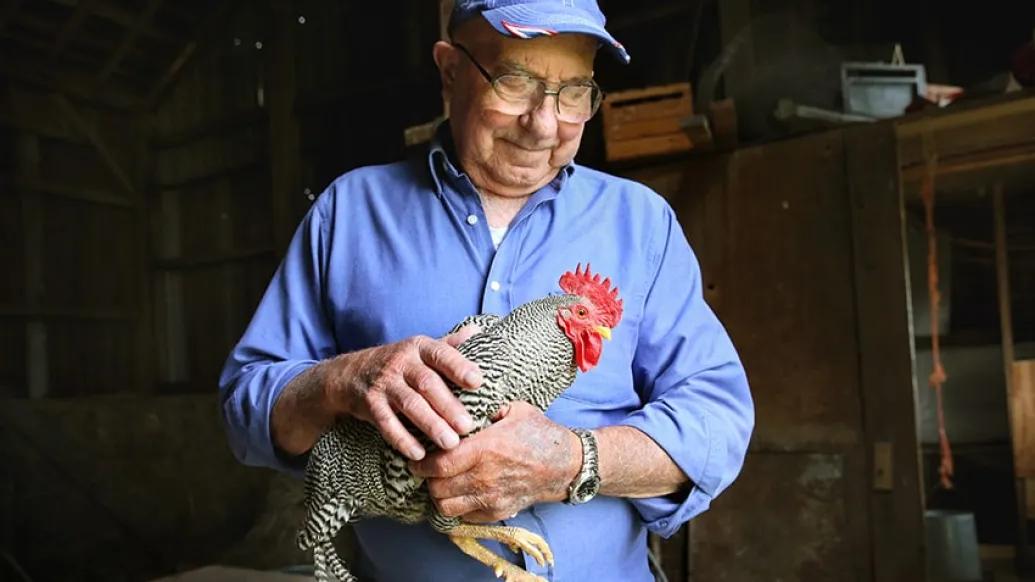
At 84 years old, Gilbert Corss isn't interested in slowing down. And a transcatheter aortic valve replacement (TAVR) procedure in 2013 is helping him stay active.
SEE ALSO: What You Need to Know About TAVR
A farmer in the small town of Vandalia, Michigan, Corss had warning signs of declining health. But his commitment to caring for his wife, who had dementia, kept him from seeing a doctor, as did his work in the fields growing soybeans and raising hogs and prize chickens.
Shortness of breath led to diagnosis
After his wife died in 2012, Corss could no longer ignore his health issues, which included shortness of breath and poor circulation.
A veteran of the Korean War, Corss visited the Veterans Affairs hospital in nearby Battle Creek, where he was diagnosed with aortic stenosis, a narrowing of the aortic valve. The doctors there referred him to the University of Michigan Frankel Cardiovascular Center for the specialized care he needed. U-M cardiologist P. Michael Grossman, M.D., determined that Corss would be a good candidate for a minimally invasive TAVR procedure because of his age and health issues.
U-M has performed more than 725 TAVR procedures, the most of any health system in the state, and is one of the top programs in the country in terms of TAVR volume.
Benefits of a TAVR
Patients who undergo a TAVR procedure experience less downtime, faster recovery and, often, a shorter hospital stay (three to five days on average) than patients undergoing open-heart surgery. Most begin gaining back their strength and start cardiac rehabilitation within days or weeks, resulting in dramatic improvements in quality of life.
SEE ALSO: 5 Things Adults with Heart Defects Need to Know
Corss' TAVR kept him hospitalized over Christmas 2012, a small price to pay for a much-improved quality of life, says his daughter, Connie. When a freak accident left Corss pinned under his tractor several months later, she says she thinks her father's improved health after his TAVR procedure played a part in helping him survive.
Still farming after all these years
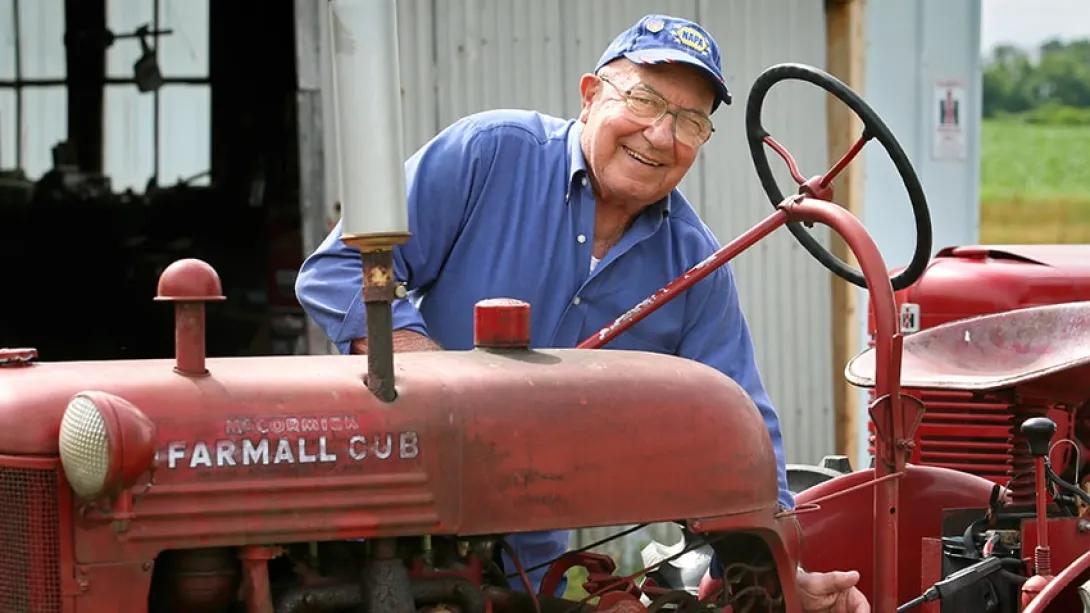
While his farming days aren't what they used to be, Corss still gets out to work on his tractor, tend to his chickens and do odd jobs around the farm, where he's lived for 56 years.
He's able to live alone and continues to drive, making regular trips to Walmart, Kroger, Taco Bell and McDonald's. "He makes a morning of it," Connie says. "He gets up early to beat the crowds."
"I think the world of my TAVR team," says Corss, thanking Grossman, Stanley Chetcuti, M.D., and Himanshu Patel, M.D., for his renewed energy and strength.

Health Lab
Explore thousands of health news & research stories by visiting the Health Lab homepage for more.
Media Contact

Public Relations
Department of Communication at Michigan Medicine
Stay Informed
Want top health & research news weekly? Sign up for Health Lab’s newsletters today!
Featured News & Stories
5 Years Later, ‘Life Is Good’ for One of Michigan’s First TAVR Patients

Digital alerts support timely treatment decisions of critically ill cardiac patients

Is the United States Lagging Behind Europe in Memory Improvement?

Reducing infections after heart surgery could save Medicare $441 million per year
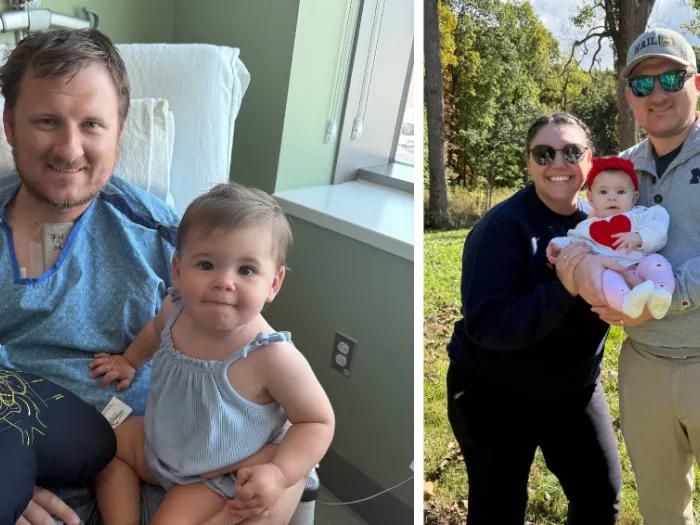
Young father survives aortic dissection after delayed diagnosis