Travel Dreams Come True After Lung Reduction Surgery
Darlene Mowatt went from being housebound to traveling the country in an RV after life-changing lung volume reduction surgery.
5:00 AM
Author |
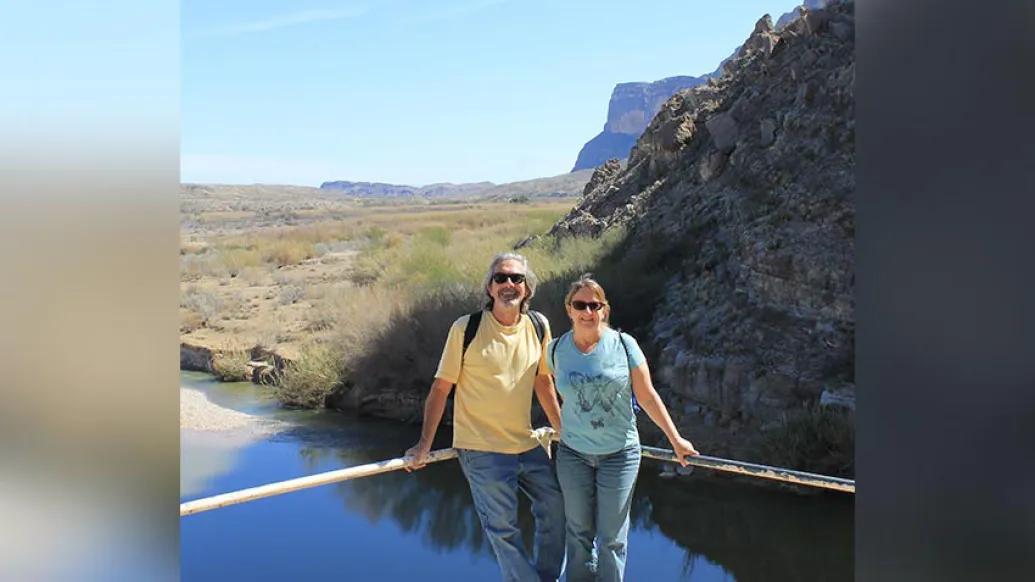
Emphysema nearly squashed Darlene Mowatt's dream of traveling.
Diagnosed at age 52, Mowatt's lungs worsened so much over time that three-hour naps occurred nearly every day, often soon after waking up in the morning.
Mowatt lived in Pinckney, Mich., at the time. She was homebound most days, afraid to plan even a simple trip to the post office. Leaving home at all depended on her energy level. Crossing the country in an RV with her husband, Deck, was hardly a possibility for this former hockey player and hiker.
Emphysema is a chronic condition which damages the tiny air sacs at the end of the lung's airways, weakening them and transforming them into larger, inefficient air sacs. That damage reduced the surface area of Mowatt's lungs, hampered her ability to exhale completely and allowed less oxygen to reach her bloodstream, manifesting in tiredness, explains her Michigan Medicine pulmonologist Kevin Chan, M.D.
SEE ALSO: Lung Volume Reduction Surgery a Viable Alternative to Transplant
She used an inhaler, but its effectiveness diminished over time, prompting more wheezing and shortness of breath. About 3.8 million U.S. residents have emphysema, according to the Center for Disease Control and Prevention. Smoking, air pollution and lung infections cause it, among other irritants.
"I am so grateful I had my art," says Mowatt, now 61, a landscape oil painter whose work is on display in several Michigan galleries.
She had owned an art supply and custom framing store, worked for her brother's fulfillment company and cleaned her local library, but her fatigue forced her to resign each position, turning to painting on canvas to generate income.
Prescribing surgery
Fed up with adjusting her lifestyle, Mowatt asked Chan if she could finally undergo lung volume reduction surgery (LVRS). They had initially discussed it in 2011 when she sought out a second opinion with Chan about her emphysema.
LVRS involves a surgeon shaving off the damaged part of the upper lung lobes where the empty holes reside, Chan explains. In Mowatt's case, they removed 30% of each lung to help it function better and ease the symptoms of her emphysema, which she still has.
SEE ALSO: What is Lung Volume Reduction Surgery?
"I tell the patients, it's kind of like if you have kids and they have rooms in your house, but then they leave and you shut off your air conditioning and the heat in those rooms," he says. "If you remove those rooms, or you take out those holes, the lungs go back to normal size and are more efficient. And then there's improvement in the breathing pattern of the lungs because they remodel themselves back to the right size."
LVRS is the next intervention after medications and pulmonary rehabilitation become ineffective to a patient. People who have LVRS may still receive a lung transplant in the future.
"The lung function has to be below 45% and greater than 20% to have lung volume reduction surgery," Chan says. Mowatt didn't qualify until dropping to 39% by July 2017 and passing a series of tests and criteria. Her surgery was in April 2018.
Chan tells his patients LVRS moves back the clock between five and 10 years, he says. "Darlene is much, much better now."
MORE FROM MICHIGAN: Sign up for our weekly newsletter
Road warrior
Mowatt was hospitalized six days for the surgery and was discharged with oxygen – a first for her – as her lungs battled inflammation during her recovery. Within a month, she no longer needed it.
By June, her quality of life had improved drastically. She had the energy to pack up the belongings in the house she occupied for 30 years, sell their house and plan an adventure of a lifetime. She and Deck loaded up a 34-foot motor home they nicknamed The Moose and travelled throughout America beginning in October 2018.
With stops that included Hot Springs, Ark., Winslow, Ariz. and San Antonio, Texas, the Mowatts squeezed out every adventure they could while they traveled, and whether it was mining for diamonds or hiking trails, they enjoyed every view.
LISTEN UP: Add the Michigan Medicine News Break to your Alexa-enabled device, or subscribe to our daily updates on iTunes, Google Play and Stitcher.
This past summer, they returned to Michigan. They were missing their grand kids and decided they wanted a home base, so they bought a house on Lake Huron in Au Gres, Mich., knowing their next adventure would begin there next summer. They want to buy a boat and cruise the Great Lakes to explore their home state from the water.
"This was life-changing surgery," Mowatt says.

Health Lab
Explore thousands of health news & research stories by visiting the Health Lab homepage for more.
Media Contact

Public Relations
Department of Communication at Michigan Medicine
Stay Informed
Want top health & research news weekly? Sign up for Health Lab’s newsletters today!
Featured News & Stories

U-M-led consortium to receive up to $52 million in NIH funding to study why viral respiratory infections affect children differently

5 things to know about ALS
Advancements and trends in lung transplantation

Nicotine pouches: Youth survey shows opportunity for prevention
Lung health expert weighs in on Zyn and other nicotine pouches