The Y chromosome is home to surprising jumping genes
The discovery could offer clues for how the Y chromosome defends against decay
5:00 AM
Author |
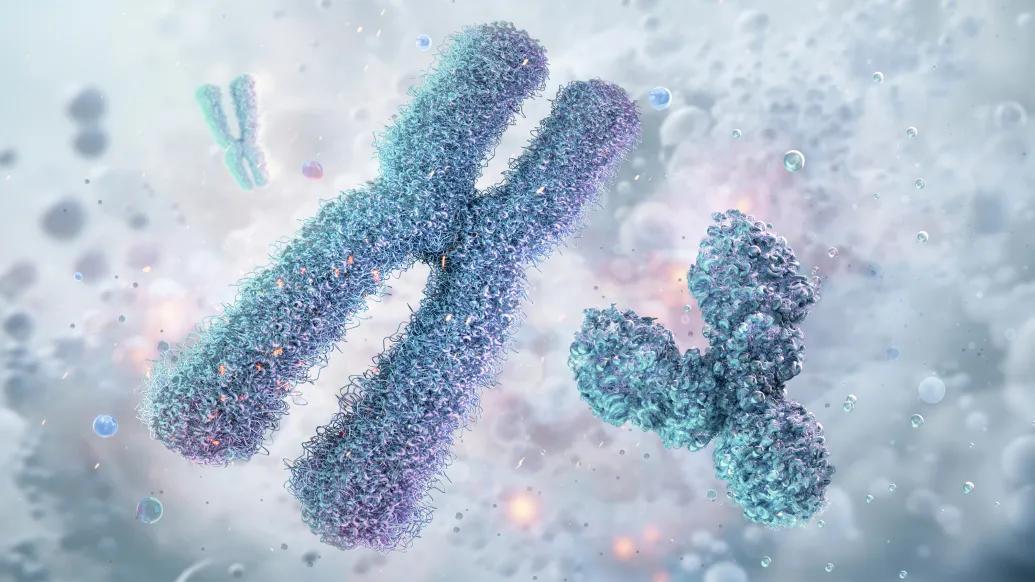
The humble Y chromosome may be the smallest chromosome in the mammalian genome (and getting even smaller), but it is mighty: genes on the Y chromosome are critical for fertility in males.
In a new study in the journal Current Biology, researchers at the University of Michigan Medical School are studying deer mice to outline how the Y chromosome defends itself against decay by acquiring gene families, holding its own to maintain fertility.
“You can think of the Y and X chromosomes as two rival political parties,” said Ivan Mier, a current M.D./Ph.D. at Albert Einstein College of Medicine and a former lab manager in the lab of Jacob Mueller, Ph.D., of the Department of Human Genetics at Michigan.
“One of the genes of the X party became independent by moving to an autosome, then eventually moving to the Y party.”
Autosomes are all of the chromosomes that aren’t the sex chromosomes.
However, the Y chromosome is often thought of as a place where genes go to die because its genes don’t recombine.
In this study, Mier, along with research scientist Martin Arlt, Ph.D., and their collaborators discovered a gene family, which they named Phf8y, that bucked this trend, hopping to the Y and duplicating itself.
“It’s a unique pattern that we didn’t expect–having a gene move from the X chromosome to an autosome to the Y chromosome. To our knowledge, it is the first example ever.”
What’s driving the process?
In the production of sperm, the X chromosome from the maternal side and the Y chromosome from the paternal side result in a sperm cell that has either an X or Y chromosome.
During this period, the X serves as a sort of autosome for genes important for viability and spermatogenesis, Mueller explains.
"But since males carry just one X, an alternative method arose evolutionarily to provide a way to backup important genes for creating sperm," said Mueller.
“It’s like having your own clone around who can jump in when you’ve gone on vacation,” said Mier.
There are genes that copy themselves, called transposable elements, that hide out in our genome and are activated on rare occasions.
In fact, these so-called jumping genes make up half of the human genome.
The team discovered that the deer mouse Phf8y on the Y chromosome is derived from the X-linked Phf8, apparently having hijacked the transposable element machinery to make an extra copy of itself.
What Phf8y is doing is still a mystery.
The team speculates that this gene on the Y chromosome is involved in chromatin packing, or how DNA is packaged, and could confer an edge to Y-bearing sperm to compete with X-bearing sperm.
Previous studies in house mice have revealed genes that share similar features to Phf8y and are in an X-Y arms race.
“Understanding how the Y chromosome persists and how genes move onto it is important for understanding how the 50/50 male to female sex ratio is maintained and ultimately, how the human population continues on.”
Additional authors: Ann Marie Lawson, Eden A. Dulka, T. Brock Wooldridge, Hopi E. Hoekstra
Michigan Research Core(s): University of Michigan Advanced Genomics Core
Paper cited: “An X-to-autosome-to-Y chromosome amplified retrogene family functions in spermatids,” Current Biology. DOI: 10.1016/j.cub.2026.04.045
Sign up for Health Lab newsletters today. Get medical tips from top experts and learn about new scientific discoveries every week.
Sign up for the Health Lab Podcast. Add us wherever you listen to your favorite shows.

Health Lab
Explore thousands of health news & research stories by visiting the Health Lab homepage for more.
Media Contact

Public Relations
Department of Communication at Michigan Medicine
In This Story
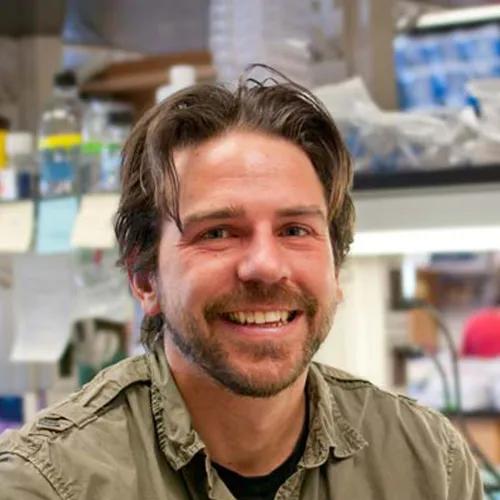
Jacob L Mueller, PhD
Associate Professor
Stay Informed
Want top health & research news weekly? Sign up for Health Lab’s newsletters today!
Featured News & Stories
Study outlines a new framework for direct cell reprogramming
Engineered nanoparticles sensitize gliomas to radiotherapy
Uncovering cellular stress signal triggered by Salmonella
New drug combination may help treat advanced prostate cancer

How a common virus's hijack of cell repair processes may promote cancer