Why Your Next Pediatric Appointment is So Important
As primary care clinics have returned to normal operations, a pediatrician discusses safety and the value of staying up-to-date on well visits and vaccines.
3:45 PM
Author |
This article was updated on March 29, 2021.
Editor's note: Information on the COVID-19 crisis is constantly changing. For the latest numbers and updates, keep checking the CDC's website. For the most up-to-date information from Michigan Medicine, visit the hospital's Coronavirus (COVID-19) webpage.
Since the coronavirus kept families home, children may have been unable to have important primary care appointments in the last year, resulting in them falling behind on their vaccine schedule.
Primary care clinics were able to ramp back up their operations in the fall; however, the number of appointments being scheduled has not necessarily followed suit.
Some still may feel a little unsettled by the idea of making an appointment for an in-person visit, but here, director of general pediatrics, Kelly Orringer, M.D., addresses questions around safety and appointments to prioritize.
Reopening safely
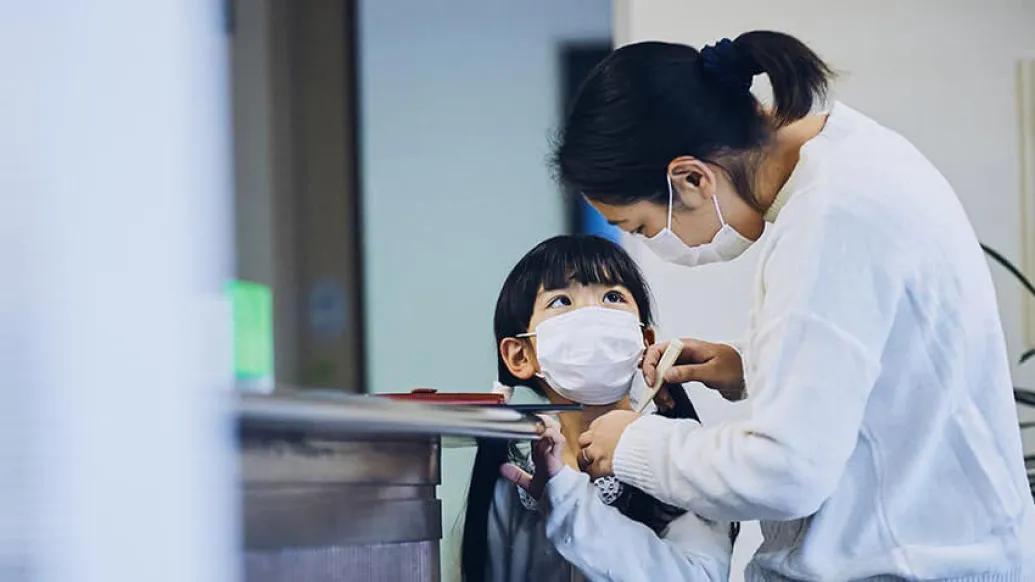
The state of Michigan recommends wearing masks for entry into enclosed public spaces. The Center for Disease Control also recommends mask use for clinical encounters.
"In accordance with these recommendations, anyone entering a clinic will be screened when they enter the building," Orringer says. "If anyone in the family is feeling sick, we'll try to reschedule the well visit and if we can't, we'll try to have a non-ill family member bring the child in." All clinic staff will be required to wear masks, as well as all visitors age two and older.
In the waiting room, special floor markings will guide people on where to stand for checking in or out. To keep the waiting room at a lower capacity, patients at many clinics will also have an option to check-in electronically.
Additional measures to allow for more physical distancing include being proactive in separating children with symptoms of illness and those who appear well. Ill children will either be seen in a different area of the clinic or at a time specified for illness care.
Although health services are separated in this way, it's still important to allow enough time between appointments to thoroughly sanitize exam rooms to reduce risk of illness transmission.
"We are only seeing sick patients every 30 minutes. This reduced schedule means fewer people in the waiting room at a time and more time for disinfecting surfaces," Orringer says. Other common areas, like restrooms, will be sanitized often, particularly frequently touched surfaces like doorknobs and railings.
All previously consolidated clinics are now open with increased capacity.
Making an appointment
As clinics return to normalcy, patients are encouraged to make an appointment with their child's primary care provider. This can include the following types of appointments:
-
Well-visits or physicals
-
Any child in need of an immunization(s)
-
For any parent with concerns about their child's growth, development or behavior
-
Mental health screenings for children and adolescents
-
Children and adolescents in need of sports physicals starting as soon as April 15
"Since the pandemic, our clinics' virtual health care capacity has significantly expanded. Virtual visits help us practice social distancing, but can also be beneficial for a variety of conditions by allowing patients to receive their care from anywhere in Michigan," Orringer says. A virtual visit can be requested through the patient portal or pediatrician's office.
Conditions that may be well-suited for virtual care include:
-
Rashes
-
Diarrhea
-
Follow-up visits for feeding problems
-
Follow-up visits for constipation
-
Sleep issues
-
Mental health concerns
-
Menstrual concerns
-
Ingrown nails
-
Head lice
-
Other behavioral issues
Prioritizing immunizations
COVID-19 has painted a frightening picture of what a world without a vaccine looks like. It's important to fight preventable, infectious diseases by receiving vaccines that already exist and doing so on-time.
"Vaccines are most effective if given on a recommended schedule. You can miss the window of greatest protection possible if there's a significant delay in when you receive a certain vaccine," Orringer says. "There should be urgency around this issue and that's why we want to see these children as soon as possible."
SEE ALSO: Follow the Right Path: A Traditional Vaccine Schedule
According to a study from the Centers for Disease Control and Prevention, fewer than half of infants 5 months or younger in Michigan are up to date on vaccines: an alarming side effect of the COVID-19 pandemic.
Getting vaccinated not only protects from potentially deadly diseases, but also helps protect immunocompromised individuals around you that may not be able to get vaccinated, Orringer says.
"Like the commitment to staying inside and social distancing when in public spaces, there's an obligation to do our part in keeping community members safe by receiving vaccinations," Orringer says. "The stakes are too high to do otherwise."
For more on vaccine safety, visit C.S. Mott Children's Hospital's Your Child Parenting Guides & Resources.
Importance of mental health screenings
Now more than ever, it's important to screen for mental health concerns in children and adolescents. The social ramifications of the pandemic have taken a toll on kids and, according to a recent national Mott poll, nearly half of parents have noticed a new or worsening mental health condition in their teen since the pandemic started.
As part of a comprehensive evaluation, your pediatrician conducts mental health screenings at all well visits and has access to community and in-clinic resources, including social work, psychology and psychiatry.
If your child is experiencing emotional and/or behavioral problems, early detection is important in helping prevent future mental health illness. Primary care providers are well positioned to identify, assess and manage mental health concerns in youth, avoiding negative long-term effects.
Anxiety and depression in teens can look like sadness, poor sleep, change in appetite, isolating in their rooms, dropping school grades, unexplained crying or explosions of temper. Contact your child's physician if you have any concerns about your teens' mental health.
Not waiting for sports physicals
While sports physicals were waived last year, that will not be the case this year. Any time on or after April 15 your child is eligible to receive a sports physical for the 2021-2022 school year.
Since school sports start the same week in August, it's important that all middle and high school athletes do not wait until summertime to come in for sports physicals as there is not enough clinic capacity for all to be seen at the same time.
For patients of Michigan Medicine, the hospital has nine clinic locations with openings for well visits now, and adolescent sports physicals starting April 15, Monday through Saturday.

Health Lab
Explore thousands of health news & research stories by visiting the Health Lab homepage for more.
Media Contact

Public Relations
Department of Communication at Michigan Medicine
Stay Informed
Want top health & research news weekly? Sign up for Health Lab’s newsletters today!
Featured News & Stories
What should you know before starting a GLP-1?

Got cyclosporiasis? How to take care of yourself and others

E-bikes are faster than ever. Are families prepared for the risks?

Beyond the White Coat: Global & Local Health Experiences

The hidden life of parasites like Cyclospora