Why the bird flu’s jump to pigs is concerning
A virologist's take on the situation
5:00 AM
Author |
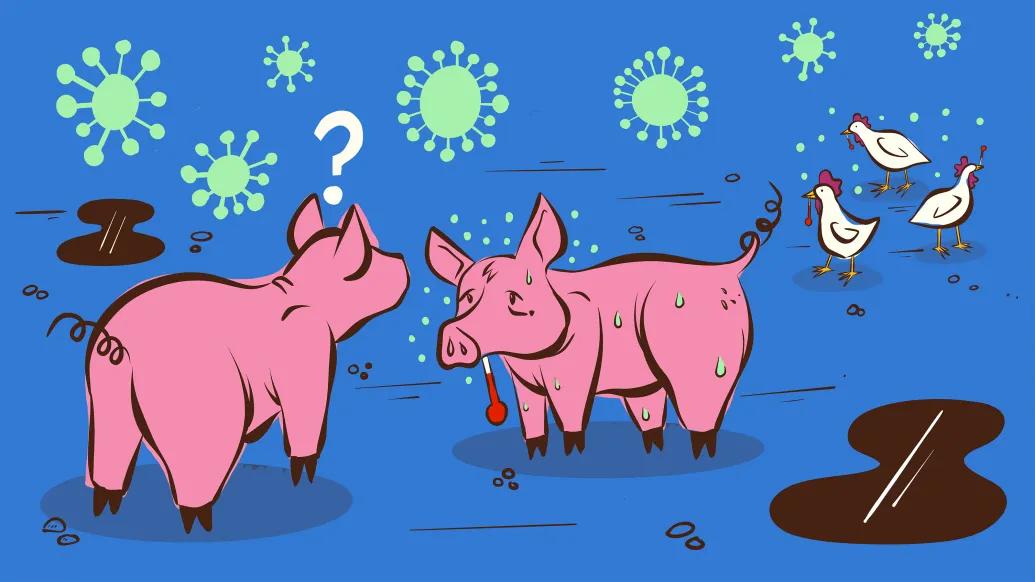
On October 30, 2024, the first reported United States case of H5N1 influenza, or bird flu, in a pig was reported in Oregon.
Michigan Medicine virologist Adam Lauring, M.D., Ph.D., speaks about the implications of this case and whether a new pandemic could be on the horizon.
How did the current H5N1 bird flu outbreak start?
Lauring: All flu viruses are essentially avian flu viruses.
Every now and then, they make it into mammals and/or people.
The ones that succeed can cause a pandemic, and then go on to become circulating seasonal flu viruses.
For example, the H3N2 virus caused the 1968 pandemic and we've been dealing with it as a seasonal flu virus every year ever since.
In 2009, H1N1 spilled over to us from pigs, and is now a seasonal virus.
For the past couple of years, H5N1 has been circulating in wild and domestic birds and it too has spilled over into mammals, including cows, mink and marine animals.
Early in 2024, H5N1 spilled over into cattle in Texas, which then moved all over the country infecting herds.
The spread has been somewhat unique because the virus is in cows’ milk and not the respiratory tract.
And the human infections for the most part have been through occupational exposure to splashes or maybe inhalation of the milk.
Despite these infections, it hasn’t been clear that there’s been human to human infection.
Why is bird flu’s jump to pigs concerning?
Lauring: Pigs are always a concern for flu viruses because like cows, they're a big agricultural species with a lot of human contact.
Once a virus is in pigs, it can spread more easily because pigs are in close quarters.
More importantly, pigs are traditionally called a mixing vessel for influenza viruses because pigs are susceptible to influenza viruses and there’s a lot of diversity of influenza viruses in pigs already.
And so, the concern is an avian virus will get into a pig population and start swapping its genes around with the pig flu viruses–a process called reassortment.
That could provide a pathway for the virus to adapt to mammals and become better at spreading. For this reason, this latest report raises the threat level.
How is the H5N1 spread being monitored?
Lauring: Locally in Michigan and nationally, epidemiologists are checking wastewater for influenza A.
However, the seasonal flu viruses and bird flu are each influenza A viruses, and wastewater monitoring alone doesn’t allow you to tease apart the variants.
So, during the spring and summer, we were more confident that the wastewater signal was H5N1 because there wasn't a lot of seasonal flu circulating.
As we're moving into the flu season, we're going to need to do something different to distinguish what influenza A viruses are giving the wastewater signal. You won't know unless you're looking for it.
Then there's a whole question of how you distinguish the source of what's in the wastewater– how much effluent from a pig farm goes into commercial wastewater?
We would need to adjust our surveillance system a bit because it's going to be hard to figure out where the source is.
What are experts doing now to keep track of H5N1?
Lauring: There are periodic briefings from USDA and CDC that report on agricultural outbreaks, how they’re managing them and results of sampling and surveillance of pigs and people.
It will take classic “shoe leather” epidemiology to figure out the extent of spread and try to contain it.
What can people anticipate with H5N1?
Lauring: I don't think this is going to be the last time that there's an H5N1 outbreak in a pig population.
It's almost as if we've been lucky that it hasn't happened until now.
We’re only as good as our surveillance–of pig farms, dairy farms and our surveillance system for human flu.
I know USDA and CDC will continue to pay attention to this.
Can you be vaccinated against H5N1?
Lauring: There is an H5N1 flu vaccine but it’s not available to the public and it’s unclear how and whether it would be deployed; we’re not there yet.
However, flu viruses are related enough that sometimes people will have some immunity against them because they've been infected with or vaccinated against flu viruses their whole lives–but we don't know if that's enough or how much protection it's going to provide.
I think the message is: get your flu shot for the seasonal flu.
Sign up for Health Lab newsletters today. Get medical tips from top experts and learn about new scientific discoveries every week.
Sign up for the Health Lab Podcast. Add us wherever you listen to your favorite shows.

Health Lab
Explore thousands of health news & research stories by visiting the Health Lab homepage for more.
Media Contact

Public Relations
Department of Communication at Michigan Medicine
In This Story

Adam Lauring, MD, PhD
Professor
Stay Informed
Want top health & research news weekly? Sign up for Health Lab’s newsletters today!
Featured News & Stories

Comprehensive DNA sequencing reveals hidden drivers of cancer

Many older adults make Medicare decisions quickly and most don’t change plans, poll finds
What’s the latest on 7-OH and kratom availability and addiction care?

A metabolic “switch” that could help reset scar-producing cells in scleroderma

Depression in OBGYN residents needs more attention, study suggests