When a Virus Turns Deadly: What You Should Know About Myocarditis
An inflammation of the heart muscle, myocarditis can be life-threatening if not treated in time. One young survivor shares his story.
7:00 AM
Author |
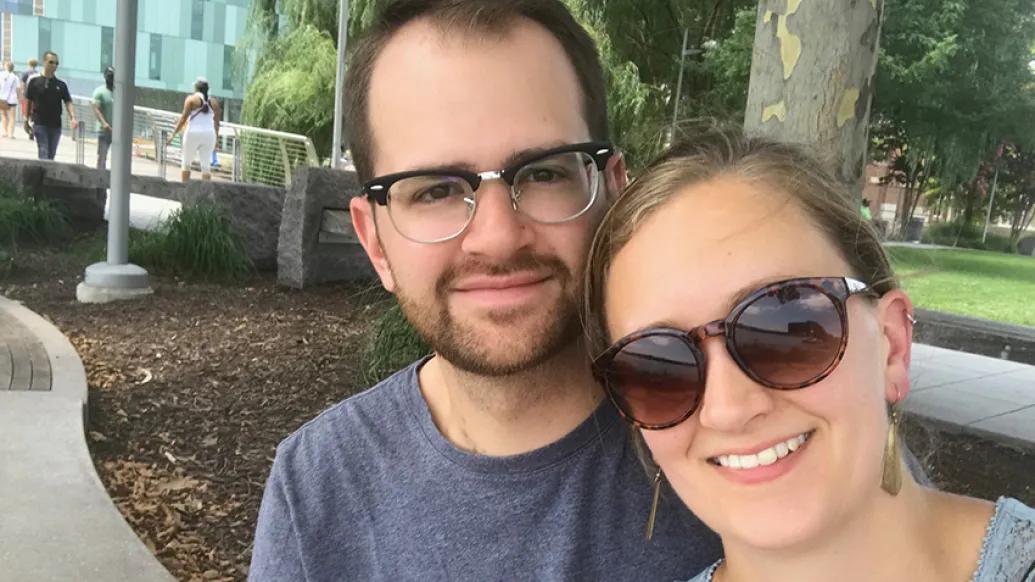
As a third-year law student at the University of Michigan, Evan Johnson is focused on his education. But his thoughts sometimes wander to a few short months ago, when he came very close to dying.
It was an experience the 29-year-old says he'll never forget — and an outcome for which he is forever grateful.
Johnson was nearing the end of school finals last spring when he came down with a fever that seemed to come and go. He attributed it to the flu, bought over-the-counter medication and tried to concentrate on finals.
After nearly a week of exhaustion and difficulty breathing, Johnson went to a clinic at U-M for antibiotics. While there, his heart rate reached an alarming 140 beats per minute (a healthy adult's heart rate should fall between 60 and 100 beats per minute).
He was immediately sent to the emergency department at Michigan Medicine.
Symptoms of myocarditis
Further testing by emergency doctors revealed that Johnson had several issues: a low ejection fraction (a measurement of the heart's pumping ability), elevated troponin levels (a heart muscle protein released in the blood after a cardiac event) and an abnormal electrocardiogram.
Those symptoms caused immediate alarm for Michigan Medicine interventional cardiologist Nadia Sutton, M.D.
"In a young person, my first thought was that he had myocarditis," Sutton says.
Myocarditis is inflammation of the heart muscle that can lead to impaired pumping function of the heart and, in serious cases, cardiac arrest.
Myocarditis can occur around the time of an infection, or it can be related to certain drugs or an autoimmune disease. Sometimes doctors can't identify a precipitating cause.
Symptoms include chest pain, arrhythmias, shortness of breath and swelling in the legs, ankles and feet.
"These patients can become very sick very quickly," says Sutton, who has treated several cases of myocarditis in which patients became critically ill.
Although some cases are mild, others can be severe, with patients going into shock or cardiac arrest, she says.
Cause of myocarditis found
Sutton's suspicion was right: Johnson had contracted a virus that provoked a severe case of myocarditis.
Like Johnson, many people who develop myocarditis are otherwise healthy.
With time a critical factor, Johnson was taken to the catheterization lab, where the team could view his heart arteries using diagnostic imaging equipment — and, if needed, temporarily implant a mechanical support device to help his heart circulate blood.
"We had to work quickly because his blood pressure was low and he was having trouble breathing, which can happen with severe heart failure," Sutton says.
That wasn't the only trouble.
"Within an hour or two of receiving the initial phone call, the team had gotten catheter access and Johnson went into ventricular tachycardia, a life-threatening heart rhythm," Sutton says.
"We started CPR and placed an Impella pump into his heart to support his circulation and allow us to stop CPR while preparing for additional support."
Teamwork proves vital
Sutton's next lifesaving decision, in consultation with cardiac surgeon Matthew Romano, M.D., was to place Johnson on extracorporeal membrane oxygenation, or ECMO.
The procedure offers full cardiac and respiratory support to patients whose heart and lungs cannot provide adequate oxygen to sustain life.
"He was deteriorating rapidly, and we determined he was a suitable candidate for ECMO," says Romano, who directed the procedure. "We look at age of a patient, how long the patient has been in distress and the health of the patient's lungs and kidneys before deciding on ECMO."
ECMO is a temporary means of emergency life support that can later be removed.
In Johnson's case, Romano says, it was a matter of life or death: "The procedure went seamlessly. It was a true team effort."
Sutton and Romano are part of a Michigan Medicine multidisciplinary cardiogenic shock team, which provides immediate evaluation and care to patients whose hearts cannot pump adequate blood to support the body's organs.
We were very prepared with an experienced team and had the necessary equipment. He was in the right place at the right time.
Recovery from myocarditis
Although the time a patient remains on ECMO varies, Johnson was able to support himself and was taken off the system within a few days. He spent nearly three weeks at the U-M Frankel Cardiovascular Center, including two weeks in the intensive care unit.
As many as 20 percent of sudden deaths in young adults are linked to myocarditis.
Which is why Johnson's doctors acknowledge his good fortune.
SEE ALSO: What a Cardiologist Eats Daily to Keep Her Heart Healthy
"We were very prepared with an experienced team and had the necessary equipment," says Sutton, noting that Johnson suffered no neurological issues that can occur in patients who have experienced cardiac arrest.
"He was in the right place at the right time."
Johnson, who started a summer internship in Washington, D.C., just weeks after his health scare, agrees.
"I was very fortunate to be where I was when it happened, with great cardiologists and technology," he says.

Health Lab
Explore thousands of health news & research stories by visiting the Health Lab homepage for more.
Media Contact

Public Relations
Department of Communication at Michigan Medicine
Stay Informed
Want top health & research news weekly? Sign up for Health Lab’s newsletters today!
Featured News & Stories

Gene editing is coming for common diseases. Are we ready?

Digital alerts support timely treatment decisions of critically ill cardiac patients

Is the United States Lagging Behind Europe in Memory Improvement?
Reducing infections after heart surgery could save Medicare $441 million per year
Young father survives aortic dissection after delayed diagnosis