When the patient becomes the student
One woman's physical therapy journey is now guiding her career path
5:00 AM
Author |
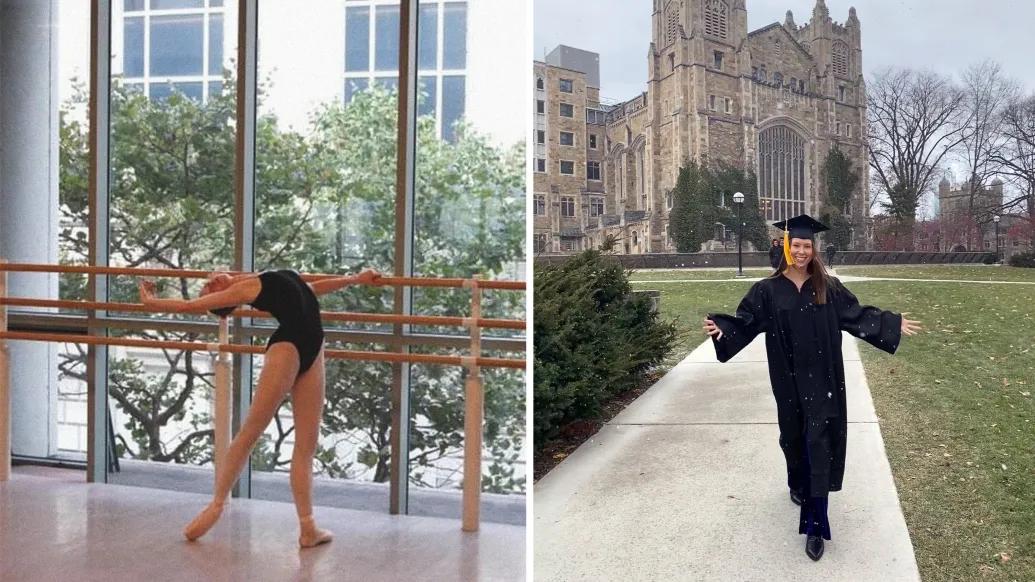
Because of her love for dance, Lauren Bos started visiting MedSport for assistance with hip pain at only 17 years old.
Little did the teen know her physical therapist would actually become her career mentor as she completed her clinical rotations at the clinic to become a PT specialist herself.
As a second-year physical therapy student at Columbia University in New York, Bos was looking for a place to do her second clinical rotation for the summer of 2023 when she thought back to her experience as a patient at MedSport.
“I thought about the care I received as a patient at MedSport and knew I wanted to try doing my next rotation there,” said Bos.
With some assistance from Columbia University and MedSport, Bos was not only able to complete a clinical experience rotation at MedSport, but she also had the opportunity to work with the physical therapist that inspired her to pursue a career in the medical field.
Life as a patient
Bos grew up around Ypsilanti, Mich., an avid dancer. She started dancing competitively at 17, even training with the Miami City Ballet School.
But despite her love for dance, it was taking a toll on her body.
She was frequently experiencing back pains as well as pain in her feet, which casued her to seek physical therapy and stop dance soon after high school.
Over the next couple of years, Bos would frequently return to MedSport for various joint pains, sprained ankles and hip pains.
“I thought that I was going to dance for my whole life,” said Bos.
“Quitting dance was a major life change for me and I wasn’t sure what to do next.”
Each time Bos came to MedSport, she saw Kristen Schuyten, PT, DPT, a physical therapy clinical specialist with a focus on performing arts rehabilitation.
Schuyten worked with Bos to not only help with her pain, but also to address the way stopping dance was impacting her life.
“When you are planning on continuing a sport for the rest of your life, stopping at such a young age can be scary and leave you feeling lost,” said Bos.
“Schuyten understood this started to help me find a sense of direction.”
As Bos and Schuyten worked together within MedSport, Bos started to take notice to the culture and the individualized care that not only she was receiving, but other patients were as well. Bos started to ask Schuyten more about the role of being a physical therapist, and Schuyten was happy to share her experience.
At the end of her gap year, Bos decided to attend the University of Michigan to pursue physical therapy as a profession.
Starting clinical rotations
Bos continued to be seen by Schuyten at MedSport throughout her time in undergrad, which only strengthened her interest in becoming a physical therapist.
When looking to start her graduate studies at Columbia University, Schuyten even wrote to write Bos’s letter of recommendation for the program.
“I could tell that she was really picking up on not only the medical side of care, but the patient side as well,” said Schuyten.
“To be a good physical therapist, you need both.”
When Bos began at Columbia, she felt sure that she was going to pursue sports medicine with a concentration on the performing arts due to her background as a dancer but wanted to explore other options.
“I spent time exploring other areas of sports medicine care,” Bos said.
"But I felt drawn to give a dance concentration another try at the beginning of this summer.”
Columbia University and MedSport didn’t have an affiliation with each other when Bos was looking for a place to complete her second clinical rotation, but both institutions were more than happy to make the collaboration work.
“We are always happy to work with new schools to establish contracts to help physical therapy students attend MedSport for clinical experiences,” said Valerie Macpherson, PT, MHS, SCCE, MedSport site coordinator of clinical education for PT and PTA students.
“MedSport aims to teach students in their clinical rotations how to give the best PT care while also caring for the individual needs and lifestyles of each patient. Our staff at MedSport enjoy getting the opportunity to mentor the best and brightest from schools across the country.”
Having a concentrated area of study during a clinical rotation for your second year is not common.
Even less common? Having the rotation be with the same physical therapist that treated you years before.
Columbia requested Bos be assigned to Schuyten and the MedSport Performing Arts program. In Bos’s case, her interest in dance concentration and Schuyten’s availability allowed for everything to align just right.
Growing as a therapist
Schuyten says she’s enjoyed watching Bos grow as a physical therapist.
“This clinic is faster paced than what would be normal for her second rotation, but she is holds her own,” said Schuyten. “She’s great at taking feedback and a hard worker, I’m really proud of how far she has come.”
For Bos, the experience has reminded her why she wanted to specialize in performing arts physical therapy in the first place.
“Being able to combine my love for the performing arts as well as physical therapy feels like the perfect combination for me,” said Bos. “I’m very grateful for Schuyten and all the guidance she has given me over the years.”
Bos plans to return to Columbia and will continue to work towards her doctorate degree in physical therapy

Health Lab
Explore thousands of health news & research stories by visiting the Health Lab homepage for more.
Media Contact

Public Relations
Department of Communication at Michigan Medicine
Stay Informed
Want top health & research news weekly? Sign up for Health Lab’s newsletters today!
Featured News & Stories

Is the United States Lagging Behind Europe in Memory Improvement?

The Care Ecosystem: Supporting People Living with Dementia and Their Families

A concussion expert and football father discusses why he values teamwork over zero-risk
Why tendons heal so poorly and how researchers hope to fix them

A Gift to Benefit All: Bill and Sally Martin’s Visionary Support for Sports Medicine