When is it time to see a hand specialist?
An expert weighs in on the key things to consider.
5:00 AM
Author |
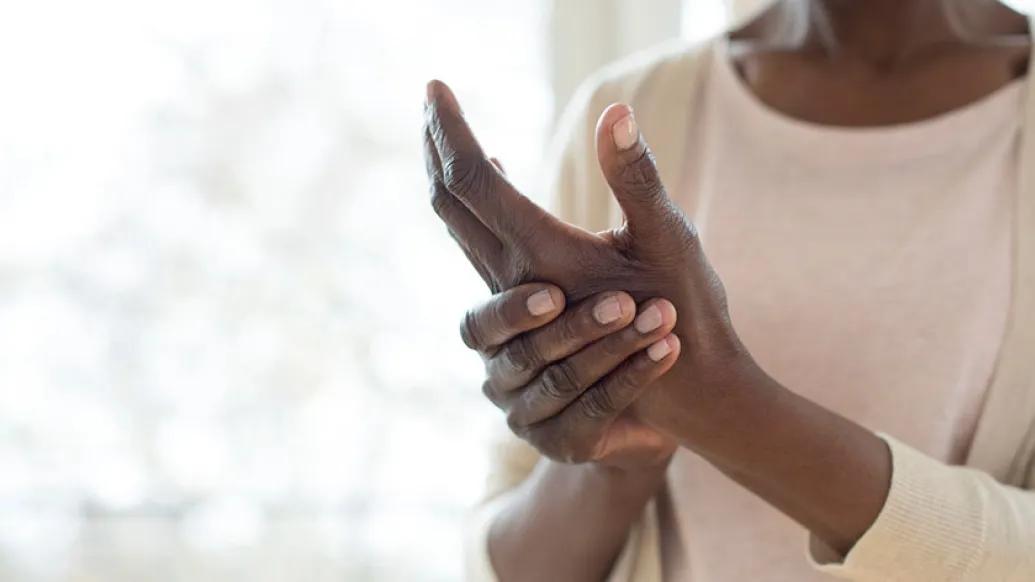
Millions of Americans experience hand and wrist pain caused by any number of conditions, says surgeon Steven Haase, M.D., of the University of Michigan Health Comprehensive Hand Center.
Haase and his team treat patients with everything from hand and wrist trauma, carpal tunnel syndrome and arthritis to work-related injuries, skin cancers, tumors and more.
"We offer every option for our patients – both surgical and non-surgical," he said.
His consistent message to anyone living with hand and wrist pain or more serious symptoms: Be evaluated sooner rather than later.
But how do you know when it's time to see a hand specialist? Haase lays out the common scenarios:
- Your primary care doctor recommends you see a hand specialist. "Many of the patients who come to us don't need hand surgery," said Haase. "They're referred to us by their primary care doctor because of the pain they're experiencing day after day. They need someone to tell them what's going on with their hand or wrist." Haase says there's no sure-fire way to know if you need hand surgery until you're evaluated by a hand expert. "There's a wide breadth of cases and no one patient is the same. All of our patients require nuanced care. Some have no need for surgery while others do. If you've been treated for years with medication or steroid injections for carpal tunnel syndrome or arthritis, for example, and haven't had results, you need to see a hand specialist. Many of my patients say that no one told them surgery was an option until they came to us."
- You have ongoing hand pain (and may or may not need surgery). "We evaluate the cause of your pain and discuss what we can do to fix it," said Haase, noting that many of his patients may need surgery down the road, but not immediately. "For our patients who don't need surgery now, we educate them about their condition and what can be done to help with their pain." This might mean referring them to another specialist, such as a rheumatologist or hand therapist, he says. "Our team includes highly specialized hand therapists who treat patients pre- and post-surgery," said Haase, noting that treatment for most of his patients with arthritis – mild or severe – begins with hand therapy. "This might be teaching patients how to rest their joints or how to do things differently to prevent joint pain. For many of our patients, it's a matter of age. They may have arthritis that can't be cured, but their pain can be minimized with a steroid injection or a brace or splint to support the hand."
- Hand surgery has been recommended. This depends on the individual condition, Haase says. "For a patient with arthritis, surgery might be recommended when all other treatments such as medications and steroid injections don't help. It's a shared decision between physician and patient. When the patient is in so much pain that it's difficult for them to function and do their normal daily activities, we consider surgery." Haase says his team's goal is to get to know patients early in their condition to discuss treatment options and when surgery might be needed. "If we can get them the tools to feel better, they might be able to avoid surgery." For patients with arthritis, for example, Haase says there are no specific indicators for surgery. "When the symptoms are bad enough, then it's recommended. "Our goal is to help you function as well as possible. We can't always fix the problem but we have in-depth conversations about the options. We want to give patients the best function with the simplest possible treatment."
What's new in hand and wrist treatments?
Haase says his team is performing more and more in-clinic procedures using local anesthesia for certain patients.
"For patients with carpal tunnel syndrome, for example, we now offer an alternative to surgery in an operating room. Doing this minor procedure in the clinic is more convenient in many ways, but does not compromise safety or patient comfort."
Other in-clinic procedures are offered for conditions such as:
- Trigger finger/trigger thumb
- Small hand cysts/growths/tumors
- Dupuytren disease/contracture
Haase treats a large number of patients with Dupuytren disease, a condition in which nodules or cords form underneath the skin, sometimes resulting in limited finger movement. The condition, typically diagnosed in older adults, is very distinctive, says Haase.
"We know Dupuytren disease when we see it and offer specialized expertise to treat it."
In addition to traditional surgical treatment options, Haase offers other minimally invasive treatments — including needle aponeurotomy and collagenase injection — providing patients with the full spectrum of available modern treatment choices.
How to find the right hand center
Hand conditions require special expertise due to the complexity of the hand's structure, says Haase, noting the importance of choosing a highly trained specialist with the necessary skills and experience, especially when surgery is required. In addition to board certification, subspecialty training in hand surgery is an important consideration.
"As part of a major university hospital, our Comprehensive Hand Center offers a tremendous breadth of experience in treating all hand conditions – from the common to the most rare or complex," said Haase. "Of our seven hand surgeons, four have a plastic surgery background and three have an orthopedic surgery background," said Haase, adding, "All have done an additional hand fellowship to enhance their training.
"We offer the experience of top-rated hand surgeons and a powerful university behind us to help with a patient's care, including specialists in areas such as neurology, oncology, dermatology and rehabilitation," said Haase.
"We also have the expertise in our operating room to perform surgery on all types of hand cancers, tumors and growths," said Haase, who has extensive training in treating these conditions and has one of the largest hand cancer practices in the country.
In addition to renowned surgeons and specialists, Haase points to the Comprehensive Hand Center's focus on hand therapy — pre- and post-surgery— for all hand conditions.
"Therapy is an integral part of what we do and is critical to a patient getting the most function of their hands and the best overall outcome."
Like Podcasts? Add the Michigan Medicine News Break on iTunes or anywhere you listen to podcasts.

Health Lab
Explore thousands of health news & research stories by visiting the Health Lab homepage for more.
Media Contact

Public Relations
Department of Communication at Michigan Medicine
Stay Informed
Want top health & research news weekly? Sign up for Health Lab’s newsletters today!
Featured News & Stories

5 things to know about ALS
Rethinking how clinicians learn to feel disease
Treating arthritis of the hands

How Student Debt is Impacting Nursing

How to discuss health care and end-of-life wishes during the holidays