What a Mini Stroke Is, and Why You Need To Act FAST
The signs of a TIA to watch for and how to handle the urgent situation.
10:02 AM
Author |
Mollie McDermott, M.D., M.S., and Cemal Sozener, M.D., have much knowledge when it comes to identifying and treating a mini stroke, also known as a TIA, or transient ischemic attack.
McDermott, a stroke neurologist, and Sozener, an emergency physician, are co-directors of the Michigan Medicine Comprehensive Stroke Center.
Here, the two clinicians address some of the questions they're often asked about TIAs. To get their expert advice, watch the full livestream above or read through some of the questions below:
Is a TIA the same as a mini stroke?
McDermott: TIA, or transient ischemic attack, is a specific medical term. A TIA happens when there is a temporary lack of blood flow to the brain that doesn't cause permanent damage.
A mini stroke can mean a few things, but for the most part, when doctors refer to mini strokes, they are referring to TIAs. However, some people use the phrase for a stroke that a person recovers from quickly.
When symptoms strike, you should call 911 quickly, because you don't know at that time whether the blood flow will restore on its own.
What makes a TIA, or mini stroke, different from a stroke?
Sozener: TIAs and strokes are both considered sudden neurological events — you'll never know the difference up front.
While a stroke often leads to permanent disability, side effects related to a TIA or mini stroke are temporary with no lasting disability.
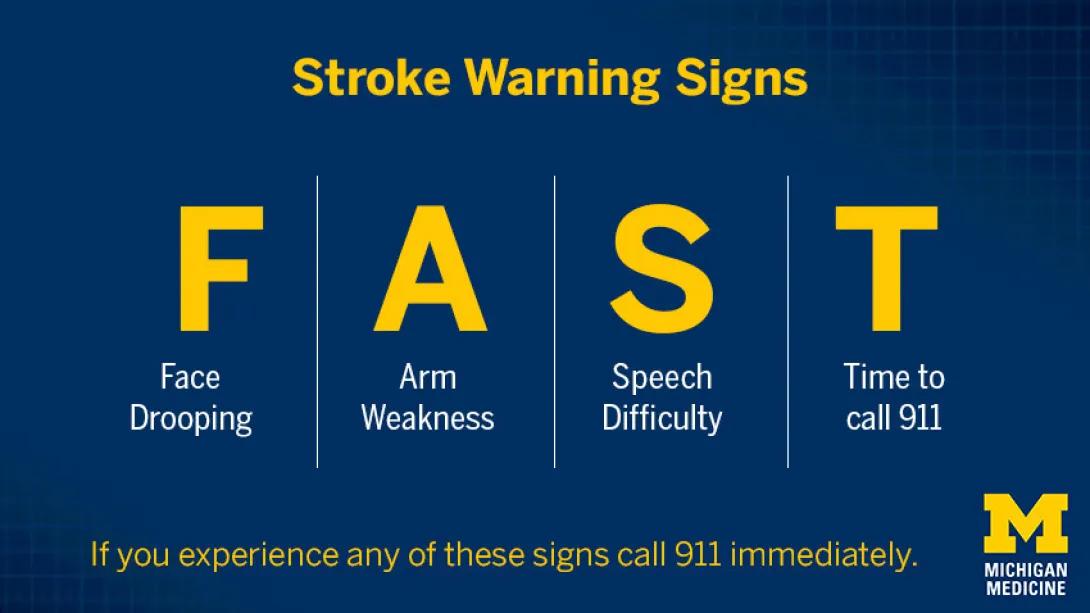
Symptoms of a TIA and stroke can be identified by remembering F.A.S.T., which refers to face, arms, speech and time. The face drooping, an arm going numb or speech that is slurred are all signs of a TIA or stroke, and timely treatment is critical.
What if you experience stroke symptoms, but they go away quickly?
McDermott: No matter how long your symptoms last, you should seek medical attention immediately. Although they may seem harmless at first, symptoms can worsen.
A confirmed TIA is a warning sign that a stoke could happen, especially in the first few days after a TIA. Do not ignore any stroke-like symptoms and to get to the emergency room right away.
What should you do if you think you're having a TIA?
Sozener: As soon as you have symptoms, you need to call 911 and get to a hospital. I would never want someone to stay at home and wonder if it's a TIA or a stroke. Even if you've had a TIA before, you can't know if new symptoms mean you're having another TIA or a stroke.
MORE FROM MICHIGAN: Sign up for our weekly newsletter
It's important to know that a TIA is an exceptionally common disease process, but many who experience a TIA don't get the therapy they need.
How do you know if you're at risk for a TIA?
McDermott: As with many conditions, the older you are (70s and 80s) the higher your risk for a TIA. But we also see younger people having TIAs, so it's important to note that TIAs are not exclusive to older populations. In addition to advanced age, other risk factors include family history, high blood pressure, smoking, an irregular heartbeat and diabetes.
What is the treatment for a TIA?
Sozener: When we see a patient with any of the symptoms described earlier, we assume they're having a stroke until proven otherwise. A patient will immediately get brain imaging done and we'll start treatment.
Depending on the patient's deficits and blood vessel blockage we may use a clot busting medication known as tissue plasminogen activator, or tPA, to break up the clot. Or we may perform an endovascular thrombectomy, a minimally invasive procedure to trap and remove the clot and restore blood flow to the brain.
Like Podcasts? Add the Michigan Medicine News Break on iTunes, Google Podcast or anywhere you listen to podcasts.

Health Lab
Explore a variety of health care news & stories by visiting the Health Lab home page for more articles.
Media Contact

Public Relations
Department of Communication at Michigan Medicine
Stay Informed
Want top health & research news weekly? Sign up for Health Lab’s newsletters today!
Featured News & Stories
Research may help better predict outcomes in kids with congenital cytomegalovirus

Michigan’s aging brains need more protection, poll shows
University of Michigan implants first-in-human Paradromics wireless brain-computer interface, designed to restore communication

Helping an employee-turned-patient overcome a brain tumor

Psychoactive substances and adverse side effects for patients with multiple sclerosis