What All Parents Should Consider Before Letting Teens Ride with Teens
More than half of parents in the national Mott Poll believe their teen has been in an unsafe situation riding with a distracted teen driver.
5:00 AM
Author |
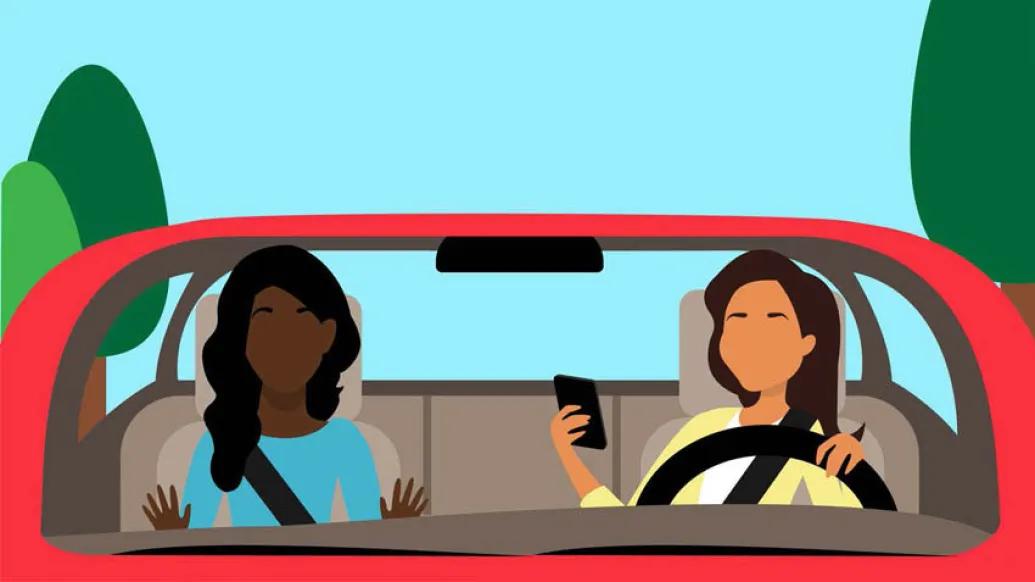
Marie Snodgrass is still getting used to seeing her oldest son behind a steering wheel after he started driver's training earlier this month. But her most nerve-racking experience as the parent of a teen came two years earlier – the first time her high schooler rode with another teen driver.
"That was even more stressful," says Snodgrass, an injury prevention program lead at the University of Michigan C.S. Mott Children's Hospital who heads the Mott Drive Smart initiative.
It's a common occurrence, with one in three parents reporting their teens are passengers with teen drivers at least once or twice a week, according to the new C.S. Mott Children's Hospital National Poll on Children's Health.
And the rite of passage causes uneasiness among many parents, with three in five believing their teen has probably been in an unsafe situation while riding with a distracted teen driver.
Snodgrass, a mother of two teenagers, says her job in injury prevention – including helping coordinate the Mott Drive Smart program that supports families of soon-to-be drivers – prepared her for the conversations she's had with her kids about safe driving.
But many parents may not think about discussing a teen's influence as a passenger.
"We put heavy focus on preparing teens to drive – but equally important is teaching them to be safety-conscious passengers," Snodgrass says. "We know that when teens drive with teens, there's a higher risk of distractions that may put them in unsafe situations.
"Teens need to know that both the driver and passenger play an important role in road safety."
Car crashes are the leading cause of death and injury for teens. More than half of teens who die in car crashes aren't behind the wheel and their chances of being in a fatal accident are much higher when there is a teen driver, according to national statistics.
We put heavy focus on preparing teens to drive – but equally important is teaching them to be safety-conscious passengers.
Snodgrass offers six tips to parents preparing adolescents and teens for carpooling with peers:
Teach them to be safety-minded passengers
Parents' top safety concerns related to teens driving with teens include distracted driving caused by loud music, cell phones or other teens in the car, the Mott Poll finds.
Snodgrass says young passengers need to be mindful of not creating distractions, such as saying "look at this!" to show the driver a video or photo. Passengers can also increase safety by offering to hold the driver's phone and respond to messages, navigate, adjust the vehicle's temperature and keep radio volume low.
"Passengers can make a big difference in reducing distractions for the driver," Snodgrass says.
Limit risks
Lack of experience can result in drivers not always reacting quickly to changes in road or driving conditions or paying as close attention to other cars or pedestrians as they should, Snodgrass says.
Parents should reduce risk to teen passengers by limiting carpooling with teen drivers in bad weather, on the highway, at night or if the driver has had less than six months of driving experience.
Empower your teen to speak up
Teens should only ride with friends they would be able to ask to slow down or reduce a distraction like loud music, Snodgrass says. If they aren't comfortable speaking up, maybe that's not a friend they're ready to ride with.
But parents may also offer teens key phrases if they're riding with a distracted driver, such as "Hey, I just want to get there alive" or "Slow down. I'm not in that big of a hurry."
"Give them the tools and words to use when they feel unsafe as passengers," Snodgrass says. "Have that conversation ahead of time so they're more prepared and know how to respond if they're in that situation."
She says parents should empower teens to advocate for their safety beyond just riding with peers – and encourage them to speak up even with parents and other adult drivers.
Consider a contract
Setting up a contract with new teen drivers or passengers is one way parents can establish safe-driving guidelines, Snodgrass says. Rules could include always wearing a seatbelt, putting phones away at the beginning of the trip, being mindful of speed, limiting distractions like loud music, not eating while driving and completing tasks such as taking off a jacket before starting the car.
For passengers, it may also include speaking up to stop unsafe activity, to always hold the driver's phone and not get in a car with a teen driver if there are already more than a certain number of passengers.
"Put your expectations in writing and talk about it. We know that when families set up clear rules and boundaries that are discussed ahead of time, kids are more likely to follow them. Anytime you're intentional as a parent it goes a long way."
Model safe driving
If you've ever read a text at a stoplight or reached down to get something from your purse while driving, your kids have probably noticed, Snodgrass says.
"From the time we turn the car seat around, our kids are watching everything we do. So model the behavior you'd want them to practice as future drivers," she says, noting that 87% of adults engage in at least one distracted driving behavior every time they drive.
Be mindful by setting up a "do not disturb" automated message on your phone, always wearing a seatbelt even for short distances and keeping your eyes on the road at all times.
"Show your kids that these are not just 'sometimes' safety rules to make them less likely to ignore a friend's distracted driving behavior. When it comes to phones, make clear that few situations are so urgent that you can't pull over and stop to respond or wait until you get there."
Keep the conversation going
Snodgrass says middle school is the right age to start talking about both driving safety and how to be a responsible passenger. De-briefing with kids after they have ridden with teen drivers is also a good habit and opportunity to discuss potential safety issues they observed and how they handled it.
"By preparing them to be good passengers we're also preparing them to be better drivers. The more aware they are of their surroundings, the less likely they are to put someone else in an unsafe situation when they are the ones behind the wheel."

Health Lab
Explore thousands of health news & research stories by visiting the Health Lab homepage for more.
Media Contact

Public Relations
Department of Communication at Michigan Medicine
Stay Informed
Want top health & research news weekly? Sign up for Health Lab’s newsletters today!
Featured News & Stories
Parents worry school traffic is a danger for kids

High dose oxytocin protocol linked to lower postpartum hemorrhage rates
4 ways to teach your teen safe driving habits

U-M-led consortium to receive up to $52 million in NIH funding to study why viral respiratory infections affect children differently
4 in 5 parents say having a baby is too expensive