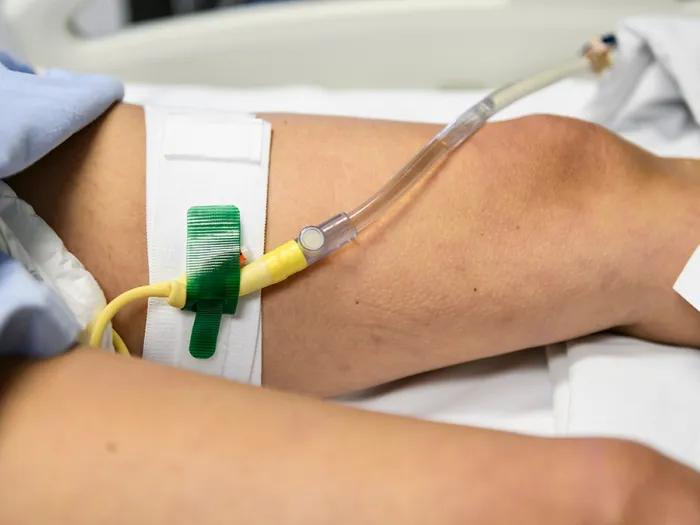
Waiting for a bed, but not for care: ED boarding study finds wide variation in handoffs
How long emergency department boarders wait to be seen by an inpatient team, including in the ED before they move to a hospital unit, could make a key difference in their care and safety
11:00 AM
Author |
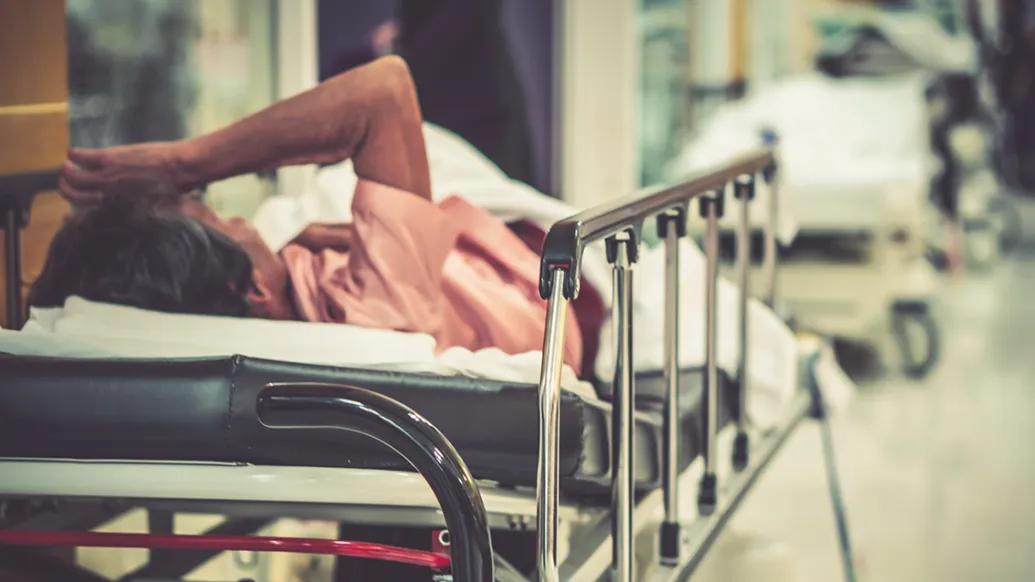
Every day across the country, patients wait hours or days in clogged emergency departments for a hospital bed to open – a well-known crisis called boarding.
Now, a new study published in JAMA looks more closely at what happens after doctors decide they’re sick enough to be admitted. The findings could have important patient safety and public policy implications.
The study finds wide variation among hospitals in how many hours such patients wait before they start receiving inpatient-quality care, even if they are still physically in the emergency department waiting to be wheeled upstairs.
Such care includes medication management, therapy assessments, and planning for where the patient will go after leaving the hospital.
In all, the study shows 23% of emergency department boarding patients, accepted for general hospital care but waiting for an available bed, wait at least 4 hours before that transition from emergency care to inpatient management.
Of these patients, many wait 12 or even 24 hours for such a handoff to a team that can focus on the testing, treatment and planning they need.
The study's co-first author is Alex Janke, M.D., M.Sc., M.H.S., an Assistant Professor of Emergency Medicine at the University of Michigan Medical School and a member of the U-M Institute for Healthcare Policy and Innovation. He has written extensively on the problem of hospital boarding of admitted patients in the emergency department.
“Emergency departments don’t control who arrives or when. Ambulances keep coming and waiting rooms fill. Emergency care is organized around that reality: rapid assessment, stabilization of life- and limb-threatening illness and injury, and the first hours of treatment, with attention always available to new patients as they come in the door,” he said.
“Inpatient care runs on a different clock, orchestrating clinical resources, pursuing diagnoses, adjusting medications, and discharge planning over days. Great care requires both, and delays in the transition from emergency care to inpatient management can be dangerous."
Janke notes that these waits for handoff to inpatient management are different from the total emergency department boarding time. The authors chose the 4-hour mark based on the Joint Commission standard, which identified emergency department boarding for more than 4 hours prior to an inpatient bed transfer as a critical patient safety issue.
Inpatient care in the ED
In recent years, hospitals have increasingly mobilized inpatient teams to assume responsibility for care while patients are still boarding in the emergency department.
This ensures that diagnosis and management can move forward before a bed is available. But these workflows have not been the subject of significant research or regulatory focus.
The new findings come from a team of emergency medicine physicians from across the country who pooled data from 56 hospitals in 17 health systems. They call themselves the Research in Emergency Systems and Quality Using EHRs Network, or RESQUE-NET.
RESQUE-NET was founded by Janke, along with the study’s co-first author Adrian Haimovich, M.D., Ph.D. of Beth Israel Deaconess Medical Center in Boston and the study’s senior author Ari Friedman, M.D., Ph.D. of the University of Pennsylvania.
“Hospital boarding in emergency departments is endemic across the U.S. right now. Health systems must have a plan for resourcing clinical teams to keep patients safe while they board.” Janke said.
“This is especially important for older patients, those with multiple chronic conditions, and those taking high-risk medications.”
Boarder handoff time as a patient safety and hospital quality factor
The study shows that ED boarders waiting for general care beds at some hospitals -- especially those that are larger, serve more patients covered by Medicaid, and/or are training grounds for new physicians -- were more likely to wait 12 or even 24 hours after the conclusion of their ED care for inpatient management.
In general, patients who are over 65, those covered by Medicare, and those with higher illness acuity were more likely to experience a prolonged delay before an admitting team assumed care.
For complex patients taking multiple medications, attention from experienced physicians and hospital pharmacists can make a major difference.
Assessments by physical and occupational therapists, which are typically done in inpatient settings and can be important for decisions about patient discharge, may be delayed for patients who are boarding for prolonged periods.
While the study isn’t representative of all the nation’s hospitals, its authors hope to inspire more research on a topic that has not received much attention.
The study focuses on emergency patients who have been admitted to general medical inpatient units, not to surgical or intensive care, or treated and sent home.
The authors even suggest that measuring ED-to-inpatient-management handoffs could be another way of addressing how well hospitals are managing the inpatient capacity crisis.
Hospital ED boarding’s public policy implications
Starting in January 2027, electronic health record systems at hospitals nationwide will start to feed anonymous data about ED patients’ travels through the system directly to the federal government’s reporting system.
Such reporting will be required for all hospitals a year later.
Boarding times and other data will be shared publicly through the federal government’s Care Compare site, and by 2030 hospitals’ performance on certain ED measures will factor into their payment rates from the Medicare program.
Some ED information is already available on Care Compare.
There is also a bill in Congress that aims to spur even more transparency around hospital bed availability and ED data tracking, with the goal of reducing hospital boarding of admitted patients in the ED further.
Other efforts to reduce ED boarding
At U-M Health’s University Hospital emergency department, Janke notes that hospitalists, general internal medicine and family medicine inpatient teams are essential to patient safety for patients boarding in the ED for prolonged periods.
“Our hospitalist teams come down to the ED and take over care for patients who are still physically with us,” he said. “That’s not a small thing to ask of a team that already has a full service upstairs, and it’s the reason boarding here is safer than it would otherwise be.”
U-M adult inpatient and observation units operate at very high capacity year-round. The Michigan Medicine Command Center, or M2C2, acts as a hub for optimizing inpatient bed use across the Ann Arbor medical campus.
But at every hospital in the U.S., admission decisions often come down to conversations between an emergency physician and an inpatient attending physician. These days, that can include a request for an inpatient team to leave the floor and come to the ED.
When that is not always possible, hospitals also need to work to ensure that ED teams have the tools and clinical support they need to manage complex patients for days after their emergency care has concluded, Janke said.
For ED boarders whose admission is based in part on their lack of ability to care for themselves, or the lack of a family caregiver or safe home environment, hospitals could do more to support in-ED assessments needed for admission to skilled nursing facilities or home-based professional care.
“Risk concentrates at these moments where one clinical team hands a patient to another. Emergency and inpatient teams work on different clocks, and they're doing this under resource constraints. What our data show is that some hospitals consistently manage that transition in under four hours, and others take more than a day, which suggests it comes down to how a hospital organizes the work, not just how full it is," said Janke.
“Where this goes well, the work has been assigned, with emergency and inpatient teams given the resources to manage these patients wherever they happen to be.”

Health Lab
Explore thousands of health news & research stories by visiting the Health Lab homepage for more.
In This Story

Alexander T Janke, MD, MHS
Assistant Professor
Related
Wait times for emergency hospitalization keep getting higher
An emergency in U.S. emergency care
Featured News & Stories
The AI is listening: Implications of machine generated clinical notes on health care

Many older adults make Medicare decisions quickly and most don’t change plans, poll finds

What’s the latest on 7-OH and kratom availability and addiction care?

Emergency room intervention pairs smartphone, telehealth counseling to reduce risky firearm behavior
Better prenatal care data could help prevent maternal complications, experts say