Wait times for emergency hospitalization keep getting higher
Study on hospital “boarding” of emergency patients reveals nationwide rise in percentage who wait more than 4 hours for a hospital bed; 5% of patients wait over 24 hours
1:04 PM
Author |
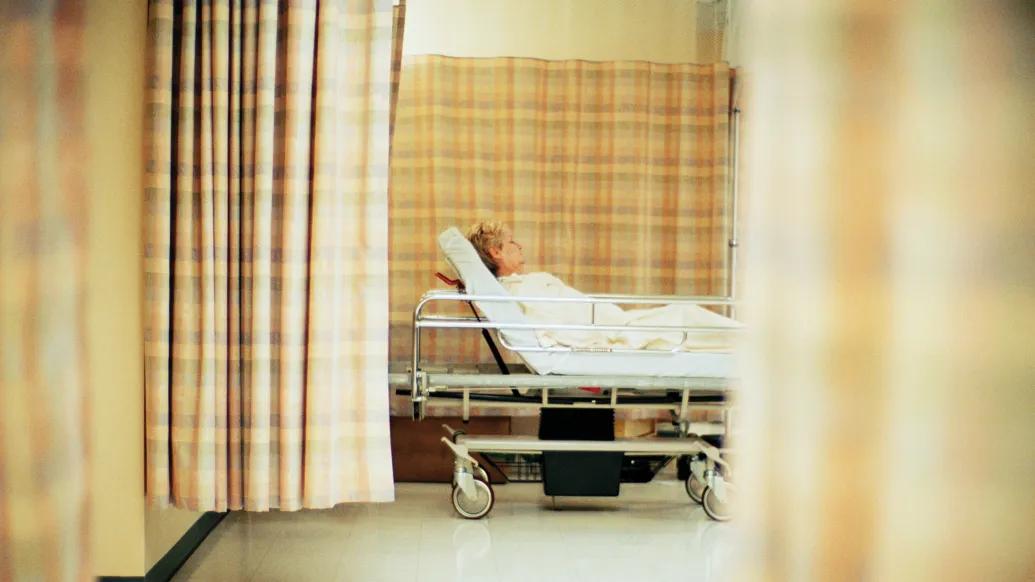
They should be in a hospital bed, getting care to help them recover from a medical emergency.
But instead, more and more Americans sick enough to require hospitalization find themselves spending hours or even days in emergency departments until a bed opens up for them, a national study shows.
The problem – called “boarding” – had already increased before the COVID-19 pandemic began, the study finds.
But it really accelerated starting in mid-2020 and has stayed high for four years – and not just in the winter months when viral infections rise and lead to more emergency hospitalizations.
In the last three years, more than 25% of all patients who came to a hospital’s emergency department during a non-peak month, and got admitted to the same hospital, waited four hours or more for a bed.
During the winter months it was closer to 35%.
National hospital standards say that no patient should board in an emergency department for more than four hours, for safety and care quality reasons.
A 24-hour or longer wait for a bed used to be rare. But the study shows that by 2024, nearly 5% of all patients admitted to a hospital from its ED during the peak months of winter waited a full day for a bed. During the off-peak months, 2.6% waited that long.
The study, published in the journal Health Affairs by a team from the University of Michigan Medical School and the Beth Israel Deaconess Medical Center in Boston, used data from 46 million emergency visits that led to hospitalizations at the same hospital.
The data came from the electronic health record systems of 1,500 hospitals in all 50 states, from the start of 2017 through the end of September 2024.
Sustained high levels of boarding, as we have seen over the past three years, suggest the health system is at risk of collapse in the event of another pandemic."
-Alexander Janke, M.D., M.H.S., M.Sc.
“This growth in long boarding times for admitted patients is the most important driver of crowded conditions and long wait times in emergency departments,” said first author Alex Janke, M.D., M.H.S., an emergency physician at U-M Health and member of the U-M Institute for Healthcare Policy and Innovation.
“Long boarding times increase patient safety risks, and delay needed care, while making it difficult for emergency departments to see new patients as they arrive,” he added. “Sustained high levels of boarding, as we have seen over the past three years, suggest the health system is at risk of collapse in the event of another pandemic.”
SEE ALSO: Suicidal teens and other kids in mental health crisis languish in ERs
By 2024, even in the months with the lowest rates of boarding patients, the percentage of patients who waited four or more hours for a bed was higher than it had been during the worst times of year in 2017 to 2019.
And while less than 5% of patients waited more than 12 hours for a bed even at the peak times in pre-COVID years, now it rarely goes below 5% even at the lowest times of year.
The peak was January 2022, when 40% of patients boarded in an ED for more than four hours, and 6% boarded for twenty-four hours or longer.
While boarding has grown nationwide and in all patient groups, the Northeast had the highest rate of boarding for 24 hours or more.
Also, boarding during peak months rose especially quickly for those aged 65 and older, those whose primary language is something other than English or Spanish, and Black patients.
“Our work highlights the need both to prepare for winter peaks and to address years-long mismatches between acute care demands and available resources,” write Janke and his coauthors Laura G. Burke, and Adrian Haimovich.
They cite a report from an ED boarding summit held last fall by the Agency for Healthcare Research and Quality, in response to a bipartisan letter from members of Congress calling on the federal government to address the issue.
AHRQ’s report notes that mismatch between emergency visits and inpatient capacity, and administrative and financial factors, are the key drivers of ED boarding.
SEE ALSO: The ‘tripledemic’ surge
The report concludes that proven solutions for ED boarding include smoothing out surgical schedules across the week to allow more rapid movement of ED patients to inpatient beds; streamlining discharges to earlier in the day and on weekends; using discharge lounges; using bed managers; and providing alternative services for patients experiencing mental or behavioral health emergencies.
The summit’s participants called for more measurement and public reporting of ED boarding, more sharing of data about bed availability within regions, help for rural hospitals including telehealth consults and transferring patients needing higher-level care, and efforts to reduce the need for inpatient behavioral health care.
AHRQ is an agency of the federal Department of Health and Human Services focused on enhancing the quality and safety of healthcare for all Americans.
U-M Health has been working to address the issue of ED boarding in its flagship University Hospital for years, even as the number of patients seeking emergency care has risen.
New short-stay units, home-based hospital-level care, and specialized providers in the triage area have all been added.
The opening of the 264-bed D. Dan and Betty Kahn Health Care Pavilion later this year will allow for more inpatient space in University Hospital for patients admitted from the emergency department.
Prashant Mahajan, M.D., M.P.H., M.B.A., professor and chair of Emergency Medicine at Michigan Medicine, emphasized the need for more studies on boarding and related issues nationwide, to inform policymaking. “We need rigorous research, to better understand this problem and identify sustainable solutions,” said Mahajan, who is also a member of IHPI.
The data for the new study came from Epic Cosmos, which pools data from hospitals that use one of the most common electronic health record systems.
Paper cited: "Hospital ‘Boarding’ Of Patients in the Emergency Department Increasingly Common, 2017–24," Health Affairs. DOI: 10.1377/hlthaff.2024.01513
Sign up for Health Lab newsletters today. Get medical tips from top experts and learn about new scientific discoveries every week
Sign up for the Health Lab Podcast. Add us wherever you listen to your favorite shows

Health Lab
Explore thousands of health news & research stories by visiting the Health Lab homepage for more.
Media Contact

Public Relations
Department of Communication at Michigan Medicine
In This Story

Alexander T Janke, MD, MHS
Assistant Professor

Prashant Mahajan, MD, MPH, MBA
Professor
Stay Informed
Want top health & research news weekly? Sign up for Health Lab’s newsletters today!
Featured News & Stories

Comprehensive DNA sequencing reveals hidden drivers of cancer
Many older adults make Medicare decisions quickly and most don’t change plans, poll finds

‘Molecular glue’ stabilizes protein that inhibits development of non-small cell lung cancer and uterine cancer

What’s the latest on 7-OH and kratom availability and addiction care?

A metabolic “switch” that could help reset scar-producing cells in scleroderma