Using virtual reality for stroke rehabilitation
The technology enhances an already existing treatment that improves limb recovery in stroke survivors
5:00 AM
Author |
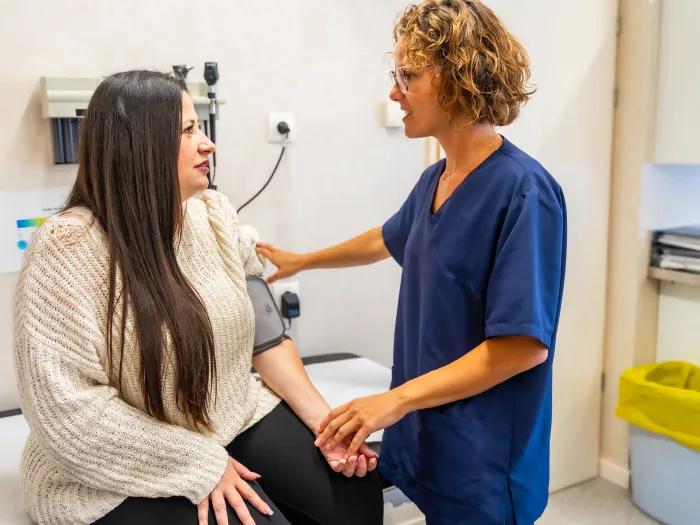
Mirror therapy rehabilitation is a technique commonly used with stroke survivors to help them regain function of their limbs that have been weakened because of a stroke.
The method consists of using visual illusion to engage the weaker limb during rehabilitation, where patients look in a mirror and watch their stronger limb complete an exercise, making it appear that the weaker limb is exercising at the same time.
The method is meant to increase and reawaken the neuroplasticity in the side of the brain that experienced the stroke and is causing the weakness.
At the University of Michigan Health, a team of researchers, led by Chandramouli Krishnan, PT, Ph.D., have been exploring an updated approach to this rehabilitation routine by adding virtual reality.
The technology, called NeuRRoVR, was created from scratch at U-M Health.
About NeuRRoVR
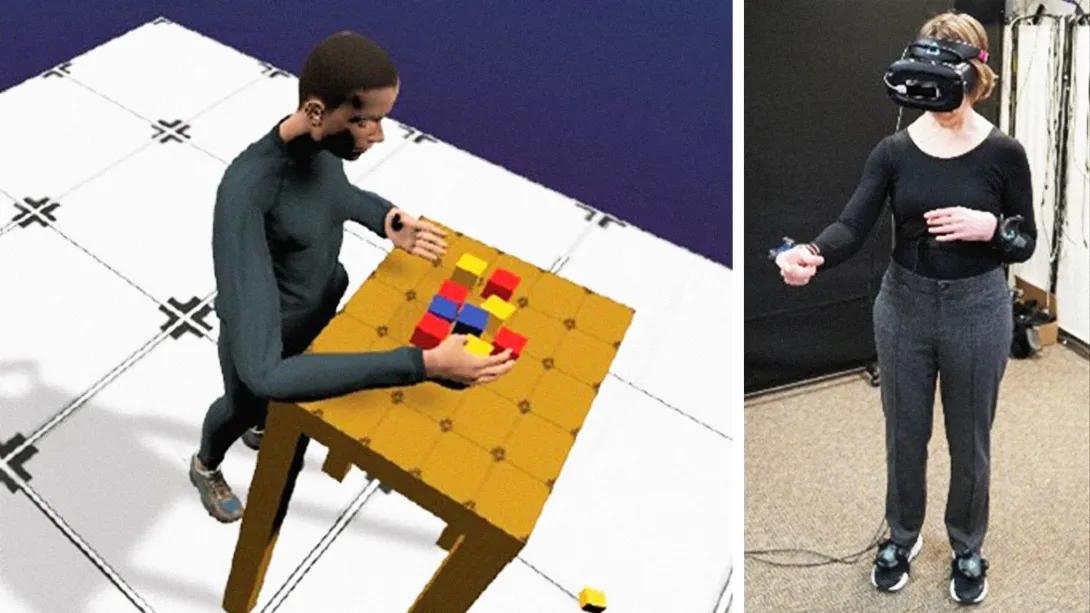
NeuRRoVR has patients use a virtual reality headset and motion sensors, placed on the body, to play different “games” that help them achieve their therapy goals.
The NeuRRoVR games can also target the weakened limb directly or require that both limbs work together to complete the movement.
Such games include one with a ball moving up and down depending on the patient's hand movements.
When you make the right movements, the ball moves up and appears green to show that it’s been done correctly.
When the patient relaxes their hand, the ball lowers.
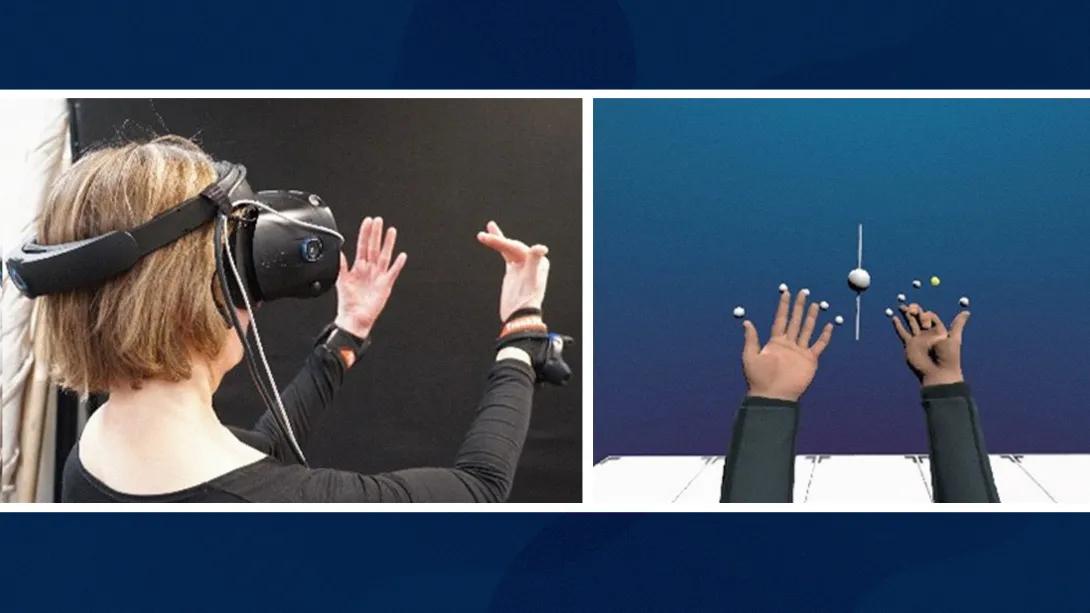
The goal is for the patient to control the ball using their hands while allowing them to see their progress through the headset.
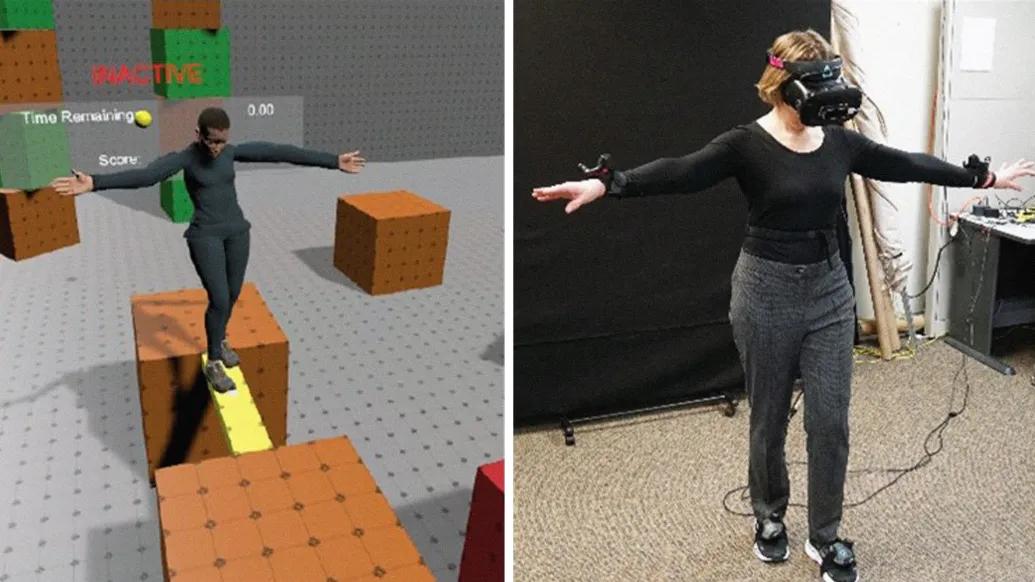
Another form of these games is one that exercises the patient’s balance.
Through the virtual reality headset, the patient will feel like they are walking on a narrow surface such as a tightrope that they need to balance to stay on.
However, the patient is safely on the ground and not at risk of falling.
Motion sensors attached to the feet will allow the patient to see their movements through the headset.
Physical therapists administering the therapy to their patients can adjust the difficulty of the game based on individual goals.
Therapists may choose to adjust what’s being shown through the headset so that it even looks like patients are doing marginally better than they are.
This helps trick the brain into placing more effort into the side of the mind that needs more neuroplasticity.
Using NeuRRoVR with stroke patients
When used with stroke survivors, the technology has helped many reach their balance and motor skill goals, as well as improve their neural connections.
“We have received positive feedback from both the physical therapists operating the virtual reality system as well as the patients who are using it in therapy,” said Krishnan.
“Patients can identify with their avatar, especially since we can make it look like them. The more the patients see the avatar as an extension of their own body, the higher chance of brain excitability there seems to be.”
For the researchers, this technology holds sentimental value, as it was pioneered by their late student colleague, Daniel Kortemeyer, who passed away in 2020.
“Daniel was very passionate about this research and using virtual reality technology to use mirror therapy to better treat patients,” Krishnan said.
“Our team is proud to honor his legacy by continuing this research and furthering the technology.”
With the technology being tested at the U-M Health Canton Health Center, the research team is focusing on expanding this technology to observe how it can be implemented into the physical therapy treatment plans for different types of patients.
While it’s known that virtual reality activities can increase brain excitability, the team wants to explore how simple versus complex exercises affect this process.
“Our team looks forward to being able to expand our research to others that benefit from mirror therapy,” said Krishnan.
“We hope that using virtual reality to aid in rehabilitation practices will become more accessible for our physical therapy teams and patients as we continue researching.”
Additional authors: Thomas E. Augenstein, Trevor A Norris, Kazandra M Rodriguez, and Edward S. Claflin
Funding/disclosures: MCubed Diamond Program, University of Michigan Rackham Research Grant
Paper cited: “Shaping corticospinal pathways in virtual reality: effects of task complexity and sensory feedback during mirror therapy in neurologically intact individuals," Journal of NeuroEngineering and Rehabilitation. DOI: 10.1186/s12984-024-01454-2
Sign up for Health Lab newsletters today. Get medical tips from top experts and learn about new scientific discoveries every week.
Sign up for the Health Lab Podcast. Add us wherever you listen to your favorite shows.

Health Lab
Explore thousands of health news & research stories by visiting the Health Lab homepage for more.
Media Contact

Public Relations
Department of Communication at Michigan Medicine
In This Story

Chandramouli Krishnan
Professor
Stay Informed
Want top health & research news weekly? Sign up for Health Lab’s newsletters today!
Featured News & Stories

A concussion expert and football father discusses why he values teamwork over zero-risk
The Questions That Shape the Future of Medicine
Spinal implant eliminates patient’s 'all-consuming' pain without need for a fusion

Michigan’s aging brains need more protection, poll shows
Timely treatment helps former baseball pro survive on-field stroke with no complications