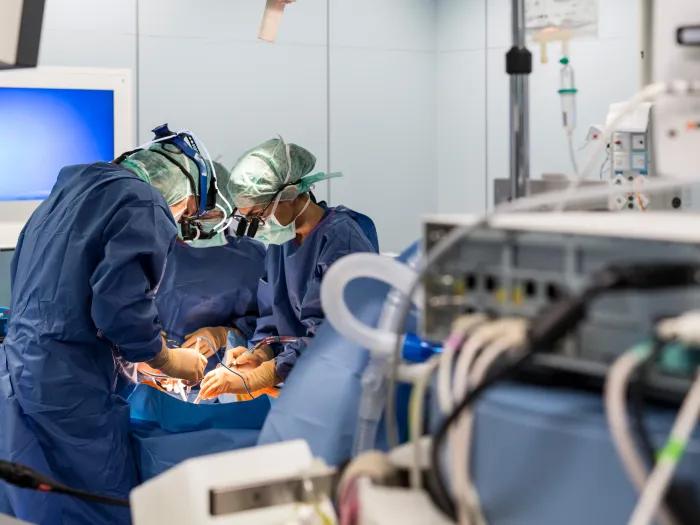
Use of greener anesthesia protects patients and the environment
The study found it reduced dangerous emissions by 50% in one year without compromising on patient safety or outcomes
5:00 AM
Author |

Globally, health care contributes significantly to overall carbon emissions.
Emissions come from a variety of sources, including waste management, single use plastics, and those related to transportation and food service.
In addition, 3% stem from inhaled agents used during anesthesia.
A study performed at Michigan Medicine reveals that the use of less polluting inhaled anesthetic agents reduced harmful emissions by 50% in one year without impacting patient safety or outcomes.
“Tens of thousands of people undergo general anesthesia at Michigan Medicine every year. Inhaled anesthetics are a natural area to pursue reductions in emissions because, as greenhouse gases, they are so disproportionately bad for the environment,” said Douglas Colquhoun, M.B.Ch.B., assistant professor of anesthesiology at U-M Medical School.
“We’ve shown that small changes in our practice lead to big changes for the environment and, importantly, no changes for the patients.”
The findings culminate from The Green Anesthesia Initiative, launched at Michigan Medicine in March 2022 aimed to reduce the use of nitrous oxide, use less environmentally harmful inhaled fluorinated ethers, and increase the use of intravenous anesthetics.
The team compared the output of CO2 equivalents, traditionally used to measure the effect of greenhouse gases on the environment, as well as the amount of anesthetic used and patient outcomes such as post-surgery nausea and vomiting, pain scores, and unintended awareness and recall of the surgery.
As part of the initiative, the department encouraged providers to reduce the use of nitrous oxide (which is 270 times more potent than carbon dioxide at warming the environment), as well as increase the use of sevoflurane, the least environmentally harmful ether, instead of isoflurane.
These changes were associated with an average decrease of more than 14 kg per case in CO2 equivalents.
There were no changes in measured depth of anesthesia, pain scores, or postoperative nausea and vomiting.
“I think the important thing that we showed was that it is possible to significantly reduce the environmental impact of anesthesia. Even beyond the study period, we reduced our emissions by a huge amount in under three years.
“We did this while modernizing our care and improving safety for patients. This is a great example of where mindful choices, technology and education all come together to make care better for our patients – both directly in the OR and in the environment in which we all live,” said David Hovord, M.B. B.Chir, clinical assistant professor of anesthesiology.
“Our individual and team efforts to save the planet are essential. The carbon emissions reduction accomplishments of anesthesiology and support teams are a point of pride at Michigan Medicine, as they are a demonstration of creativity, persistence and teamwork,” said Tony Denton, Michigan Medicine's senior vice president and chief environmental, social and governance officer.
“These impressive results show that we can redesign our long standing approaches to care without compromising patient safety, quality and outcomes. This is a great example of what we can do to reduce environmental harm and improve public health across the communities and society we serve,” he said.
“We should all be proud and grateful for this important collaboration which emphasizes Michigan Medicine's daily commitment to continuous improvement, while finding new solutions that can save our planet and lives, simultaneously.”
Paper cited: “Environmental and patient safety outcomes of a health system Green Anesthesia Initiative: a retrospective observational cohort study,” The Lancet Planetary Health, DOI: 10.1016/S2542-5196(24)00331-0
Sign up for Health Lab newsletters today. Get medical tips from top experts and learn about new scientific discoveries every week by subscribing to Health Lab’s two newsletters, Health & Wellness and Research & Innovation.
Sign up for the Health Lab Podcast: Add us on Spotify, Apple Podcasts or wherever you get you listen to your favorite shows.

Health Lab
Explore thousands of health news & research stories by visiting the Health Lab homepage for more.
Media Contact

Public Relations
Department of Communication at Michigan Medicine
In This Story

Douglas A Colquhoun, MB ChB, MPH
Associate Professor

T. Anthony Denton, JD, MHA
Senior Vice President
Chief Environmental, Social and Governance Officer, U-M Health
Stay Informed
Want top health & research news weekly? Sign up for Health Lab’s newsletters today!
Featured News & Stories
Better prenatal care data could help prevent maternal complications, experts say
Many hospitals still don’t do enough to prevent UTIs from catheters

Digital alerts support timely treatment decisions of critically ill cardiac patients

What’s changing in Medicaid and what can you do?

Study reveals the work and health insurance roller coaster millions of Americans ride