A unique patient case inspiring research
By studying Mallory's case, a 22-year-old film student is enabling investigators to examine the mechanisms behind lipodystrophy
7:00 AM
Authors |
This story was originally published on January 2, 2024.
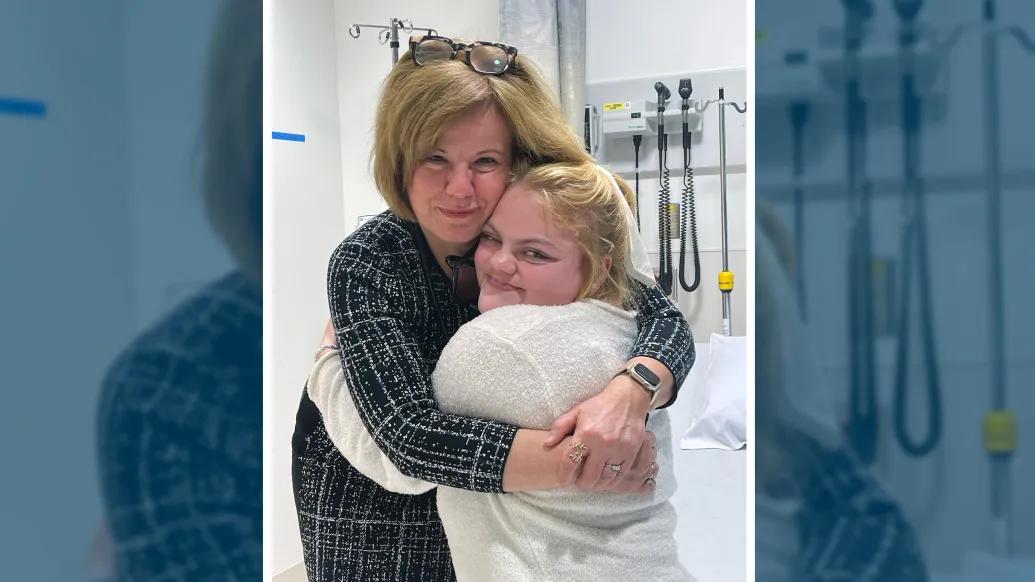
Mallory Mattison is a film student at Western Michigan University, studying in hopes of someday becoming a producer of medical documentaries.
She loves creating and editing videos, assembling puzzles and belting it out during a good round of karaoke with friends.
Mattison is also the inspiration behind critical medical research that’s supporting other patients like her.
Mattison’s case
Mattison’s story began when she was 11, when her arms and legs became very thin.
Her family didn’t know what was wrong, theorizing that perhaps Mattison, now 24, was dehydrated or wasn’t getting enough protein.
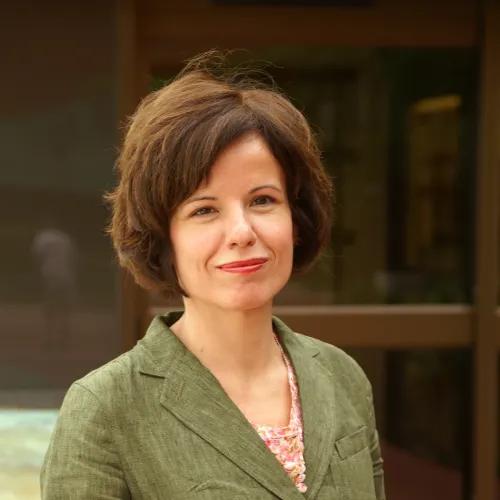
Her primary care providers referred her to an endocrinologist with Michigan Medicine, Michael Wood, M.D., who suspected the diagnosis of lipodystrophy and referred her to Elif A. Oral, M.D. at Metabolism, Endocrinology & Diabetes Clinic.
Oral has devoted her entire career to the study of lipodystrophy syndromes and is credited for bringing the first therapy approved for this condition (metreleptin- a recombinant form of the hormone leptin) to patients with lipodystrophy.
Oral describes lipodystrophy syndromes as diseases where people don't have normal fat.
They may lose fat or have a genetic reason not to develop it.
Because the hormone leptin comes from fat, people who have lipodystrophy have very low levels of leptin.
In part because of their low leptin, patients who have the condition develop diabetes with severe insulin resistance (making it very difficult to treat), and high levels of fats in their liver and blood.
Because of the high levels of fats in the blood, they may develop lots of abdominal pain or recurrent pancreatitis episodes.
In Mattison’s case, she was having pancreatic episodes that kept her in the hospital for two to three weeks at a time.
Mattison participated in a study to receive metreleptin.
Initially, this drug worked well, but then Mattison developed an antibody to metreleptin that made the drug ineffective.
At that point, the real havoc started.
Oral estimates that during her junior and senior years of high school, Mattison was spending more time in the hospital than in school.
Oral began collaborations with Regeneron to develop novel therapies for lipodystrophy and knew that a drug they were developing could assist in treating Mattison’s lipodystrophy by directly stimulating her leptin receptor to mimic the effects of leptin or metreleptin.
They took a “leap of faith,” about trying the drug with Mattison - at the time they brought the drug to her, only very early trials had been done and no humans had been treated with it for more than 12-weeks.
“We didn't really know what to expect. But we knew that we needed to do something because I couldn't spend that much time in the hospital anymore,” Mattison said.
Once the team got their approvals, Mattison began her treatment with Regeneron’s drug, which originally called REGN4461 before being given the name Mibavademab.
Thankfully, this “leap of faith” yielded desired results.
Mattison said the drug was immediately life changing.
She felt much better, her liver lost fat, her triglycerides improved, and her pancreatic episodes subsided.
“I didn't feel sick or in pain at all, and it was so nice,” Mattison said.
“I could sleep again. I felt normal. I could go back to school full time, and I felt like I didn't have this debilitating disease anymore.”
The “dream team”
Mattison’s team, who she refers to as her “dream team” (led by Oral and including researchers like Maria Foss-Freitas) found her case beneficial not just for her, but for finding answers and more treatment options for others with lipodystrophy.
Oral’s team, together with scientists at Regeneron, have since authored detailed patient centered research publications about the drug and about Mattison’s case.
“I do believe that she really helped us understand her condition and this drug better by allowing us to treat her with it. Seeing what was happening with Mattison allowed us to gain experience for effective and safe dosing in this disease,” Oral said.
I feel lucky that they picked my case specifically because this not only is a rare disease, but also a rare case."
- Mallory Mattison, patient
“This was a win-win. Our patient got access to a drug that she really needed, and a new drug development program for lipodystrophy came to life.”
Oral also mentions that this research could only be done in a place like Michigan, where investment from the Caswell Diabetes Institute enables targeted approaches to understand rare diseases and where expanded access programs help researchers like her bring very early investigational drugs to patients.
“The team is wonderful and represents a hallmark of the Michigan difference,” said Oral.
Oral also added, “This is not a cure, but an effective treatment. Our team will not stop until we reach a cure for every patient with lipodystrophy.”
In addition, the team hopes that as they learn why patients with lipodystrophy lose their fat cells, so they can gain insights about how to tackle obesity (the opposite problem) and other forms of diabetes.
“There are similarities between lipodystrophy and obesity,” Oral said.
By participating in research, Mattison enables studies that investigate the mechanisms of fat loss in her body.
She also credits her mother for supporting her through each appointment and even donating blood and tissue to help understand the basis of Mattison’s disease and to develop a treatment for her.
She’s grateful for her ability to take part in the research that will support treatments for other patients.
By participating in research, Mattison enables studies that investigate the mechanisms of fat loss in her body.
She also credits her mother for supporting her through each appointment and even donating blood and tissue to help understand the basis of Mattison’s disease and to develop a treatment for her.
She’s grateful for her ability to take part in the research that will support treatments for other patients.
“I feel really special and honored. I feel lucky that they picked my case specifically because this not only is a rare disease, but also a rare case,” Mattison said.
“The fact that they want to help me so they can help others is so cool. I'm just so happy that I get to be that first patient.”
Continuing research
Using genome sequencing, a team led by U-M and Harvard researchers found that Mattison had a genetic variant in the EBF2 gene, whose protein helps develop adipocytes, or fat cells.
The study, published in Journal of Clinical Investigation, is the first report linking EBF2 to any form of human disease.
The researchers created a mouse model that carried Mattison’s unique genetic alteration.
The model confirmed that the EBF2 variant interfered with adipocyte development, like what they saw with Mattison’s cells.
“We knew when we looked at the mouse tissue under the microscope that we had the right answer,” said Tae-Hwa Chun, Associate Professor of Internal Medicine.
“It is not every day that we can recapitulate a patient’s condition using cellular and animal models.”
The team is hopeful that they will be able to design personalized therapies for Mattison and further improve her quality of life.
They are planning to partner with the U-M Center for RNA Biomedicine, which accelerates RNA research into clinical therapies.
“It is very important to recognize the patients who can help us make the breakthroughs we hope and dream,” Oral said.
“For us, it is exciting work, and purpose, but for our patients, it is their life.”
Additional authors: Maria C. Foss-Freitas, Donatella Gilio, Lynn Pais, Eric D. Buras, Romil Kaul Verma, Melanie O'Leary, Heidi L. Rehm, Carmen Glaze, Kathryn Russell, Andre Monteiro da Rocha, Adam Neidert, Patrick Seale and Miriam S. Udle.
Funding/disclosures: NIH grant R01-DK088114 (Oral, Conjeevaram) and the Lipodystrophy Research Fund at the University of Michigan (Sopha Family, Baker Family, Rosenblum Family, White Point Foundation of Turkey). RNA-seq was partially supported by R01-DK125513 (Oral, MacDougald). Infrastructure support was provided by NIH grants 2P30DK089503, 5P30DK020572, UL1TR002240, and the Caswell Diabetes Institute. Whole genome sequencing was provided by the Broad CMG, supported by NIH grant K23DK114551, NHGRI grants UM1HG008900 and R01HG009141 (with additional support from NEI and NHLBI), and a Chan Zuckerberg Initiative grant (DAF2019-199278).
Michigan Research Core(s): University of Michigan Vector Core, the Transgenic Animal Model Core, the CyTOF Core and the Flow Cytometry Core.
Paper cited: : “EBF2 variant identified in a patient with atypical partial lipodystrophy causes adipose fibrosis and dysfunction”, Journal of Clinical Investigation, DOI: 10.1172/JCI192737
Sign up for Health Lab newsletters today. Get medical tips from top experts and learn about new scientific discoveries every week by subscribing to Health Lab’s two newsletters, Health & Wellness and Research & Innovation.
Sign up for the Health Lab Podcast: Add us on Spotify, Apple Podcasts or wherever you get you listen to your favorite shows.

Health Lab
Explore a variety of health care news & stories by visiting the Health Lab home page for more articles.
Media Contact

Public Relations
Department of Communication at Michigan Medicine
In This Story
Elif A Oral
Professor
Stay Informed
Want top health & research news weekly? Sign up for Health Lab’s newsletters today!
Featured News & Stories

Helping patients with diabetic foot disease
Unraveling the secrets behind beta cells

Examining mental health and reducing stigma in diabetes
A Wife and Mother Turned Diabetes Research Crusader
Disease Connection Answers May Exist within this Arizona Tribe