Two Big Ten schools connected by one bone marrow donation
Registering for the National Marrow Donor Program allowed a U-M Medical School alumnus the chance to save a life and connect with another Big Ten family
5:00 AM
Author |
Throughout her time as an undergraduate student and medical student at the University of Michigan, Erica Brockberg was active in Wolverines for Life, the on-campus organization focused on organ, tissue and blood donation.
While a member of the club, she made a choice in 2013 that would change her life when she decided to register to become a bone marrow donor.
“There was a lecture that had a panel of patients that had been recipients of bone marrow transplant and shared the impact of the donation on their lives,” said Brockberg.
“I felt inspired by the stories and went to the NMDP’s table at the event to register.”
Brockberg said the registration was simple, just a swab of her cheek and confirming her name and birthday.
While the test was simple, it would be 2021 before Brockberg got the call to donate.
Brockberg’s donation
Towards the end of her medical school career, Brockberg was contacted by the National Marrow Donor Program, also known as the NMDP, asking if she was still willing to donate her bone marrow.
All they could tell her about the recipient was that Brockberg was not only their perfect match, but their only match.
“There was no hesitation, I immediately said yes and began figuring out the next steps,”
she said.
“If I was this person’s chance at life saving care, how could I say no? I felt honored to be able to do this for whoever this person was.”
The NMDP was created in 1987 and continues to play a vital role in identifying potential bone marrow donors for patients worldwide.
There are currently over 11 million individuals available for testing as donors in the NMDP registry.
Despite the size of this registry, it is often hard to find a suitably matched donor for many patients in need of a transplant.
For Brockberg, the donation process took only a day of her time and felt relatively simple.
“There are two ways to extract bone marrow from a donor, either through a procedure called a bone marrow harvest or through a process called a peripheral stem cell collection,” said Gregory Yanik, M.D., a pediatric hematologist and oncologist at University of Michigan Health who treats patients needing bone marrow transplants.
“In a bone marrow harvest, bone marrow is extracted directly from the hip bone while a patient is under anesthesia. The entire procedure takes approximately two hours to collect. With a peripheral stem cell collection, bone marrow stem cells are directly ‘siphoned and centrifuged’ from the blood stream of the donor and with the remaining blood given back to the donor in the moment.”
Brockberg was told that due to the nature of her recipient’s condition, it would be best to extract the marrow from her hip bones while under anesthesia.
“I felt like a celebrity as soon as I arrived at University of Michigan Health for the procedure,” she said.
“All of the staff were so kind, excited for me and kept expressing gratitude that I had said yes to being a bone marrow donor.”
Brockberg was worried that the procedure would leave her unable to participate in her obstetrics and gynecology residency at the time for a few days but was pleasantly surprised when she only experienced mild pain for a couple of days after.
“It felt like I slipped and fell on ice, but it was manageable with over-the-counter pain medication,” she said.
A year after the procedure in 2022, Brockberg was contacted by the NMDP asking for consent to share her name and contact information with the recipient of her bone marrow.
“I said yes again, you don’t get many chances to save a life, and I was curious to know how my recipient was doing,” she said.
At the same time, the Morrison family in Lincoln, Nebraska was told by the NMDP that they had the choice to contact the person who donated bone marrow to their six-year-old daughter, Julia.
Julia’s journey
Julia was diagnosed with severe aplastic anemia at five years old in February 2021.
Her bone marrow had stopped producing the cells that she needed to live.
After her diagnosis, she began receiving treatment at Children’s Nebraska that included blood transfusions, platelet transfusions, weekly checkups and more.
By November that year, her doctors determined she would need a bone marrow transplant if her blood cells were going to get stronger.
The Morrison family had Julia’s two older sisters tested in addition to her parents to see if anyone was a match for Julia with negative results.
According to Yanik, siblings have only a 25% chance of being a match with their respective siblings.
“We were told we would need an outside donor and the NMDP would go through their registry,” said Tyler Morrison, Julia’s father.
“The waiting was the worst part, you are hoping there is someone out there who has not only registered with the NMDP, but who is still able and willing to donate.”
When the call came that there was a match for Julia, the Morrisons were overwhelmed with joy, gratitude and hope.
“Getting individuals to enroll in the NMDP’s registry is the key to success,” said Yanik.
“For blood disorder cases like Julia’s, the NMDP registry gave her the best chance to identify a donor and then begin the healing process through her transplant.”
The day of the procedure came, and Julia was ready to receive her cells.
“I remember feeling really tired before and falling asleep soon after it started,” said now ten-year-old Julia.
“When I woke up, I looked in the mirror and I was pink! I never looked pink.”
After the bone marrow transplant, Julia’s health steadily improved.
That next year she spent less time at the hospital and more time at home being a kid.
When the Morrisons learned that Julia’s donor was open to being contacted they quickly began the task of reaching out.
“I searched the name we got from the NMDP on Facebook and found Erica’s profile,” said Tyler Morrison.
“I immediately sent her profile to my wife and told her this was Julia’s donor. It felt so surreal.”
Julia couldn’t wait to reach out to her donor and meet who had given her their bone marrow.
“Even though I didn’t know who it was, I knew they would be the best person in the world,” she said.
Forming a connection
Jen Morrison, Julia’s mother, sent an initial email to Erica that included an update on how Julia was doing after her transplant and many photos of the family.
“Seeing that email I knew they were a special family and that I had to meet them,” said Brockberg.
“It was amazing to see the photos of Julia before and after her transplant.”
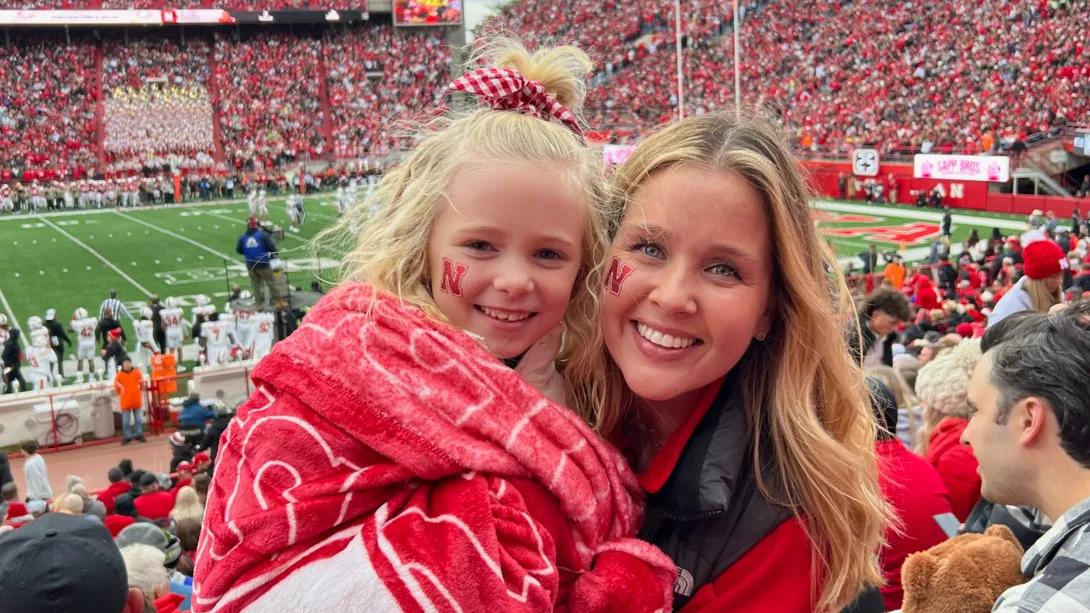
The two families kept in touch and the Morrisons invited Brockberg and her family to not only come stay with them in Nebraska but attend a Cornhuskers game as well.
“After having done all 10 years of schooling at U-M and being a season ticket holder for football that whole time, I feel pretty certain that U-M fans are the best,” said Brockberg.
“However, I have to say that the Cornhusker fans have a rivaling passion for their team and were welcoming to my family.”
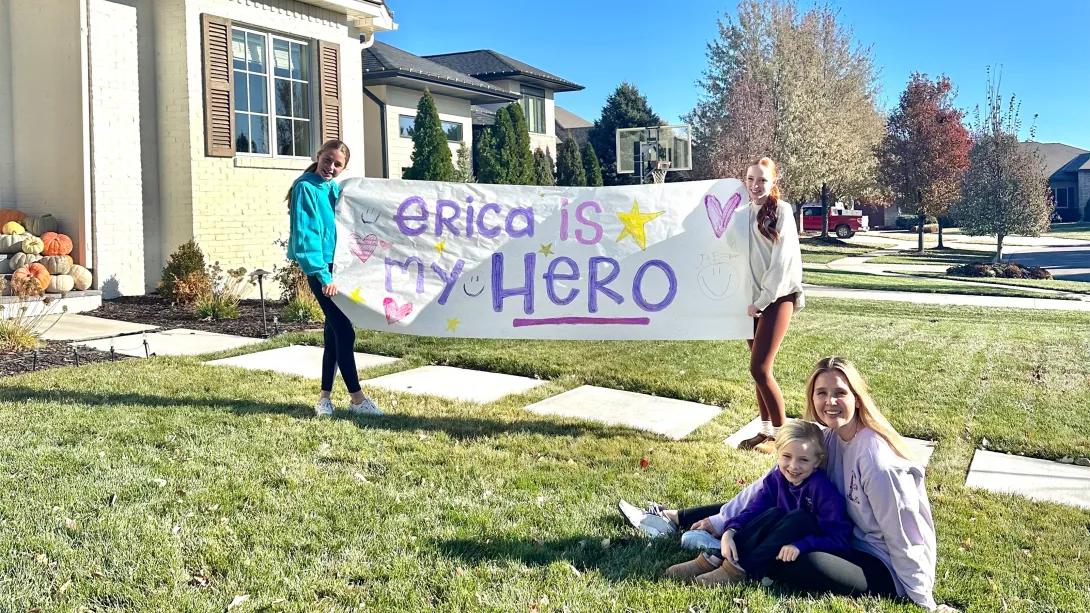
The Morrisons have also had a chance to visit Brockberg and her family in Michigan, where they took trips to Ann Arbor, Mackinac Island and the Brockberg’s cabin up north.
“Michigan was really cool,” said Julia.
“I loved getting to ride bikes around Mackinac Island and seeing the Grand Hotel.”
While keeping in touch, the families have also worked to spread awareness about bone marrow donation.
On Saturday, September 20, 2025, the families will be highlighted during the U-M versus University of Nebraska football game in Lincoln, Nebraska to bring awareness to bone marrow donation.
“If I got the call again asking to donate, I would do it in a heartbeat,” said Brockberg.
“There are so many children and adults like Julia waiting for the call saying they have a bone marrow donor match,” said Tyler Morrison.
“By increasing the amount of people on the bone marrow registry, we increase the amount of people that can get their lifesaving match.”
To learn more about how to register to donate bone marrow, visit Wolverines for Life.
Sign up for Health Lab newsletters today. Get medical tips from top experts and learn about new scientific discoveries every week.
Sign up for the Health Lab Podcast. Add us wherever you listen to your favorite shows.

Health Lab
Explore thousands of health news & research stories by visiting the Health Lab homepage for more.
In This Story
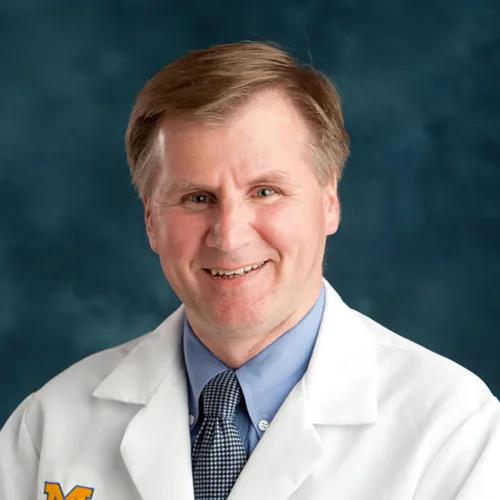
Gregory Anthony Yanik, MD
Clinical Professor
Featured News & Stories
Advancements and trends in lung transplantation
State of Michigan allows tax credit for private employers of living organ donors
Social, financial barriers linked to reduced treatment for dangerous blood clots

The Future of Cell and Gene Therapies
12-year-old shares journey with sickle cell anemia on Capitol Hill