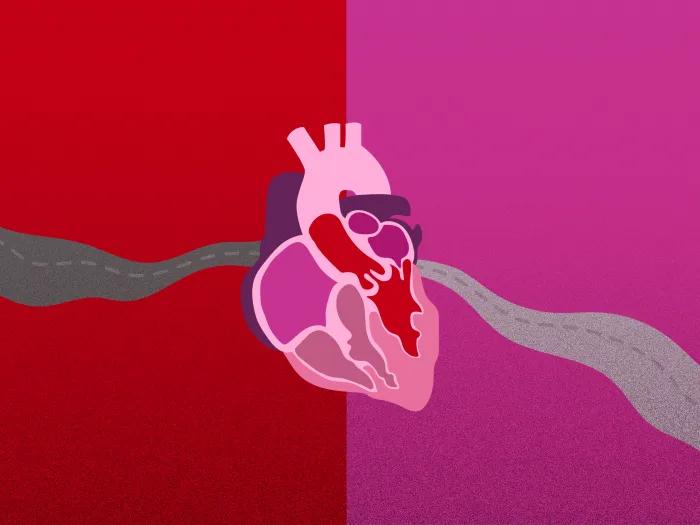
Treating Hypertrophic Cardiomyopathy with Collaborative Care
A complex case required a Michigan Medicine care team to help one patient recover and realize an improved quality of life.
1:00 PM
Author |

Joe Giammarinaro's heart issues began in 2001 when a routine physical exam by his primary doctor revealed a heart murmur.
MORE FROM MICHIGAN: Sign up for our weekly newsletter
"I had no symptoms related to the murmur, but an echocardiogram showed I had mitral valve regurgitation and hypertrophic cardiomyopathy (HCM)," recalls Giammarinaro, who was 46 at the time. "I was put on blood pressure medication and felt fine for nearly 10 years, with regular doctor appointments to monitor my condition."
It wasn't evident then that he would one day require a team of experts and surgery.
In 2012, Giammarinaro noticed he was becoming fatigued and out of breath during his regular walks. He was referred to William Armstrong, M.D., a cardiologist at the University of Michigan Frankel Cardiovascular Center.
Giammarinaro's condition turned out to be far more complex than that of a typical HCM patient, says Armstrong, who would bring together experts from a variety of disciplines for the case.
Symptoms of hypertrophic cardiomyopathy
HCM is a congenital disease in which the heart muscle is abnormally thick. This thickening reduces the inside of the left ventricle, preventing it from holding enough blood.
The ventricle walls might also become stiff, making it more difficult for the ventricle to fill with blood. This typically increases blood pressure in the ventricles and blood vessels of the lungs.
The heart's electrical signals are also often disrupted in patients with HCM, leading to an irregular heartbeat, or arrhythmia. While rare, some people with hypertrophic cardiomyopathy experience arrhythmias that can cause sudden cardiac arrest.
Some HCM patients have no signs or symptoms, while others experience symptoms that may include:
• Chest pain
• Dizziness
• Fainting, especially during exercise
• Fatigue
• Heart palpitations
• Lightheadedness, especially with or after activity or exercise
• Shortness of breath with activity or after lying down
Surgery and strength
Giammarinaro didn't realize hypertrophic cardiomyopathy ran in his family. He discovered his grandmother had been diagnosed with the genetic disease years earlier.
Also a pressing issue: mitral valve regurgitation, which occurs when the valve doesn't close tightly, allowing blood to leak back into the upper chamber of the heart rather than flowing forward.
His mitral valve troubles, common among HCM patients, were further complicated by atrial fibrillation, a type of heart arrhythmia, and by a low ejection fraction, which represents the amount of blood being pumped from the heart.
When his ejection fraction was found to be low, Giammarinaro recalls, "Dr. Armstrong told me: 'It's time for surgery.'"
SEE ALSO: What You Should Know About Counseling and Testing for Genetic Heart Disease
Giammarinaro's open-heart procedure was performed in February 2015 by Frankel Cardiovascular Center surgeon Francis Pagani, M.D., who repaired the mitral valve and performed a maze procedure, or surgical ablation — which uses various methods to create scar tissue to block abnormal electrical signals causing the arrhythmia.
Pagani also implanted a pacemaker to ensure a steady heartbeat and cleared a valve obstruction.
Finally on the road to recovery, Giammarinaro experienced a setback with an episode of arrhythmia in June 2016, which required a minimally invasive catheter ablation performed by Frankel Cardiovascular Center electrophysiologist Aman Chugh, M.D.
Through it all, Giammarinaro remains grateful for the care he received and for an improved quality of life.
"The U-M team did amazing work on my heart," he says. "Because of them, I'm walking outside again and loving the warm weather. It's great to have my quality of life back."

Health Lab
Explore thousands of health news & research stories by visiting the Health Lab homepage for more.
Media Contact

Public Relations
Department of Communication at Michigan Medicine
Stay Informed
Want top health & research news weekly? Sign up for Health Lab’s newsletters today!
Featured News & Stories

Digital alerts support timely treatment decisions of critically ill cardiac patients

Is the United States Lagging Behind Europe in Memory Improvement?

Reducing infections after heart surgery could save Medicare $441 million per year
Young father survives aortic dissection after delayed diagnosis
C.S. Mott Children’s Hospital first in country to implant expandable heart valve during FDA review phase