Treating arthritis of the hands
Pain in your hands, wrist and fingers can be unbearable, but a doctor says you don’t have to live in agony
5:00 AM
Author |
This story was originally published on March 29, 2022 and was updated on March 19, 2026.
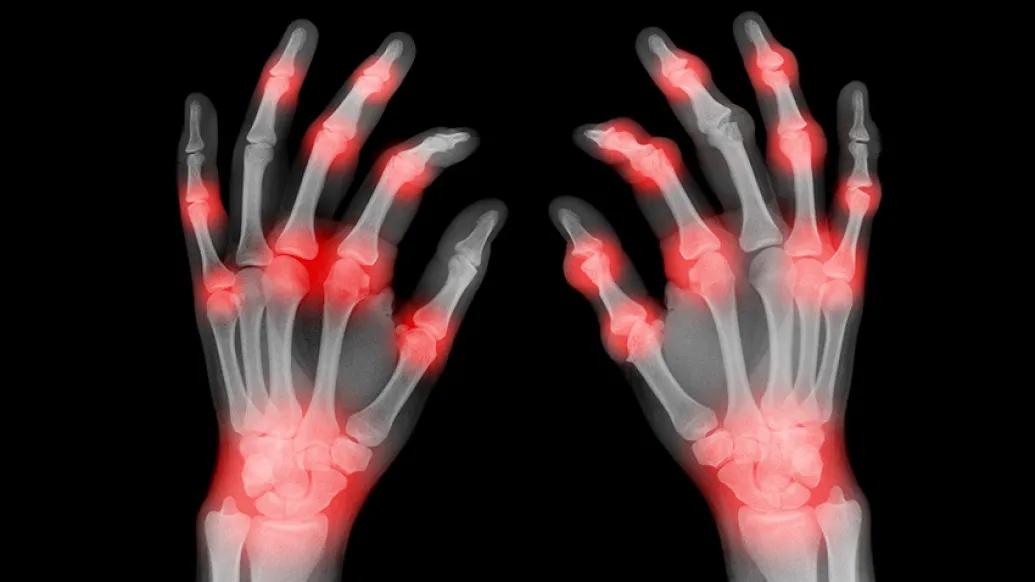
Aches and pains in your hands or wrists, or sore, swollen fingers could signal a condition known as arthritis.
But you don't have to live with the pain, says Kevin Chung, M.D., Chief of Hand Surgery and Director of the Comprehensive Hand Center at University of Michigan Health.
There are three common types of arthritis of the hands, wrist and fingers.
- Osteoarthritis, also known as degenerative joint disease, is a condition in which the smooth, protective cartilage on the ends of joint bones begins to break down. Eventually, the bones become exposed and start to rub together. Osteoarthritis typically happens as a person ages. According to the Arthritis Foundation, approximately half of all women and one-quarter of all men will experience pain related to osteoarthritis by the time they reach the age of 85.
- Rheumatoid arthritis is an autoimmune and inflammatory condition in which the immune system attacks the tissue lining around a joint that produces lubrication to help the joint move smoothly. This causes the joint to become tender and painful to move. Individuals diagnosed with rheumatoid arthritis my be genetically predisposed to the condition, which researchers believe is activated by an environmental trigger such as a virus or bacteria or by physical or emotional stress.
- Post-traumatic arthritis is a type of osteoarthritis caused by joint injury or trauma.
"Oftentimes, we see patients with a broken bone or torn ligament in the hand or wrist that they weren't aware of," said Chung.
Another cause of post-traumatic arthritis is the overuse of a joint.
"Much of our population has a job that requires repetitive work with their hands," noted Chung, who treats many such patients.
All types of arthritis can cause pain, swelling and stiffness anywhere in the body, but when it affects the hands, wrist or fingers, it can be particularly difficult, preventing you from doing daily activities.
In the most severe cases, arthritis can cause loss of function.
"Individuals often come to the Comprehensive Hand Center when their hands or wrists hurts, or when their fingers become crooked. The pain they experience can prevent them from doing regular activities, keep them awake at night and even cause deformity and disability," said Chung.
What are arthritis symptoms?
Chung recommends anyone experiencing symptoms of arthritis first consult with a primary care physician.
"Your primary care doctor will order an X-ray or lab tests to determine if your symptoms are related to arthritis."
Symptoms may include:
- Swelling in and around joints
- Pain and stiffness in joints
- Warmth in joints
- Decreased range of motion
What are the treatment options for arthritis?
A primary care physician will typically prescribe medications, including anti-inflammatory medications or cortisone injections, lifestyle changes or splinting/bracing.
If these minimal approaches aren't effective, or if medication stops working, a referral to a specialist at an experienced hand center such as the U-M Health Comprehensive Hand Center is typically the next step, says Chung.
"The U-M Health Comprehensive Hand Center offers non-surgical treatment options for our patients, including hand therapy with our very experienced team," said Chung.
If the pain becomes unbearable, surgery may be the next step.
Surgeons at the Comprehensive Hand Center are nationally known for their advanced training and extensive expertise.
"We use a variety of surgical techniques, depending on the severity of the condition," said Chung.
This includes removing inflammatory tissue, inserting a tissue cushion to eliminate bone-on-bone contact, joint fusion or joint replacement.
"We provide state-of-the-art treatment, novel surgical techniques and a decision-making process based on scientific data. Our surgeons are complemented by experienced hand therapists specially trained in all hand surgery conditions as well as expert management of the most complex hand issues following surgery," said Chung.
"Our involvement in leading research initiatives gives patients access to surgical options not available at other centers, including computer-assisted and minimally invasive techniques," said Chung.
"Our goal with surgery is to improve function and eliminate pain so patients can get back to enjoying their lives."
Like Podcasts? Add the Michigan Medicine News Break on iTunes, Google Podcasts or anywhere you listen to podcasts.

Health Lab
Explore thousands of health news & research stories by visiting the Health Lab homepage for more.
Media Contact

Public Relations
Department of Communication at Michigan Medicine
Stay Informed
Want top health & research news weekly? Sign up for Health Lab’s newsletters today!
Featured News & Stories
Rethinking how clinicians learn to feel disease

Advancements and trends in lung transplantation

Lung transplant recipient stays active climbing stadium steps and more post-transplant

Texas man walking on ‘new legs’ after complex vascular procedures

Kidney transplant recipient celebrates 10 year anniversary at Transplant Games