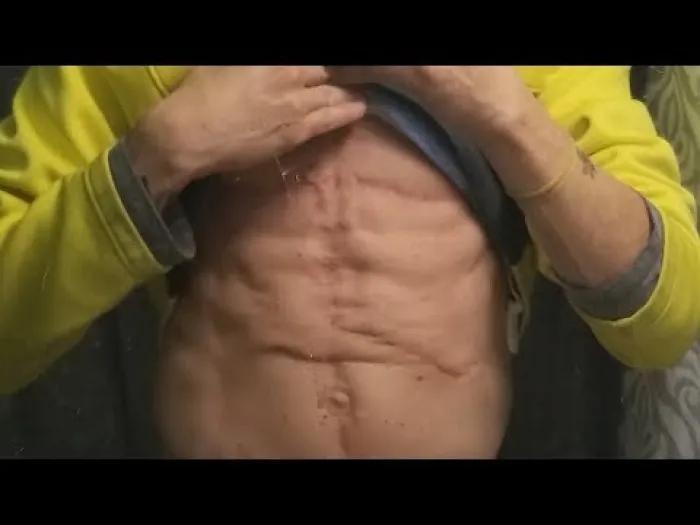
From transplant to skydiving, a young liver recipient finds new strength
Skydiving helped Nicholas Derr step outside his comfort zone
1:00 PM
Author |
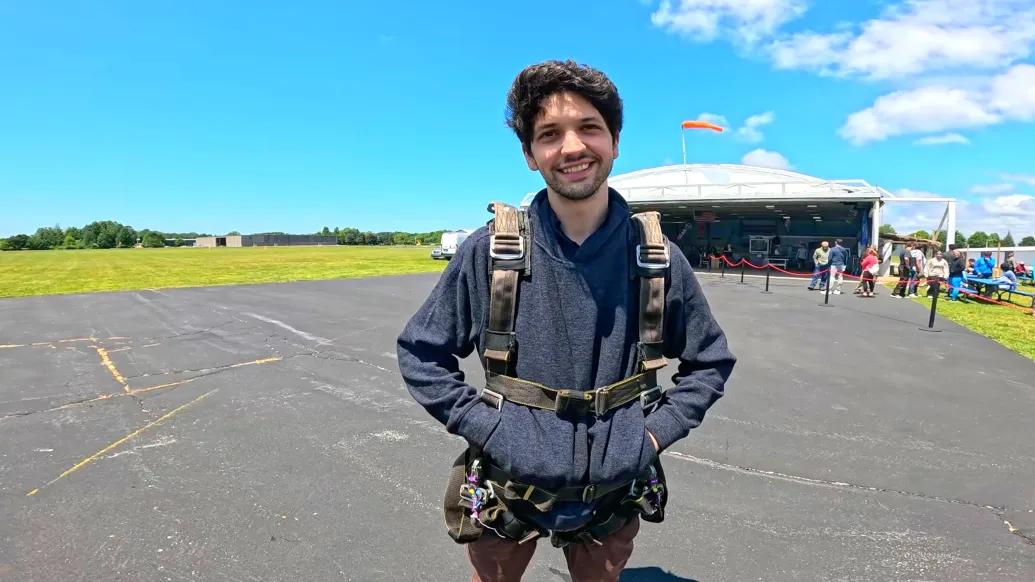
At 29 years old, Nicholas Derr doesn’t know many people his age who have had a liver transplant.
For years, that made it difficult to talk about his experience.
Even after undergoing a successful transplant in 2024, Derr shared his journey only with close family and friends.
National data shows approximately 22% of patients on the liver transplants waitlist are between ages of 18 to 34, while only 7% of liver recipients are in that age group.
As Derr recovered, he began looking for ways to challenge himself both physically and emotionally. He rode his bike, lifted weights -- and eventually decided to go skydiving.
The leap became more than an adventure. It helped Derr break a pattern of self isolation and find the confidence to share his story.
Searching for answers
Derr’s path to transplant began in high school when he contracted mononucleosis and became very sick for about a week. Although his initial symptoms eventually improved, his extreme fatigue persisted.
“I knew something wasn’t right, I felt exhausted all the time,” he said. “I saw my primary care doctor who ordered bloodwork to get a better idea of what was going on inside my body.”
The results showed his liver was struggling.
About a year later, he was diagnosed with extrahepatic biliary dilation of the common bile duct. A liver biopsy also showed inflammation and scarring around his larger bile ducts, leading to a diagnosis of primary sclerosing cholangitis.
“It’s unlikely that having infectious mononucleosis was the cause of Nicholas’s decline in liver function,” said Pratima Sharma, MBBS, M.S, a Professor of Medicine and Derr's Transplant Hepatologist at the University of Michigan Health Transplant Center.
“The work up at that time revealed that Nick had extrahepatic biliary dilation. He was consistent with a type I choledochal cyst, a balloon-like dilation of common bile duct. He also had liver biopsy with inflammation and scarring around larger ducts favoring a diagnosis of primary sclerosing cholangitis.”
Derr began taking medications to keep his bile ducts clear. Although the treatment helped, it wasn’t a lasting solution.
He continued to experience periods of jaundice, a yellowing of the skin and eyes as well as infection of bile ducts called cholangitis due to narrowing of his bile ducts.
“I always felt self-conscious when the jaundice came, I tended to isolate myself more during those periods,” said Derr. “When the jaundice was gone though, it was out of sight out of mind.”
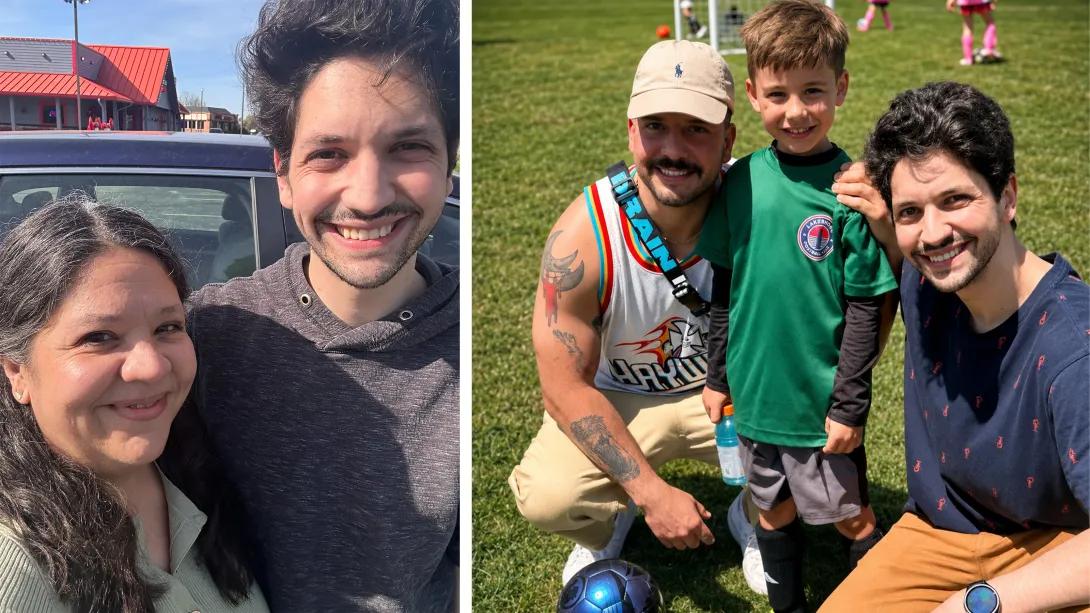
Living with a diagnosis
As medications became less effective at treating the bile duct blockages, Derr’s care team recommended endoscopic retrograde cholangiopancreatography, or ERCP about every six months.
During this procedure, clinicians treat narrowed or blocked bile ducts to improve bile flow.
“I regularly underwent these procedures for nearly five years,” he said. “I just thought this is how it would be for the rest of my life and I accepted that.”
By May 2023, the procedures were becoming less effective. Derr was also becoming jaundiced more often, deepening his desire to withdraw from others. His care team determined that a liver transplant was his best option.
“I wasn’t sure how to react when they told me I needed a transplant,” said Derr. “But I was ready to not have jaundice anymore.”
Derr was listed for a transplant in May 2023. In January 2024, he received a call from U-M Health.
A deceased donor liver was available.
Beyond his comfort zone
The transplant was successful, and Derr’s care team was pleased with the results.
“The care team at U-M Health was excellent,” he said. “After my transplant, I needed a couple of rounds of hemodialysis to wake up my kidneys. The team was very helpful at guiding me through this process.”
As he regained his strength, Derr began trying physical activities that had previously felt challenging due to fatigue.
But one challenge remained: breaking the habit of isolating himself. Derr knew he needed to do something far outside his comfort zone.
He decided he wanted to try skydiving.
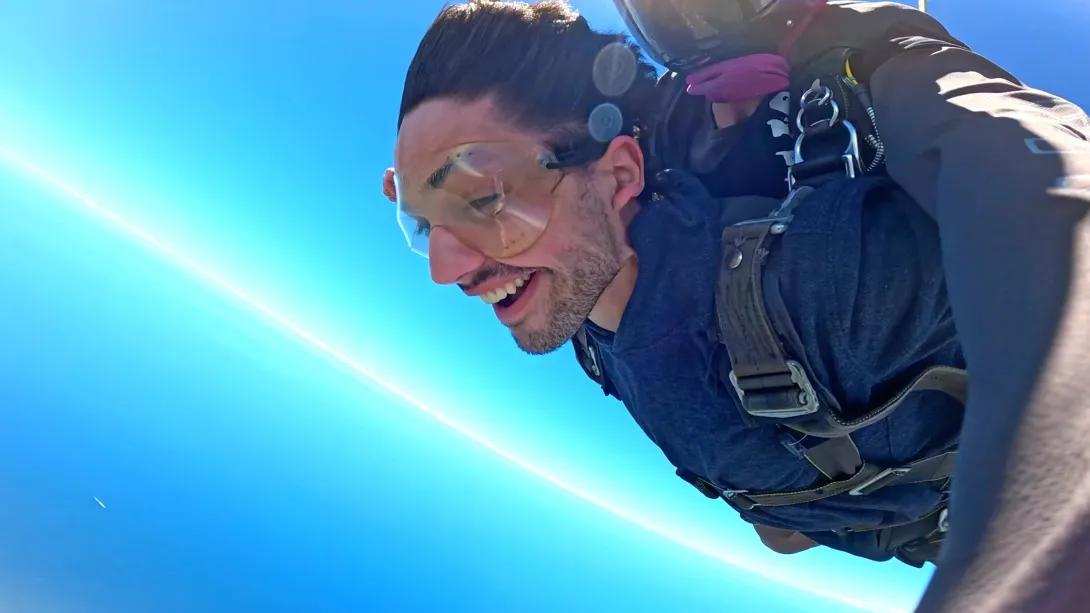
After discussing the plan with his transplant and primary care teams, he learned they had no transplant specific concerns beyond the risks associated with skydiving itself.
“For the most part, Nicholas can expect to live a normal life as a person in their late 20s, with some important considerations related to his transplant, should,” said Sharma who is the lead author on recent guidelines published by the American Society for the Study of Liver Diseases and the American Society of Transplantation providing best practice recommendations for preventative and disease specific management to help liver transplant patients live a full and healthy life after transplant.
“Having excellent collaboration between the transplant team and primary care physicians helps improve transplant outcomes and supports a positive quality of life.”
Derr’s decision to skydive even created an inside joke with his transplant social work team. He would be “skydiving for all liver transplant recipients”.
New horizons
For Derr, skydiving offered an unexpected parallel to transplantation.
“Skydiving was a bit like having a transplant,” said Derr. “Both can appear scary from the outside but in reality, you have a team there to support you. It’s important that you trust the team to help you have a better experience both physically and mentally.”
Derr encourages others facing a transplant, especially young adults, to lean on the people around them and consider sharing their experience.
“It’s hard to go through something like this so young and it can feel challenging to explain it to your peers,” he said.
“Opening up about your experience might not only help your transplant journey, but others as well.”
Additional authors: Manhal Izzy from the Department of Medicine, Vanderbilt School of Medicine, Nashville, Tennessee, USA. Marwan S. Ghabril from the Department of Medicine, Indiana University School of Medicine, Indianapolis, Indiana, USA. Marina Serper from the Department of Medicine, University of Pennsylvania School of Medicine, Philadelphia, Pennsylvania, USA. Virginia C. Clark from the Department of Medicine, University of Florida, Gainesville, Florida, USA. Michael G. Ison from the Department of Medicine, Northwestern University Feinberg School of Medicine, Chicago, Illinois, USA. Bilal Hameed from the Department of Medicine, University of California School San Francisco, San Francisco, California, USA. Michael Volk, Department of Medicine, Baylor Scott and White Health, Temple, Texas, USA. Robert S. Brown from the Department of Medicine, Weill Cornell Medical College, New York, New York, USA. Abhinav Humar from the Department of Surgery, University of Pittsburgh Medical Center, Pittsburgh, Pennsylvania, USA. Paul Martin from the Department of Medicine, Cedars-Sinai Medical Center, Los Angeles, California, USA.
Paper cited: “AASLD AST Practice Guideline on adult liver transplantation: Diagnosis and post-transplant management of non-graft-related complications,” Liver Transplantation. DOI: 10.1097/LVT.0000000000000785
Sign up for Health Lab newsletters today. Get medical tips from top experts and learn about new scientific discoveries every week.
Sign up for the Health Lab Podcast. Add us wherever you listen to your favorite shows.

Health Lab
Explore thousands of health news & research stories by visiting the Health Lab homepage for more.
Media Contact

Public Relations
Department of Communication at Michigan Medicine
In This Story
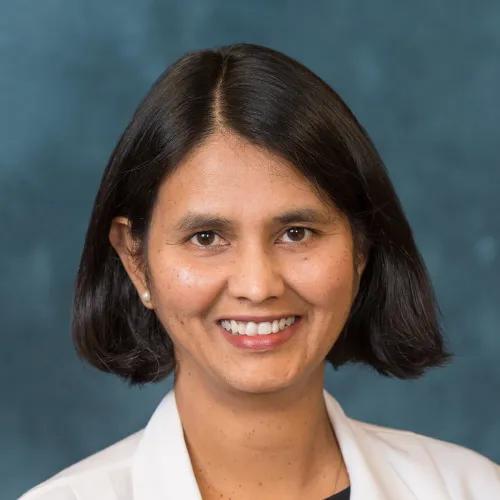
Pratima Sharma, MD, MS
Professor
Related
Doctors perform first liver transplant in Michigan for colon cancer
University of Michigan Health Liver Transplant Program Earns Top Five National Ranking for Transplant Access
Stay Informed
Want top health & research news weekly? Sign up for Health Lab’s newsletters today!
Featured News & Stories
University of Michigan Health Liver Transplant Program Earns Top Five National Ranking for Transplant Access
How Quality Improvement Supports Clinician Well-Being

Liver transplant bonds 3 Michigan families
LaKendra’s Michigan Answer: Liver transplant
Saved by a Liver Transplant, Former Soccer Player Looks Forward