Testimony: High Drug Prices Have ‘Enormous Human Cost’
Executives from Valeant Pharmaceuticals testified before a Senate committee Wednesday regarding the company’s pricing practices. A U-M physician told his patients’ side of the story.
4:00 PM
Author |
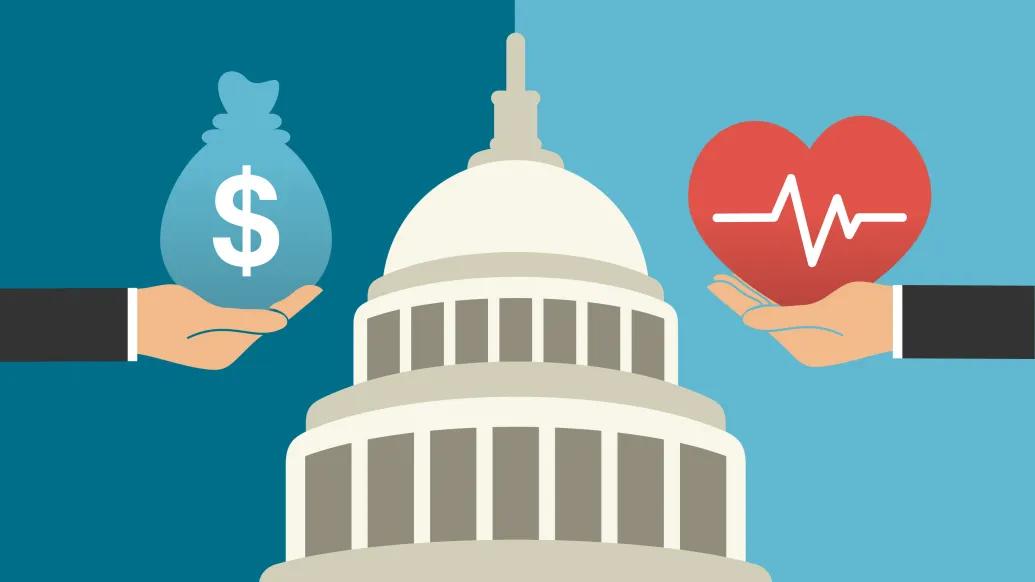
A lucrative pricing strategy for pharmaceutical companies has increased the workload for doctors — and the burden for patients.
Fred Askari, M.D., Ph.D., for example, is using more clinic staff time to help patients figure out how to manage 3,000 percent price increases on their prescriptions, a change he says is not without consequences.
Askari testified Wednesday before lawmakers on Capitol Hill as the U.S. Senate Committee on Aging focuses on the pharmaceutical company Valeant's practice of buying smaller drug companies with specialized niche drugs and jacking up prices. It's a trend reflected across the pharmaceutical industry.
One Valeant-owned drug in particular, Cuprimine, which is taken by the Wilson disease patients Askari treats at the University of Michigan Health System, rose from $888 for 100 capsules to $26,189 for 100 after Valeant bought the rights to sell it in 2010.
"One should not confuse companies which institute sudden and dramatic price increases on long-standing critical drugs with those which are truly developing new ones," says Askari, associate professor of hepatology at the University of Michigan.
Heart drugs have also had huge price increases. "There is an enormous human cost associated with these practices," says Askari.
The persistently increasing price of Valeant's Wilson disease drugs poses a problem for up to half of my patients.Fred Askari, M.D., Ph.D.
Access to necessary treatments
After arriving at a diagnosis of Wilson disease, an inherited disorder of copper processing, the good news is it's manageable with proper treatment. In people with Wilson disease, copper overwhelms the body, chiefly damaging the liver and brain.
Patients take drugs such as Cuprimine, which has been used to treat Wilson disease since 1956, and Syprine, both sold by Valeant, for life to remove excess copper in their body.
Risks of not treating Wilson disease or gaps in treatment include liver failure, brain damage and death.
But as prices rise, Askari says he's seeing more patients hoard pills or skip doses to stretch out their supply in case they lose access. Patients have also sought his clinic's help in applying for patient assistance programs.
"I have worked with dozens of patients to obtain Syprine through Valeant's patient assistance program. It is time-consuming and frustrating," says Askari, who treats about 400 Wilson disease patients annually and consults on dozens of other cases.
"Even when patients are approved for patient assistance, they cannot be certain that they can stay in the program. They have to reapply every year."
And they can't always do it on their own. Some patients with Wilson disease have neurological conditions, which can make it even more difficult for them to navigate the assistance programs.
"The persistently increasing price of Valeant's Wilson disease drugs poses a problem for up to half of my patients," he told lawmakers. "One patient was denied coverage and left off treatment completely for several weeks. Access to appropriate treatment is especially a problem for seniors with Medicare."
He urged Congress to arrive at policies that protect patients while maintaining incentives for lifesaving therapies.
"Ethical pharmaceutical companies do support research, which provides new and improved treatments for diseases," he says. "Wilson patients have many unmet needs with current treatments."
Based on an expectation of reasonable investment returns, companies invest in developing these new treatments, such as gene therapy, once-daily dosing regimens, and novel therapies such as one being investigated, tetrathiomolybdate anticopper therapy, which offers hope for improved neurological outcomes.
"We are fortunate that there are companies which safely manufacture, test and distribute medications for rare diseases," Askari says.
Also on Wednesday, the chief executive of Valeant testified before the Senate committee, calling the company's aggressive drug-pricing policy "a mistake."

Health Lab
Explore thousands of health news & research stories by visiting the Health Lab homepage for more.
Media Contact

Public Relations
Department of Communication at Michigan Medicine
Stay Informed
Want top health & research news weekly? Sign up for Health Lab’s newsletters today!
Featured News & Stories

Evolving causes, diagnosis of drug-induced liver injury
2-year-old thrives after liver transplant for biliary atresia

Rare infant triplet overcomes one-in-a-million type of liver cancer

Managing cirrhosis pain without drugs

New metric better predicts which drug-induced liver injury patients require transplant