Targeting and blocking sCD13 protein could lead to systemic sclerosis treatment
Blocking this specific protein interaction could pave way for new fibrosis and systemic sclerosis treatments
5:00 AM
Author |

Fibrosis, or the scaring of tissue, occurs in many diseases, and is a central component of systemic sclerosis.
There are currently no treatments that can reverse fibrosis and the current treatment only has a modest effect on the course of the disease.
But research is finding new targets for potential treatments.
Investigators at the University of Michigan used skin samples from systemic scleroderma patients to study interactions between the sCD13 protein and the B1R protein to determine if the two contributed to fibrosis in those with systemic sclerosis.
“It is known that the sCD13 protein can cause inflammation and damage in various tissues,” said Eliza Tsou, Ph.D., an assistant professor in internal medicine at the University of Michigan and lead author of the study.
“Our research found that the levels of sCD13, B1R and an additional protein called MMP14 were higher in the skin of those with systemic sclerosis and the interaction of these proteins was creating the scaring we see in fibrosis.”
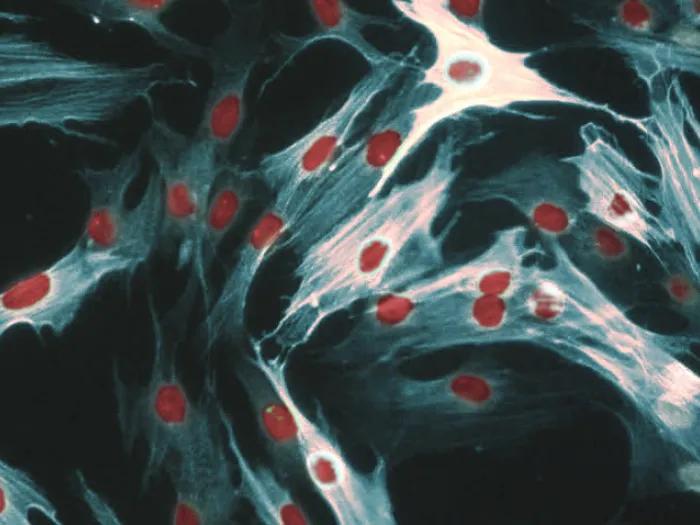
The research found that certain skin cells, called fibroblasts, in the scarred skin had very high levels of the B1R receptor protein.
When sCD13 engages B1R, the fibroblasts alter their normal functions and become cells that produce fibrosis.
To test if blocking the interaction between the sCD13 protein and the B1R protein would result in a decrease of fibrosis, fibroblasts isolated from healthy volunteers were first treated with a substance called TGF-β, which induced production of more sCD13 and B1R, causing more signs of fibrosis such as increased production of proteins that contribute to scarring, increased cell growth and increased cell movement.
However, when a B1R-blocking drug was used, arresting the interaction between the sCD13 and B1R proteins, these harmful effects were stopped, and the skin developed less damage and inflammation.
Similar results were also observed in fibroblasts isolated from patients with systemic sclerosis.
The University of Michigan researchers also studied a model of systemic sclerosis in mice, and showed that mice that were genetically deficient in either B1R or CD13 were protected from developing skin fibrosis.
In mice in which both B1R and sCD13 were present, a B1R-blocking drug was also protective, and even partially reversed established fibrosis.
“These results suggest that sCD13 plays an important role in causing the skin scarring seen in systemic sclerosis,” said David Fox, M.D., a professor of rheumatology and internal medicine at the University of Michigan and a co-lead on the study.
“Therefore, drugs that block the interaction between sCD13 and B1R might be a promising new way to treat systemic sclerosis, potentially reducing symptoms and slowing down the progression of the disease.”
The team plans to further their research through a deeper understanding of the mechanisms involved and the relative contributions of various cell types to disease development and progression when it comes to fibrosis in systemic sclerosis.
Additional authors: Sei Muraoka from the Division of Rheumatology, Department of Internal Medicine, University of Michigan, Ann Arbor, MI, USA and the Division of Rheumatology, Department of Internal Medicine, Toho University School of Medicine, Tokyo, Japan; William D. Brodie, Megan N. Mattichak, Mikel Gurrea-Rubio, Caroline Foster, M. Asif Amin, Neha Khanna, Hafsa Amin, Phillip L. Campbell, Sirapa Vichaikul, Ellen N. Model, Morgan M. Omara, Steven Petrovski, Karly Kozicki, Camilia Amarista, Anna Webber, Mustafa Ali, Pamela J. Palisoc, Jonatan Hervoso, and Jeffrey H. Ruth from the Division of Rheumatology, Department of Internal Medicine, University of Michigan, Ann Arbor, MI, USA; Yuzo Ikari from the Division of Rheumatology, Department of Internal Medicine, University of Michigan, Ann Arbor, MI, USA and the Division of Rheumatology, Department of Medicine, Showa University School of Medicine, Tokyo, Japan; Lam C. Tsoi from the Department of Dermatology, University of Michigan, Ann Arbor, MI, USA; John Varga and Johann E. Gudjonsson from the Division of Rheumatology, Department of Internal Medicine, University of Michigan, Ann Arbor, MI, USA and the Department of Dermatology, University of Michigan, Ann Arbor, MI, USA; Dinesh Khanna from the Division of Rheumatology, Department of Internal Medicine, University of Michigan, Ann Arbor, MI, USA and the University of Michigan Scleroderma Program, Ann Arbor, MI, USA.
Funding/disclosures: This project is a collaborative effort between the University of Michigan Scleroderma Program, Division of Rheumatology, and Department of Dermatology. This project was supported by the National Institute of Health and the National Scleroderma Foundation.
Michigan Research Core: Hybridoma Core
Paper cited: “Targeting CD13/aminopeptidase N as a novel therapeutic approach for scleroderma fibrosis,” American College of Rheumatology, DOI: 10.1172/JCI151827
Sign up for Health Lab newsletters today. Get medical tips from top experts and learn about new scientific discoveries every week.
Sign up for the Health Lab Podcast. Add us wherever you listen to your favorite shows.

Health Lab
Explore a variety of health care news & stories by visiting the Health Lab home page for more articles.
Media Contact

Public Relations
Department of Communication at Michigan Medicine
In This Story

Eliza PS Tsou, PhD
Assistant Professor
Stay Informed
Want top health & research news weekly? Sign up for Health Lab’s newsletters today!
Featured News & Stories

Cracking the code on APS vasculopathy
Tofacitinib shows promise in scleroderma patients, researchers are optimistic for next phase of study.

How the western diet and gut bacteria can lead to scarring, vessel damage in scleroderma

Kids with rare autoimmune disease show these symptoms before blood clots

Gout Treatment Success Doubled by Combining Two Drugs, Study Finds