Study reveals why a rare mutation behind Dravet syndrome is so deadly
Findings point to the importance of an understudied piece of DNA called an intron
3:30 PM
Author |
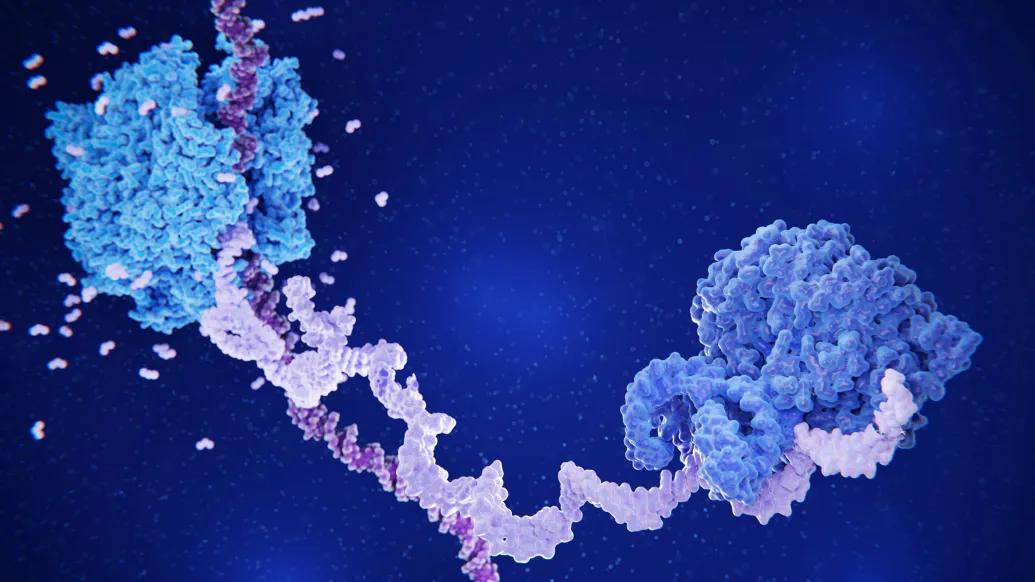
Dravet syndrome is a rare developmental disease that causes epileptic seizures along with movement and balance disorders, intellectual disability, cognitive delay and other issues in children. Devastatingly, Dravet syndrome increases the risk of sudden unexplained death in epilepsy (SUDEP).
A mutation in the SCN1A gene accounts for around 90 percent of cases. Other more rare variants of the SCN1B gene can cause a particularly severe form of Dravet syndrome.
“For Dravet syndrome, there’s usually a 20 percent rate of SUDEP, but for patients with the SCN1B c.449-2A>G variant, it was essentially 100 percent,” said Lori Isom, Ph.D., Professor of Pharmacology, Neurology, and Molecular and Integrative Physiology.
Her team, including Shreeya Bakshi, Ph.D., a postdoctoral fellow, wanted to understand what made this variant so lethal.
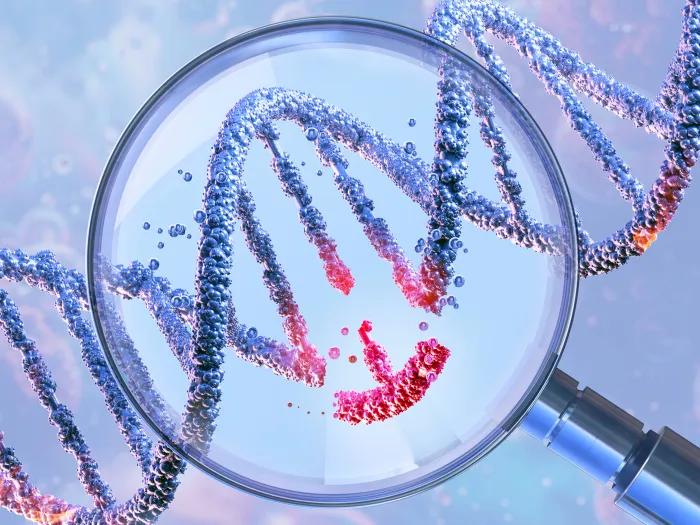
The variant in question, SCN1B c.449-2A>G, stood out because it affected an intron, said Bakshi. In the DNA to RNA to protein translation process, introns are typically cut out of RNA. Previously, scientists regarded introns as junk DNA. But the team discovered their proper removal had enormous consequences.
“Basically, what this patient variant does is affect how that intron is removed, and that's what ends up resulting in this very severe form of epilepsy,” said Bakshi. Essentially, because the intron isn’t removed, the gene is spliced incorrectly, and no functional protein is produced.
Severe type of Dravet syndrome
Isom’s lab has demonstrated previously that in mouse models bred to lack the SCN1B gene, neurons and heart muscle cells cannot control their excitability, resulting in severe epilepsy, cardiac arrhythmia, and death. This was the first time they saw this severe type of Dravet syndrome in a patient.
The finding hints at a way of fixing the problem: removing the intron.
“If you have the intron included in there, you're going to have less protein. If you could somehow increase intron removal for this variant, you'd increase the amount of functional protein. But right now, there's not a lot of research that focuses on introns that are retained,” said Bakshi.
Bakshi is interested in understanding how intron retention is regulated not just in SCN1B but all genes.
Potential gene therapy
Last year, Isom’s team published a paper detailing a potential gene therapy for Dravet syndrome that they are testing along with colleagues at Children's Hospital of Philadelphia, which replaces the mutated gene in patients with an SCN1B variant with the wildtype gene so that cells can create the correct protein.
Bakshi and Isom are working with Michelle Hastings, Ph.D. on another, potentially safer approach using antisense oligonucleotides, a type of RNA therapy that can fix how a gene is being expressed.
“Studying diseases at the basic science level is so important because it helps us understand what the problem is and ways we can potentially address it,” said Bakshi. “Our work is in early stages, but we’re hopeful.”
Paper cited: “SCN1B intron 3 retention results in a nonsense-mediated decay sensitive mRNA linked to developmental and epileptic encephalopathy,” PNAS, DOI: 10.1073/pnas.2531330123
Additional authors: Amanda M. Catalfio, Chunling Chen, Yukun Yuan, Luis F. Lopez-Santiago, Chloe Moore, Daniel S. Seagull, Sahana Macedo, Aazif Hussein, Isha Verma, Kyle Stokes, Joe Minton, Louis T. Dang, Christelle M El Achkar, Annapurna Poduri, Jack M. Parent
Sign up for Health Lab newsletters today. Get medical tips from top experts and learn about new scientific discoveries every week.
Sign up for the Health Lab Podcast. Add us wherever you listen to your favorite shows.

Health Lab
Explore thousands of health news & research stories by visiting the Health Lab homepage for more.
Media Contact

Public Relations
Department of Communication at Michigan Medicine
In This Story

Lori L Isom, PhD
Professor
Related

Investigational New Therapy Prevents Onset of Dravet Syndrome Symptoms in Mice
Finding answers for Dravet syndrome, a deadly form of epilepsy
Stay Informed
Want top health & research news weekly? Sign up for Health Lab’s newsletters today!
Featured News & Stories
Timing is of the essence for RNA during stress

Exploring the mind’s mysteries: 130 years of mental health care & innovation at U-M
Immune system protein is a cancer killer on its own, new study shows
Gene editing is coming for common diseases. Are we ready?

The AI is listening: Implications of machine generated clinical notes on health care