Study reveals the dual role for a protein critical for healing nerve damage
Sarm1 appears to be essential for regeneration
5:00 AM
Author |
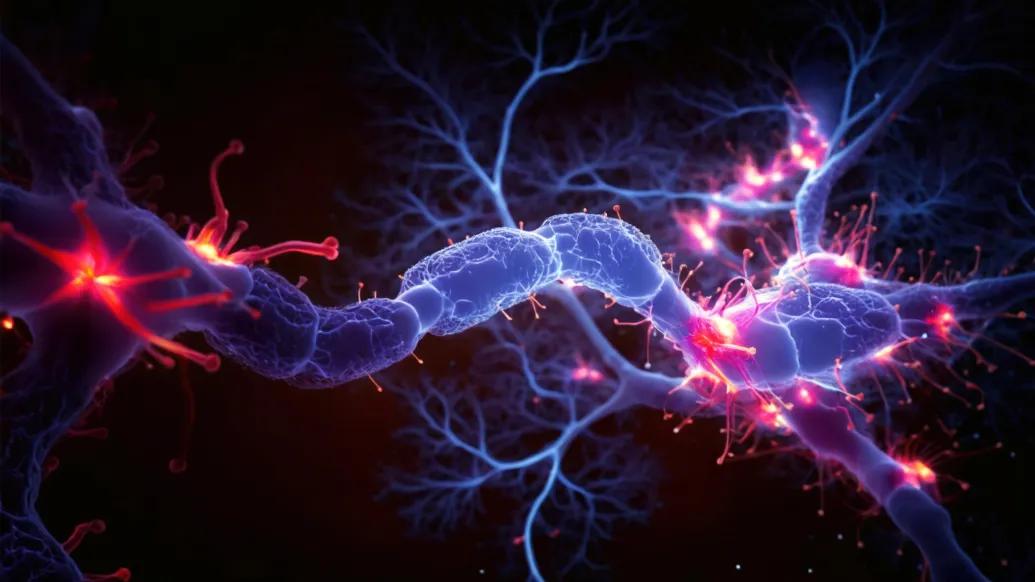
Nerve damage can be an unfortunate side effect from an accident, illness or even certain treatments, like chemotherapy.
Fortunately, the peripheral nervous system can heal itself to a certain extent, albeit very slowly.
Researchers are still trying to understand this natural healing process in order to improve it.
A recent University of Michigan study in mice adds to the evidence regarding a specific protein inside of the nerves, called Sarm1, that appears to be essential for their regeneration.
Previous studies have revealed that when Sarm1 is activated, it sets off the degenerative process in nerves.
The thinking has been that for conditions like chemotherapy induced peripheral neuropathy, diabetes, or nerve trauma, blocking Sarm1 would beneficially block the breakdown of nerves.
But what else would blocking Sarm1 effect?
“We know that nerve breakdown after an injury is quite efficient, and the breakdown is what Sarm1 controls. So, there must be a biological reason for this breakdown to be so quick and efficient,” said Ligia B. Schmitd, Ph.D., of the Department of Cell and Developmental Biology, lead author of the study.
Schmidt is a research fellow in the lab of Roman Giger, Ph.D., co-senior author with Ashley Kalinski of the University of South Carolina.
Using mice bred to lack Sarm1 and subjecting them to peripheral nerve injury, the team could observe drastic changes to the distal nerve environment, including fewer blood-borne immune cells resulting in reduced nerve inflammation.
"These cells are important because they have to enter the injured nerve to clean up all of the debris,” said Schmitd.
More importantly, their study revealed a critical effect on Schwann cells, which line and support the peripheral nerves.
Normally following an injury, Schwann cells will convert to a repair state in which they express different genes and proteins to migrate and proliferate in order to regrow the axon, the long projecting portion of the neuron.
But without Sarm1, “the Schwann cells are just stuck there,” said Schmitd.
In essence, Sarm1 controls both nerve degeneration and regeneration through its effect on Schwann cells.
The team also noted that a lack of Sarm1 seemed to boost the nerve’s efforts to regrow, but without activating the repair Schwann cells, these efforts were much less efficient.
“For a long time, we’ve thought that simply preventing nerve breakdown would be a good thing. What our study now shows is that this early breakdown also sends powerful signals to Schwann cells and immune cells that are needed for efficient repair, so any future therapy that targets Sarm1 will have to preserve that delicate balance between protection and regeneration,” said Giger, professor in the Department of Cell and Developmental Biology.
Schmitd notes that the study needs to be done in other animal models and with other proteins involved in nerve repair, “but if this proves to be an important mechanism for triggering the repair Schwann cell state, then down the road, fixing this response could help humans regenerate peripheral nerves.”
Additional authors: Additional authors include Hannah Hafner, Ayobami, Elham Asghari Adib, Natalia P. Biscola, Rafi Kohen, Mitre Athaiya, Meghan Tuttle, Manav Patel, Rachel E. Williamson, Emily Desai, Julianna Bennett, Grace Saxman, David Wilborn, Jaisha Shumpert, Xiao-Feng Zhao, Riki Kawaguchi, Daniel H. Geschwind, Ahmet Hoke, Peter Shrager, Catherine A. Collins, Leif A. Havton, and Ashley L. Kalinski
Funding/disclosures: : This work was supported by the NIH grant nos. 1R15NS128837 (to A.L.K.), T32DE007057 (to L.B.S.), F31NS135919 (to H.H.), R01NS069844 (to C.A.C. and R.J.G.), and R01NS141351 (to R.J.G.); a Ball State University ASPiRE Junior Faculty Award (to A.L.K.); Johns Hopkins University Merkin Family Foundation on Peripheral Neuropathy and Nerve Regeneration seed grants (to A.L.K. and A.W.); the Dr. Miriam and Sheldon G. Adelson Medical Research Foundation (to R. Kawaguchi, L.A.H., A.H., D.H.G., and R.J.G.); the New York State Department of Health Spinal Cord Injury Research Program grant no. C39072GG (to R.J.G.); and a gift in memory of Dr. Lynda J. S. Yang (to R.J.G.)
Paper cited: “Deletion of murine Sarm1 results in a microenvironment that delays peripheral nerve regeneration after injury,” Science Translational Medicine. DOI: 10.1126/scitranslmed.adp9155
Sign up for Health Lab newsletters today. Get medical tips from top experts and learn about new scientific discoveries every week.
Sign up for the Health Lab Podcast. Add us wherever you listen to your favorite shows.

Health Lab
Explore thousands of health news & research stories by visiting the Health Lab homepage for more.
Media Contact

Public Relations
Department of Communication at Michigan Medicine
In This Story

Roman Giger, PhD
Professor
Stay Informed
Want top health & research news weekly? Sign up for Health Lab’s newsletters today!
Featured News & Stories
The AI is listening: Implications of machine generated clinical notes on health care

A pediatric epilepsy fundraiser that changes lives
15 years of data will help uncover how flu spreads—and how to reduce its impact
$3.9 million NIH grant to fuel U-M effort to develop first targeted therapy for fatal childhood brain disorder
Bigger data reveals the second, third and fourth switches controlling a gene