Study identifies function behind mysterious variants for gene linked to colon cancer
Genetic tests could be more helpful using high-throughput functional analysis
1:12 PM
Author |
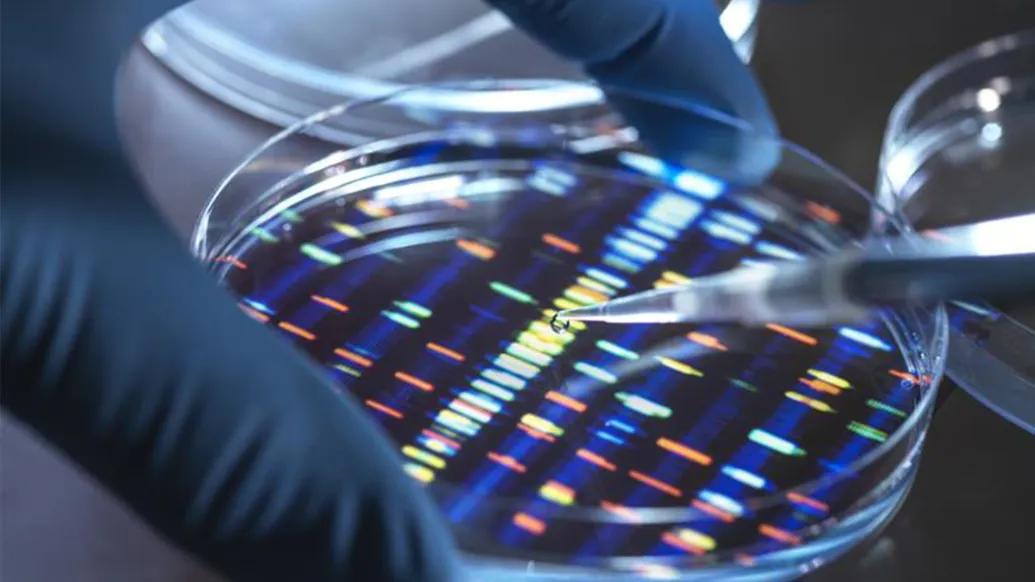
Genes get passed down from parents, determining traits such as eye color and height as well as risk for certain diseases.
And while cancer-linked genes such as BRCA1 and TP53 are relatively familiar, most variants fall into a catch-all category known as variants of uncertain significance.
Currently, a person with a family history has a limited chance of using their genetic screening data to determine their risk for most diseases.
Recent research from the lab of University of Michigan's Jacob Kitzman uncovers more clues about the risk conferred by variants in a gene linked to colon cancer, called MUTYH, the normal function of which is to repair DNA.
Variants in MUTYH can cause abnormal growths to form in the body, especially inside the colon, increasing the risk for deadly colon cancer.
These variants are also fairly common, with up to 1 out of every 50 people in the United States carrying risk variants in that gene.
“It's really important to identify the subset of individuals for whom there is an inherited familial risk factor because for them, prevention could be life saving,” said Kitzman, associate professor of human genetics.
Not all variants, or mutations, are the same.
Nonsense variants are ones that break a gene while synonymous ones have no effect and are benign.
So-called missense variants arise when a change in the DNA sequence leads to a different protein being created.
To examine these variants, instead of creating cellular or animal models expressing one variant at a time to study any functional changes, the team employed a pooled model that creates every variant in MUTYH possible, creating a mutational library of 10,941 variants.
They then used a DNA-repair reporter to systematically measure the function of each variant.
“Basically, we put a sensor for oxidative damage into cells that will light them up green if there is the proper repair and not light up if the repair function is broken,” explained Kitzman.
They then sorted them into two categories, functional and non-functional.
Using this method, they were able to accurately sort nonsense variants from synonymous, or silent, variants.
They also defined many missense variants that fell in the middle range with effects that fell along a continuum of functionality.
Furthermore, they confirmed clinical relevance for these MUTYH mutations by comparing them with the National Center for Biotechnology Information’s ClinVar database, which contains variants found during genetic testing that have been reviewed and classified by clinicians.
“It turns out that some of the mutations in MUTYH are seen in human populations, and their degree of pathogenicity was perfectly captured by our assay,” said Kitzman.
For example, one variant that fell in the intermediate range corresponds with a clinical variant known for a later onset and milder form of polyp development.
Beyond providing more evidence for what variants of uncertain significance are actually doing, Kitzman says this type of functional analysis could be used to help people make more informed decisions about disease prevention from their genetic information.
“Genetic testing is becoming more common, and while we can read the letters in the book, we don't know how to turn them into words and sentences or how to figure out what those sentences mean,” said Kitzman.
“We need continued funding for basic science research to realize the real-world benefits, like being able to interpret cancer risk from genetic tests, which could feed into life saving prevention."
Additional authors: Shelby L Hemker, Ashley Marsh, Felicia Hernandez, Elena Glick, Grace Clark, Alyssa Bashir, and Krystal Jiang.
Funding: This work was supported by the National Institute of General Medical Sciences (R35GM153286 to J.O.K.) and an American Cancer Society Postdoctoral Fellowship (to S.L.H.)
Conflicts/disclosures: J.O.K. serves on the scientific advisory board of Myome, Inc. A.M. and F.H. are employees of Ambry Genetics, Inc.
Paper cited: “Saturation mapping of MUTYH variant effects using DNA repair reporters,” The American Journal of Human Genetics. DOI: 10.1016/j.ajhg.2025.07.005

Health Lab
Explore thousands of health news & research stories by visiting the Health Lab homepage for more.
Media Contact

Public Relations
Department of Communication at Michigan Medicine
In This Story

Jacob Kitzman, PhD
Associate Professor
Stay Informed
Want top health & research news weekly? Sign up for Health Lab’s newsletters today!
Featured News & Stories

What’s the latest on 7-OH and kratom availability and addiction care?
Early instruction in scientific reasoning skills can help teens develop greater health literacy and confidence
Mutations attracted to the X chromosome amplify disease risk

Lung health expert weighs in on Zyn and other nicotine pouches

Many young adults may not be ready to manage their own health care