Study: Double-Digit Rise in Head Injuries After Michigan Helmet Law Repeal
After the state partially repealed its universal motorcycle helmet law in 2012, U-M researchers examined how the new law is impacting helmet use and rider safety.
1:00 PM
Author |
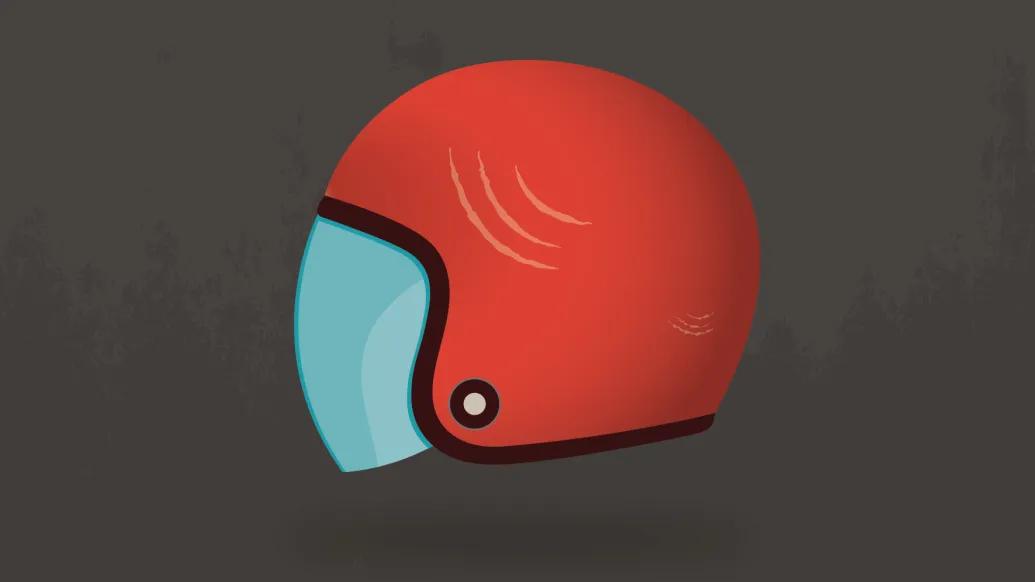
Fewer motorcycle riders who are involved in crashes in Michigan are wearing helmets since the state's partial repeal of its universal helmet law.
MORE FROM THE LAB: Subscribe to our weekly newsletter
And, perhaps no surprise, the state's trauma centers have since seen a 14 percent increase in head injuries among motorcyclists, a new study finds.
Emergency physicians and trauma surgeons also saw a shift in the types of head injuries resulting from motorcycle crashes during that period. Mild concussions fell 17 percent, for one, while skull fractures increased 38 percent.
The overall spike in head injuries was also associated with an increased need for costly hospital services, including invasive neurosurgical procedures necessary to treat serious head injuries.
The study was conducted by a team of researchers from the University of Michigan Injury Center as well as the University of Michigan Transportation Research Institute and the Insurance Institute for Highway Safety (IIHS). The study compared statewide rates of helmet use, fatalities and serious head injuries for the 12-month periods before and after the helmet legislation was passed.
The partial repeal, passed in April 2012, allowed Michigan motorcycle riders age 21 or older to legally ride without wearing a helmet if they have passed a motorcycle safety course or have held the motorcycle endorsement on their driver's licenses for at least two years. In addition, they must also have at least $20,000 in first-party medical benefits.
But helmets, research has proved, are a key injury-prevention measure. Prior studies have shown that helmets decrease the risks for fatal and nonfatal head injuries by 69 percent and the overall risk of fatality after a motorcycle crash by 42 percent.
In addition, the National Highway Traffic Safety Administration estimates that motorcyclists without helmets are 40 percent more likely to suffer fatal head injuries and 15 percent more likely to suffer nonfatal head injuries than helmeted motorcyclists involved in a crash.
In the current study, published in the American Journal of Public Health, the researchers cite past studies in other states that have demonstrated the success of universal helmet laws at increasing helmet use among riders — and, alternatively, the detrimental impact of similar repeal efforts in other states on the rates of head injuries and fatalities.
"No previous studies have examined the effects of Michigan's repeal on head injuries or fatalities in a statewide context," says Patrick Carter, M.D., the lead author of the study and an assistant professor of emergency medicine in the U-M Injury Center.
This study provides important data that should be considered as part of the policy debate regarding the importance of universal helmet laws for preventing injuryPatrick Carter, M.D.
A call for safety
Carter, joined by colleagues from U-M and IIHS, began by analyzing two data sets: police-reported crashes that captured both in- and out-of-hospital fatalities, and head injuries among patients hospitalized at trauma centers. The second data set was formed by linking police-reported crashes to statewide trauma registry data from all 23 Level 1 and Level 2 Michigan trauma centers.
Researchers examined helmet use, fatalities and head injuries from the 12 months before and after the repeal. They included 7,235 riders involved in police-reported crashes and 1,094 riders hospitalized at trauma centers.
SEE ALSO: The More Doctors Interact, the Better their Patients Do
Both data sets surveyed only motorcycle operators or passengers who were 16 or older and riding in Michigan — and who were either involved in a police-reported motorcycle crash or evaluated and treated at a Michigan trauma center for a traumatic injury between April 12, 2011, and April 12, 2013.
What Carter and his colleagues found should give motorcyclists pause before they head out on the road without the protection provided by a helmet.
After the repeal, helmet use dropped 24 percent among riders involved in crashes. That figure increased to 27 percent among those seeking care at trauma centers.
Although the number of motorcyclist fatalities statewide did not increase, motorcyclists who were not wearing a helmet in a crash had a fatality rate of 5.4 percent — nearly twice as high as the 2.8 percent rate for riders wearing a helmet. That's on top of the 14 percent increase in head injury rates overall.
Among the crash-involved riders and trauma patients sampled before and after the repeal, researchers also found that not wearing a helmet doubled the odds of a fatality and the odds of a head injury among those involved in a crash or treated at a trauma center.
"Head injuries can have a devastating impact on the long-term health of motorcyclists and their families after a crash," Carter says. "The 14 percent increase in head injuries observed in our study is consistent with the negative public health impact we have witnessed following similar repeals in other states."
Carter hopes the sobering results can be used to inform policymakers about the motorcycle helmet law and how the repeal is affecting the health of citizens.
"This study provides important data that should be considered as part of the policy debate regarding the importance of universal helmet laws for preventing injury," he says.

Health Lab
Explore thousands of health news & research stories by visiting the Health Lab homepage for more.
Media Contact

Public Relations
Department of Communication at Michigan Medicine
Stay Informed
Want top health & research news weekly? Sign up for Health Lab’s newsletters today!
Featured News & Stories

Digital alerts support timely treatment decisions of critically ill cardiac patients

What’s changing in Medicaid and what can you do?

Rabies is on the rise: Experts offer advice

E-Bikes are everywhere, but most parents say they don’t know enough about them
Young father survives aortic dissection after delayed diagnosis