Sleep Aids Aren’t Safe for Older Adults, but 1 in 3 Still Take Them
A new national poll finds that many people 65 and older take prescription sleep aids — even though guidelines warn against it. What the findings mean for patients and providers.
7:00 AM
Author |

Sleep doesn't come easily for nearly 50 percent of older Americans, and more than a third have resorted to medication to help them doze off at night, according to new results from the National Poll on Healthy Aging.
But most poll respondents said they hadn't talked to a doctor about their sleep, even though more than a third said their sleep posed a problem. Half of those surveyed believe — incorrectly — that sleep problems are simply a part of growing older.
The poll was conducted by the University of Michigan Institute for Healthcare Policy and Innovation (IHPI) and is sponsored by AARP and Michigan Medicine, U-M's academic medical center.
Although sleep problems can happen at any age and for many reasons, they can't be cured by taking a pill, either prescription, over-the-counter or herbal — no matter what the ads on TV say.
People who turn to medications may not realize that prescription, over-the-counter and even "natural" sleep aids carry health risks, especially for older adults, either alone or in combination with other substances. In fact, national guidelines strongly warn against prescription sleep medicine use by people over age 65.
"Although sleep problems can happen at any age and for many reasons, they can't be cured by taking a pill, either prescription, over-the-counter or herbal — no matter what the ads on TV say," says poll director Preeti Malani, M.D., a U-M physician trained in geriatric medicine. "Some of these medications can create big concerns for older adults, from falls and memory issues to confusion and constipation," even if they're sold without a prescription, she says.
Despite this, the nationally representative poll of people ages 65 to 80 found that 8 percent of older people take prescription sleep medicine regularly or occasionally.
Among those who report sleep troubles three or more nights a week, 23 percent use a prescription sleep aid. Most had been taking them for years. Manufacturers and the Food and Drug Administration say such drugs are only for short-term use.
That's why doctor-patient conversation is crucial.
"The first step for anyone having trouble sleeping on a regular basis should be to talk to a doctor about it," Malani says. "Our poll shows that nearly two-thirds of those who did so got helpful advice — but a large percentage of those with sleep problems simply weren't talking about it."
She notes that nonmedication-based sleep habits are the first choice for improving sleep in older people.
How health affects sleep
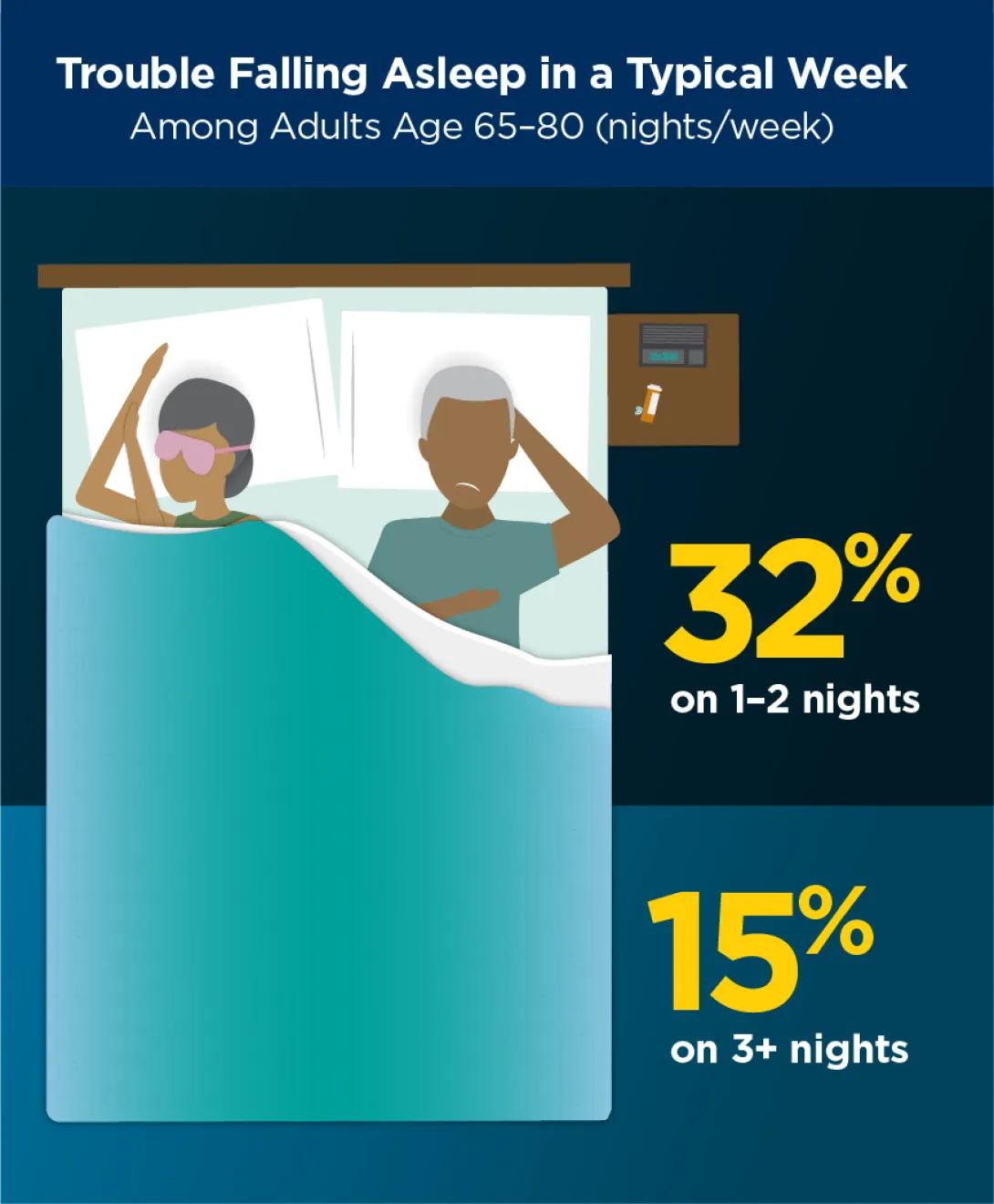
In all, 46 percent of those polled had trouble falling asleep one or more nights a week. Fifteen percent of the poll respondents said they had trouble falling asleep three or more nights a week.
Other health conditions can contribute to sleep difficulties: Twenty-three percent of poll respondents who had trouble sleeping said it was because of pain. And 40 percent of those with frequent sleep problems said their overall health was fair or poor. Other reasons for sleep troubles included having to get up to use the bathroom at night, and worry or stress.
Insomnia and other irregular sleep patterns can interfere with daytime functioning and are associated with memory issues, depression and an increased risk of falls and accidents.
Even so, many said they didn't see sleep issues as a health problem. In fact, this belief was the most common reason poll respondents gave for not talking to a doctor about sleep.
This also highlights the need for doctors to ask older patients about their sleep habits and what they're doing to address any issues they are having.
"We know that sleep is a critical factor for overall health as we age, and this new research highlights sleep problems as both a significant health issue for older adults and an underacknowledged one both by patients and their providers," says Alison Bryant, Ph.D., senior vice president of research for AARP. "We need to help people understand that lack of sleep is not just a natural part of aging."
More about medication use
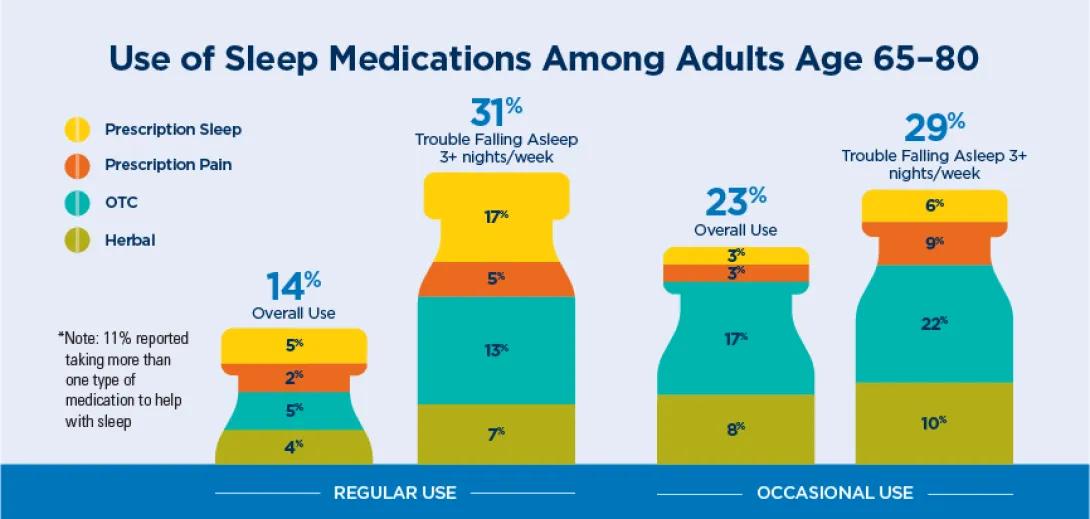
In all, 14 percent of the poll respondents said they regularly took a prescription sleep medication, prescription pain medication, over-the-counter sleep aid or herbal supplement to help them sleep. An additional 23 percent took one of these options occasionally; most of the occasional users said they chose over-the-counter sleep aids.
The most recent Beers Criteria established by the American Geriatrics Society, which guides the use of medications among older people, gives a strong warning against use of prescription sleep drugs, which are sold under such names as Ambien, Lunesta and Sonata.
Meanwhile, even though over-the-counter sleep aids do not require a doctor's guidance or prescription to purchase, they still carry health risks for older people, Malani notes. Most of them contain diphenhydramine, an antihistamine that can cause side effects such as confusion, urinary retention and constipation.
Among poll respondents with frequent sleep problems who took something occasionally to help them sleep, over-the-counter sleep remedies were the most common choice. But for those with frequent sleep issues who took something regularly to try to sleep, prescription sleep medications were the most common option, with 17 percent reporting use.
Use of melatonin and other herbal remedies may be perceived as safer, but less is known about their potential side effects and they are not subject to the FDA's approval process for medications, says Malani. But any issue that prompts people to buy an over-the-counter or herbal remedy regularly is something they should discuss with a doctor, she adds.
The poll results are based on answers from a nationally representative sample of 1,065 people ages 65 to 80 who answered a wide range of questions online. The IHPI team wrote the questions and compiled and interpreted the data. Laptops and internet access were provided to poll respondents who did not have them.

Health Lab
Explore thousands of health news & research stories by visiting the Health Lab homepage for more.
Media Contact

Public Relations
Department of Communication at Michigan Medicine
Stay Informed
Want top health & research news weekly? Sign up for Health Lab’s newsletters today!
Featured News & Stories

Better prenatal care data could help prevent maternal complications, experts say

Many hospitals still don’t do enough to prevent UTIs from catheters

Digital alerts support timely treatment decisions of critically ill cardiac patients

What’s changing in Medicaid and what can you do?

Reducing infections after heart surgery could save Medicare $441 million per year