Should you get a PSA screening for prostate cancer?
An expert explains why most doctors now “watch and wait” rather than treat right away
2:44 PM
Author |
This story originally published August 22, 2016 and was updated on September 6, 2024.
Screening saves lives. It's virtually a mantra when it comes to cancer.
But for prostate cancer, the prostate-specific antigen, or PSA, test used to screen for the disease has previously come under fire as experts began to attribute it to a rise in the number of slow growing, non-aggressive prostate cancers being diagnosed and treated.
"We know that prostate cancer has been overtreated for generations," said Jeffrey Montgomery, M.D., a urologist at the University of Michigan Health Rogel Cancer Center.
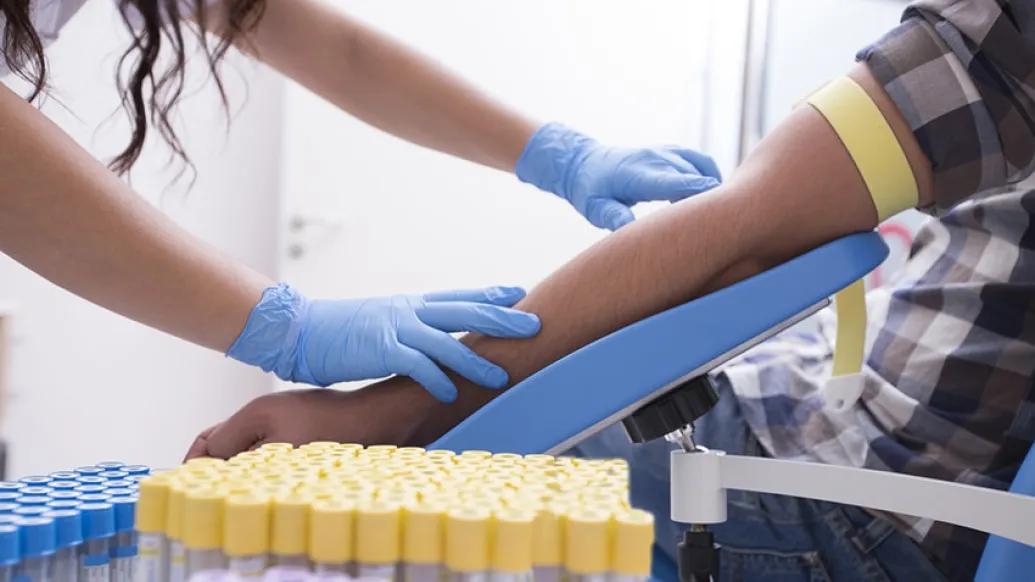
But screenings, Montgomery says, have merit: A simple blood test can detect elevated levels of PSA — a substance released into the body by a man's prostate gland — that could indicate the likelihood of cancer.
On the other hand, screenings can also prompt surgery and radiation, which can induce side effects in low risk patients who don't need it.
That's why the results of a PSA test, if a man receives one, should be analyzed carefully.
"We now observe more patients with prostate cancer than we treat," Montgomery said.
Here he explains what men should know about PSA testing.
Has there been a rise in prostate cancer diagnoses?
Montgomery: Anecdotally between me and my partners, we're tending to see more advanced cases of prostate cancer — and in younger men.
I think that the move to decrease PSA screenings has affected this: men are getting tested at a later age, and less frequently.
But we want to screen the younger men, too; men who are healthy, have a family history of longevity, or with a family history of prostate cancer that could really be impacted by the diagnosis of an intermediate or high risk prostate cancer.
There's also a lot of work being done on new biomarkers that can better identify prostate cancer.
We at U-M, for instance, now offer patients a urine based test, called MyProstateScore2.0, which looks at 18 different genes linked to high grade prostate cancer.
This allows patients with slow growing tumors avoid unnecessary biopsies.
Overall, our goal is to always screen the right person, with the right test, at the right time.
Are there any issues with PSA testing?
Montgomery: The biggest concern some have are about the overdiagnosis and overtreatment of low risk prostate cancer detected.
The vast majority of these patients now, though, are instead followed and observed over time.
We also want to remain aware about how prostatectomy or radiation therapy can impact your quality of life — as they affect urinary and erectile function — and want to remain mindful of that.
For instance, now upwards of 99% of our prostatectomy surgeries are done robotically, with improved outcomes for erectile function recovery and a significant improvement in urine control recovery.
How do you determine whether someone should be screened for prostate cancer?
Montgomery: I think the sweet spot for PSA screening is between age 50 and 70.
Generally, I would say in men who are at higher risk — having a first degree relative like a son, a father or a brother with a history of prostate cancer — should get first evaluated with a PSA test at age 40 to 45.
African American men are at a higher risk as well, as are Vietnam veterans exposed to Agent Orange.
For now, the PSA test is the most widely available tool we have for prostate cancer screening.
It is not particularly specific for prostate cancer, but it is sensitive. It identifies those men we should pay more attention to.
It's up to us as urologists, once men are referred to us, to determine whether a prostate biopsy is indicated.
Would you advise a patient to request a PSA if his physician discourages it?
Montgomery: We see situations in which a primary care doctor doesn't offer a man PSA screening and the patient comes for a second opinion.
If a man wants to be screened for prostate cancer and he understands the risks and benefits of screening, he should be screened.
It is up to us to take that PSA level in context.
It's a matter of taking that PSA value and really understanding it beyond its face value.
A single PSA value doesn't necessarily dictate that a patient needs a prostate biopsy.
There's a lot of consideration that goes into determining whether a patient requires further investigation.

Health Lab
Explore thousands of health news & research stories by visiting the Health Lab homepage for more.
Media Contact

Public Relations
Department of Communication at Michigan Medicine
In This Story

Jeffrey S Montgomery, MD, MHSA, FACS
Clinical Professor
Stay Informed
Want top health & research news weekly? Sign up for Health Lab’s newsletters today!
Featured News & Stories

Should Young People Get a Colon Cancer Screening? It Depends on Their Risk
Prostate cancer and hereditary risk: A doctor explains the connection

Specialized care helps patient navigate rare liposarcoma diagnosis

Path forward for glioblastoma treatment
Rogel research team receives $3. 2 M grant to cascade genetic testing to relatives