Scientists track pneumonia-causing bacteria as they infect the blood stream
A unique barcoding system enabled tracking of K. pneumoniae as it moved throughout the body
2:18 PM
Author |
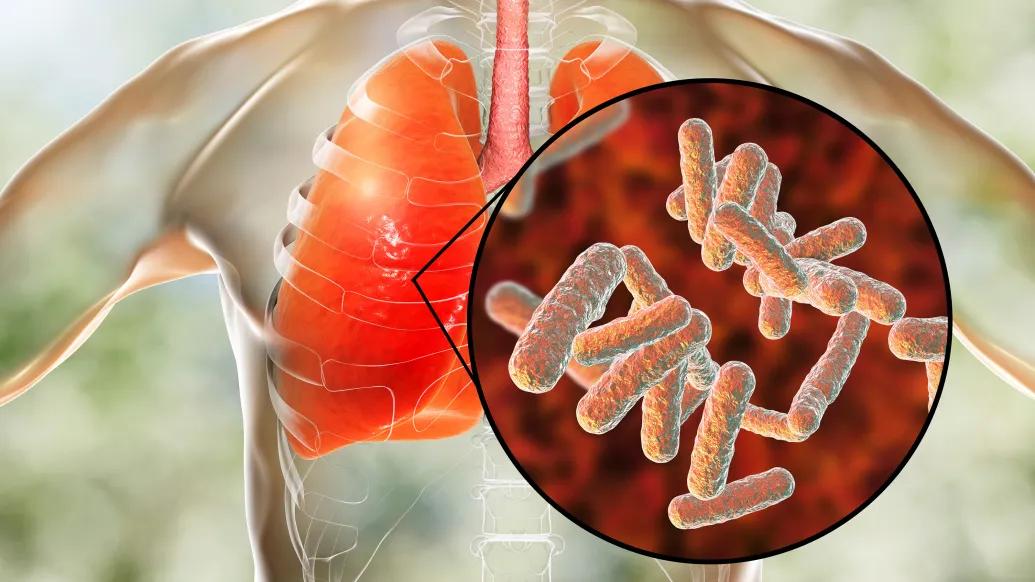
Bacteremia, or blood poisoning, occurs when bacteria overcome the body’s immune defenses.
Bacteremia can worsen into sepsis, a condition that accounts for more than 1 in 3 hospital deaths per year.
Yet people are routinely exposed to and fight off bacteria from the environment without this deadly series of events occurring.
Scientists are trying to figure out exactly how bacteria spread throughout the body to cause systemic infection in the hopes of eventually stopping this process in its tracks.
Michael Bachman, M.D., Ph.D., clinical associate professor of pathology and microbiology and immunology at U-M Medical School and former postdoc Caitlyn Holmes, Ph.D., have tried to solve this mystery, focusing on gram negative bacteria like Klebsiella pneumoniae, a common source of pneumonia-initiated bacteremia.
In previous work, they determined that bacteria spread in three phases: infection of an initial site, such as the lungs; entrance into the bloodstream; and finally, replication and avoidance of filtration by the liver and spleen.
Traditionally, analyzing a bacterial infection is done by culturing tissue and counting the number of resulting bacteria.
“Experimentally, we can measure the first phase pretty easily in terms of how the bacteria infect the lungs and we can measure the third phase pretty easily in terms of how the bacteria survive in these blood-filtering organs and whether they replicate or not. But that transition out of the lungs and into the bloodstream has traditionally been difficult to measure,” said Bachman.
Using an innovative barcoding-style system developed with colleagues at Harvard University, Bachman, Holmes and their team were able to label bacteria with short snippets of DNA in mouse models and use computer analysis to track the movement of K. pneumoniae throughout the body.
They expected that the bacteria would replicate in the lungs until such a point that their clones overwhelmed the lung’s defenses, spilling out into the blood stream, says Bachman.
And while they did see this type of spread—which they called metastatic dissemination—there was evidence of another type as well.
Unexpectedly, “about half of the mice had the metastatic pattern, and the other half contained bacteria that escaped on their own into the bloodstream without the need to replicate to large numbers first,” Bachman explained about this second mode, which they called direct dissemination.
Overall, metastatic pathway correlated with a stronger infection than the direct route.
Furthermore, over time, infection progressed to more of the metastatic pattern.
“We need to understand the biology of each of these routes in order to figure out the best treatments,” said Bachman.
“There’s a mantra in infectious disease that is to find and treat the source to stop the bacteremia.”
Uncovering the existence of the direct route may mean that bacteria are setting up low level reservoirs in other parts of the body that could be better targeted to treat blood infections.
Additionally, Holmes created mutations in both the K. pneumoniae and mice that affected the mode of dissemination hinting that the interaction between the bacteria and the host’s immune system may determine the outcome of the infection.
“The project began with a very basic question—how does bacteria leave the lungs—that we have now provided some insight into, closing a significant gap in our knowledge,” said Holmes.
Additional authors: Katherine G. Dailey, Karthik Hullahalli, Alexis E. Wilcox, Sophia Mason, Bridget S. Moricz, Lavinia V. Unverdorben, George I. Balazs, Matthew K. Waldor.
Paper cited: “Patterns of Klebsiella pneumoniae bacteremic dissemination from the lung,” Nature Communications. DOI: 10.1038/s41467-025-56095-3
Sign up for Health Lab newsletters today. Get medical tips from top experts and learn about new scientific discoveries every week by subscribing to Health Lab’s two newsletters, Health & Wellness and Research & Innovation.
Sign up for the Health Lab Podcast: Add us on Spotify, Apple Podcasts or wherever you get you listen to your favorite shows.

Health Lab
Explore thousands of health news & research stories by visiting the Health Lab homepage for more.
Media Contact

Public Relations
Department of Communication at Michigan Medicine
In This Story

Michael Bachman, MD, PhD
Clinical Professor
Stay Informed
Want top health & research news weekly? Sign up for Health Lab’s newsletters today!
Featured News & Stories
Study Shows How Pneumonia-Causing Superbug Invades
Many hospitals still don’t do enough to prevent UTIs from catheters

$3.9 million NIH grant to fuel U-M effort to develop first targeted therapy for fatal childhood brain disorder
15 years of data will help uncover how flu spreads—and how to reduce its impact
Bigger data reveals the second, third and fourth switches controlling a gene