Scientists discover that bacteria use an understudied polymer found in all life to protect cell functions during stress
The findings could pave the way for new antibiotics
5:00 AM
Author |
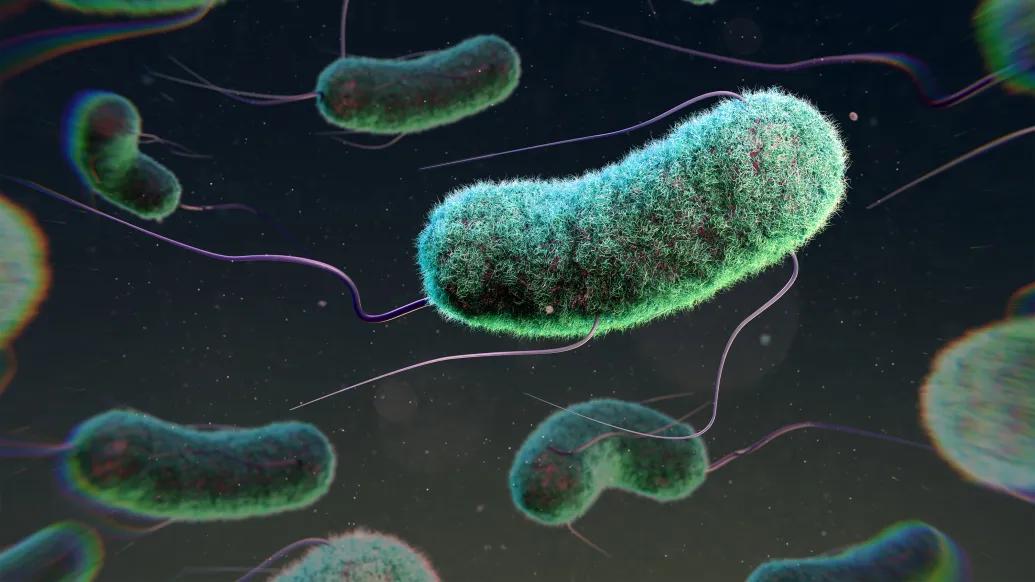
Each moment, our cells go about their business of making proteins, cleaning up waste and responding to external stressors.
It’s only recently that scientists have come to appreciate the extent to which cells rearrange their innards during many of these processes by forming what are known as biomolecular condensates.
Condensates are essentially small factories, explains Lydia Freddolino, Ph.D., Professor of Biological Chemistry at University of Michigan Medical School.
“Cells can use them to set up partitioned areas that do specialized functions,” she said.
What’s more, it’s not just mammalian cells that do this, but bacteria as well, evidence that the process is evolutionarily preserved.
In a recent paper, Freddolino, along with Ursula Jakob, Ph.D., Patricia S. Yaeger Collegiate Professor of Molecular, Cellular, and Developmental Biology at U-M, and their team have discovered a fundamental element of condensates that span the tree of life from bacteria to humans – polyphosphate, a molecule that exists in all lifeforms but has to date been hard to study.
The research team found that polyphosphate is essential to the structure of eukaryotic condensates called P-bodies, processing units involved in the storage and degradation of RNA, and Hfq condensates, which form in bacteria when they are under stress to protect essential functions.
The researchers tested their hypothesis by studying E. coli that was starved of nitrogen.
Understanding how condensates are constructed “is super important because it is a major bacterial survival mechanism: they phase separate condensates to help preserve the stuff they really need,” Freddolino noted.
“And it turns out that these bacterial stress response condensates are chained together by polyphosphate, which along with a protein called Hfq, pulls together all the components for these condensates.”
This new understanding of how bacteria survive stress could potentially be exploited for new antibiotics, says Freddolino.
The findings position polyphosphate as a new antibiotic target that should sensitize the bacteria to other stresses, making them more vulnerable to the body's own defenses and to other antibiotic treatments, she adds.
Additionally, the team found that polyphosphate is used in the formation of P-bodies in mammalian cells as well, which has implications for disease in humans.
“We know that cancer cells use P-bodies as a major driver of their oncogenesis and so it's very likely that modeling that system would be really helpful for understanding how certain cancers form,” said Freddolino.
Traditionally, polyphosphates have been understudied because researchers have lacked the tools to target them. However, several researchers at U-M are actively investigating their role in disease and therapeutics.
“We have a body of folks here who just have the technical knowledge of how to do this,” said Freddolino.
“And it's one of the things that's wonderful about a place like Michigan is having all these researchers who are looking at different problems and able to share their work… there is so much we can learn by continuing to grow this knowledge.”
Additional authors: Additional authors include Jian Guan, Rebecca Lee Hurto, Akash Rai, Janakraj Bhattrai, Christopher A. Azaldegui, Luis A. Ortiz-Rodríguez, Quancheng Liu, Julie S. Biteen
Paper cited: “Polyphosphate modulates the stress-responsive formation of functional RNA-protein condensates in bacteria and mammalian cells,” PLoS Biology. DOI: 10.1371/journal.pbio.3003775
Sign up for Health Lab newsletters today. Get medical tips from top experts and learn about new scientific discoveries every week.
Sign up for the Health Lab Podcast. Add us wherever you listen to your favorite shows.

Health Lab
Explore thousands of health news & research stories by visiting the Health Lab homepage for more.
Media Contact

Public Relations
Department of Communication at Michigan Medicine
In This Story

Lydia Freddolino, PhD
Professor
Stay Informed
Want top health & research news weekly? Sign up for Health Lab’s newsletters today!
Featured News & Stories

The AI is listening: Implications of machine generated clinical notes on health care
Comprehensive DNA sequencing reveals hidden drivers of cancer

‘Molecular glue’ stabilizes protein that inhibits development of non-small cell lung cancer and uterine cancer

Many older adults make Medicare decisions quickly and most don’t change plans, poll finds
What’s the latest on 7-OH and kratom availability and addiction care?