Research needed on support for nontraditional caregivers providing care for people with Alzheimer’s disease, dementias
Expert shares insight on how to support this new generation of caregivers
5:00 AM
Author |
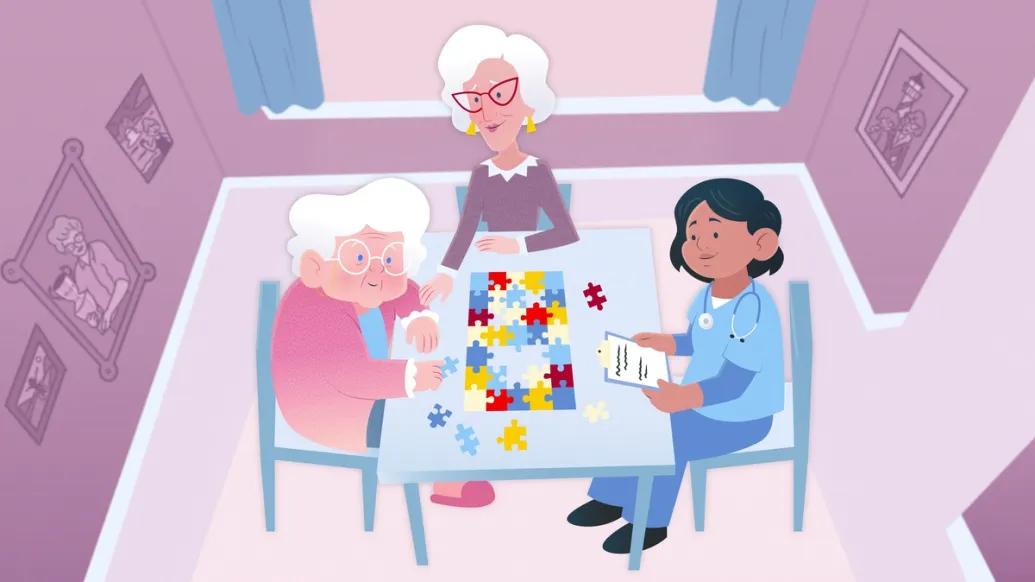
Informal caregivers do not receive any training or payment for the essential care they provide for someone who is sick, injured, or disabled. Traditionally, care for people with Alzheimer’s disease and related dementias has been provided by spouses and adult children.
Yet, a growing number of people living with Alzheimer’s disease and related dementias – especially those from diverse backgrounds – receive care from a network of individuals that increasingly includes nontraditional informal caregivers. These nontraditional caregivers, who may not be closely related to the person with Alzheimer’s disease and related dementias, include nonmarital partners, biological siblings, nonbiological children, and other kin-like relations.
While this means a wider circle of trusted caregivers for many, it also may cause complications with the delivery of patient care and unknown hardships for the caregivers.
Noelle E Carlozzi, Ph.D., a professor in the Department of Physical Medicine and Rehabilitation and director of the Center for Clinical Outcomes Development and Application at Michigan Medicine, discusses why studying the growing population of nontraditional caregivers can benefit caregivers and patients alike.
Why do we need research on nontraditional informal caregivers of people with ADRD?
Carlozzi: A lot of patients with Alzheimer’s disease and related dementias receive informal care from loved ones. Importantly, more people are being diagnosed with Alzheimer’s disease and related dementias during a time when major social changes are straining our country’s health care resources.
This means that the number of informal caregivers, including nontraditional caregivers, will likely continue to grow as the need for Alzheimer’s disease and related dementias care increases.
However, we know next to nothing about the roles of nontraditional caregivers because we lack the tools to study them.
Existing research has shown that caregivers of people living with Alzheimer’s disease and related dementias often undergo considerable stress, which can have negative impacts on the health of both the caregiver and the person they are caring for. But most caregiver research to date has focused almost entirely on the role of traditional caregivers such as spouses and biological children.
Our team’s study, funded by the NIH, will address this lack of knowledge by developing a new measurement system that can help us better understand nontraditional caregivers’ experiences.
This information will allow us to identify and provide support to those at greatest risk for poor outcomes and promote future research on what additional resources may be needed to support the well-being of this previously unstudied caregiver population.
Will researching the differences between traditional and nontraditional caregivers lead to better patient care?
Overall, the shift in Alzheimer’s disease and related dementias caregiver dynamics creates an opening for research to better characterize the caregiver landscape and help doctors work with a wider range of caregivers to make positive impacts on how patients receive care.
Caregivers of patients with Alzheimer’s disease and related dementias receive a large amount of support from the patients’ health care providers, who guide the caregivers through each stage of treatment, give them resources on how to best care for the patient at home, and provide feedback on any questions or concerns the caregivers may have.
The care needs of people with Alzheimer’s disease and related dementias are complex, and commonly require a similarly complex support system.
Primary caregivers often rely on a broad network of other family members, friends, and neighbors to help meet the needs of the person with Alzheimer’s disease and related dementias. The diverse backgrounds, capabilities, and contributions of individuals in these networks suggest that specialized resources are needed to support caregivers in different situations and relationships to patients – especially those that can be used regardless of the caregiver’s ability to access a patient’s medical information.
Our research will lead to more targeted supports for nontraditional caregivers to make sure they have the appropriate information and tools they need to take the best care of their patients as well as themselves. Ultimately, this will improve the health related quality of life for this new generation of caregivers and the people for whom they provide care.
What are some current resources caregivers can turn to for support?
Being a caregiver, whether full or part time, can be a tiring, stressful job that becomes frustrating at times. As a nontraditional caregiver of someone with Alzheimer’s disease and related dementias, being unable to communicate effectively with the patient’s health care providers can make this task even more challenging.
To help address these concerns, outside support is available for traditional and nontraditional caregivers alike that can help them decompress and better understand how to care for their patients as well as themselves.
A good place to start is the Alzheimer's Association, which has many free resources and information for caregivers who are working with Alzheimer’s disease and related dementias patients that explain the different stages of the disease and what to expect over time.
Caregivers across many types of care situations can experience similar frustrations and emotions and talking to others can help them feel less alone. Local support groups for caregivers offer an opportunity to discuss their experiences and hear from others who are in similar situations.
Finally, while it might sometimes feel difficult, it is important for caregivers to take time for themselves whenever possible, even if it is just for a few minutes each day. There are many free and paid apps to help with learning meditation and breathing exercises, and physical activity as well as time spent outdoors can be good ways to clear one’s mind for a few minutes and reset before moving on to the next task.
Sign up for Health Lab newsletters today. Get medical tips from top experts and learn about new scientific discoveries every week by subscribing to Health Lab’s two newsletters, Health & Wellness and Research & Innovation.
Sign up for the Health Lab Podcast: Add us on Spotify, Apple Podcasts or wherever you get you listen to your favorite shows.

Health Lab
Explore thousands of health news & research stories by visiting the Health Lab homepage for more.
Media Contact

Public Relations
Department of Communication at Michigan Medicine
Related
1 in 10 older americans has dementia
Stay Informed
Want top health & research news weekly? Sign up for Health Lab’s newsletters today!
Featured News & Stories

Is the United States Lagging Behind Europe in Memory Improvement?
Michigan Alzheimer's Disease Research Center receives $22M to advance efforts statewide

The Care Ecosystem: Supporting People Living with Dementia and Their Families

Caregiver Resources: Reduce the Risk of Burnout
First person-centered measure of dementia caregiving styles improves partner, patient outcomes