Research links iron-mediated cell death and inflammatory bowel disease
Study could explain why therapy with antioxidants hasn’t yet panned out
5:00 AM
Author |
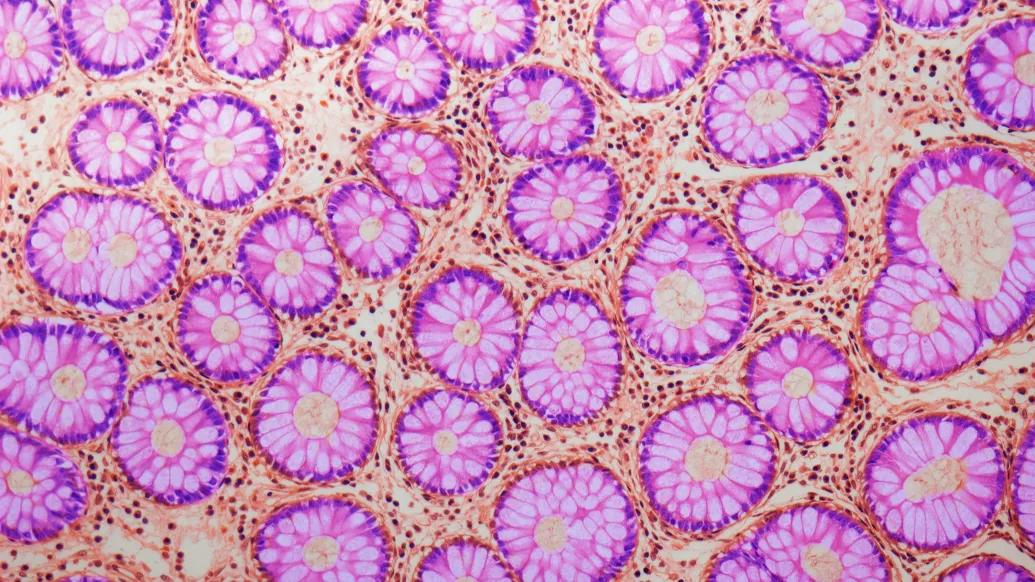
New basic science insights into programmed cell death could offer relief for inflammatory bowel disease.
Many people with IBD, an umbrella term that includes ulcerative colitis and Crohn’s disease, have a reduced quality of life, marred by chronic diarrhea, pain and fatigue.
One pathological hallmark of IBD is the increased presence of reactive oxidative species in the cells of inflamed intestinal tissue.
While ROS are normal by-products of metabolism (and tend to accumulate with aging), too many can cause cellular damage and lead to disease.
This seeming smoking gun has led researchers to pursue antioxidants, which can neutralize ROS, as a potential treatment for IBD.
In fact, antioxidants have successfully quelled symptoms of the disease in animal models of acute IBD.
Yet, clinical trials of medications that suppress ROS in humans haven’t been successful.
This may be because “newer research has revealed that too many antioxidants can cause what we call reductive stress that can cause dysfunction and kill cells and also block signaling events in cells that are important for normal function,” said Yatrik Shah, Ph.D., the Horace W Davenport Collegiate Professor of Physiology at U-M Medical School.
Shah Lab set out to build a better animal model, one that could more accurately reflect the chronic nature of IBD.
Additionally, they took a closer look at the types of reactive oxygen species associated with IBD in cells.
Two graduate students in Shah’s lab, Wesley Huang, M.D., Ph.D., and Yuezhong “Diana” Zhang, devised a way to measure the short-lived molecules in mouse models of chronic IBD as well as in patient samples provided by U-M colleague Peter Higgins, M.D., of the Division of Gastroenterology and Hepatology.
They discovered that a specific type of ROS associated with lipids was present in the epithelial cells of the intestine.
Lipid ROS activate a relatively recently discovered type of cell death dependent on iron, called ferroptosis.
Further hinting at a connection between ferroptosis and IBD, the team, using RNA expression data from IBD tissue, found a subset of differently expressed genes related to ferroptosis in IBD tissue vs. non-IBD tissue—in particular, a gene known as acsl4.
Painstaking tests in IBD-model mice confirmed that ACSL4 enzyme overexpressed in fibroblasts, cells that make up connective tissue, seemed to drive the generation of lipid ROS and cell death in the lining of the colon.
Zhang notes that normal mice did not see the same effect of lipid ROS-induced ferroptosis, hinting that something else is at play in the case of IBD.
However, the discovery of this connection is a step toward better drug targets for Crohn’s and colitis.
“If this is a major feature that drives the inflammatory nature of IBD, and what makes the disease worse, there are ways to specifically target it. Instead of targeting all reactive oxidative species, we can just inhibit this one connected to ferroptosis,” noted Shah.
For example, a drug that inhibits ferroptosis relieved some symptoms in mouse models and ACSL4 could be a novel target to treat IBD.
Additional authors: Nupur K. Das, Sumeet N. Solanki, Chesta Jain, Marwa O. El-Derany, Imhoi Koo, Hannah N. Bell, Noora Aabed, Rashi Singhal, Cristina Castillo, Kathryn Buscher, Yinzhi Ying, James Dimitroff, Ankit Sharma, Jiaqi Shi, Simon P. Hogan, Michael K. Dame, Peter D.R. Higgins, Justin A. Colacino, Tae Gyu Oh, Jason R. Spence, Andrew D. Patterson, Andrew S. Greenberg, Joel K. Greenson, Asma Nusrat
Funding/disclosures: This work was funded by NIH grants R01CA148828, R01CA245546, and R01DK095201 (YMS) and UMCCC Core Grant P30CA046592 (YMS). WH was supported by the NIH grant F30DK131851. YZ was supported by the Rackham International Students Fellowship/Chia-Lun Lo Fellowship. JS was supported in part by the NIH grant R37CA262209. JAC was supported by the NIH grant R01ES028802. ASG was supported by USDA grants USDA 58-8050-9-004 and USDA NIFA 2022-67018-37186 and by NIH grant P30DK046200
Paper cited: “Fibroblast lipid metabolism through ACSL4 regulates epithelial sensitivity to ferroptosis in IBD,” Nature Metabolism. DOI: 10.1038/s42255-025-01313-x

Health Lab
Explore thousands of health news & research stories by visiting the Health Lab homepage for more.
Media Contact

Public Relations
Department of Communication at Michigan Medicine
In This Story

Yatrik M Shah
Professor
Stay Informed
Want top health & research news weekly? Sign up for Health Lab’s newsletters today!
Featured News & Stories

How a phone call led Michigan Medicine to become a leader in treating severe ulcerative colitis
Why anti-TNF drugs don’t work for some kids with Crohn's disease

Can coordinated care help patients with high-risk IBD?

How Viruses and Bacteria Balance Each Other in the Gut Microbiome
Could the Cure for IBD Be Inside Your Mouth?