Removal of ventilator breathing tube is delayed for some patients, posing health risks
Spontaneous breathing trials were examined to study the issue further
11:46 AM
Author |
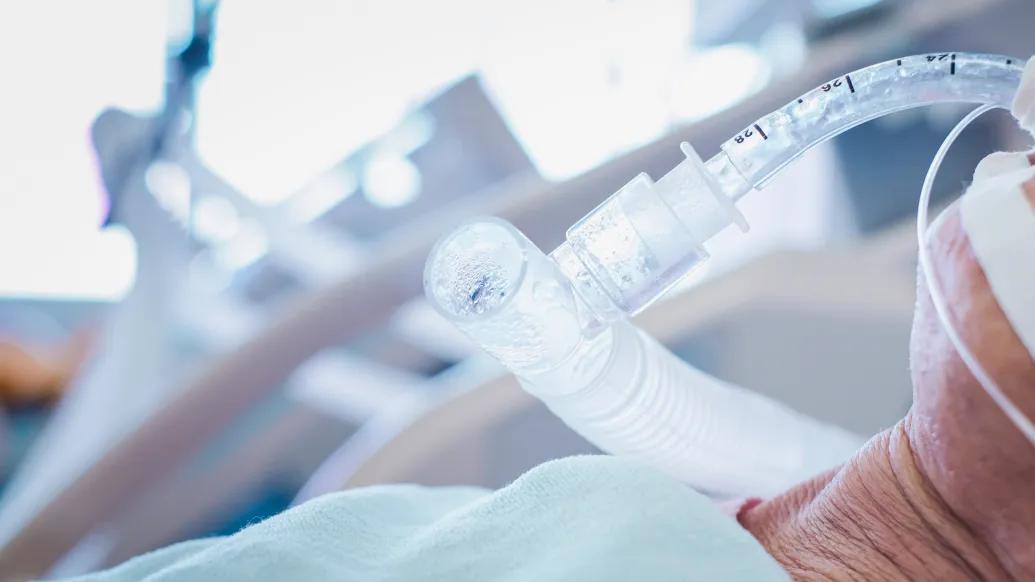
Research from the University of Michigan Medical School finds that one in three hospitalized patients remain connected to a breathing tube after passing a spontaneous breathing trial.
While a delay in removal is sometimes necessary, being connected to a breathing tube increases the risk for ventilator-associated complications.
Patients are often intubated prior to surgery or during emergencies as a life saving measure to protect their airways and facilitate breathing. Yet, intubation also increases the risk of pneumonia, lung injury and prolonged sedation.
Spontaneous breathing trials are a guideline-recommended method that help determine whether a patient can breathe on their own following mechanical ventilation.
During an SBT, ventilator settings are minimized for a period of 30 minutes to three hours to see whether a patient’s heart rate and breathing are stable.
The U-M team, led by Anna Barker, M.D., Ph.D., and Michael Sjoding, M.D., from the Division of Pulmonary and Critical Care Medicine, sought to determine how many patients who pass this trial are extubated within six hours and what factors were associated with staying connected to the ventilator.
Analyzing electronic health record data from more than 3,000 patients between 2015 and 2023, they found that 62.3% of patients were extubated within six hours following a successful SBT.
Patients who weren't extubated spent an average of two additional days on the ventilator.
While some of the factors associated with remaining on the ventilator are known barriers to safe extubation, including having low levels of consciousness, being on low or high vasopressors (medications to raise blood pressure), or having a procedure within the day following the trial, more than half of patients had none of these factors.
For that group, the most common reason provided for non-removal was attending preference, which needs more research to better understand.
“These results highlight the importance of close communication between respiratory therapists, nurses and physicians when determining the safest time to extubate patients. The presence of families and caregivers help many patients stay more alert, which we also found is an important predictor of timely extubation after passing an SBT,” said Barker.
Additional authors: Rachel K. Hechtman and Megan Acho
Funding: This study was supported by the National Institutes of Health grants R01 HL 158626 and T32 HL 00774.
Paper cited: “Providers Consistently Delay Extubation After Successful Spontaneous Breathing Trials: A Retrospective Cohort Study,” Annals of the American Thoracic Society. DOI: 10.1513/AnnalsATS.202502-188OC

Health Lab
Explore thousands of health news & research stories by visiting the Health Lab homepage for more.
Media Contact

Public Relations
Department of Communication at Michigan Medicine
In This Story

Anna K Barker, MD, PhD
Clinical Instructor

Michael William Sjoding, MD, MSc
Associate Professor
Stay Informed
Want top health & research news weekly? Sign up for Health Lab’s newsletters today!
Featured News & Stories
Depression in OBGYN residents needs more attention, study suggests

A metabolic “switch” that could help reset scar-producing cells in scleroderma

Emergency room intervention pairs smartphone, telehealth counseling to reduce risky firearm behavior
Better prenatal care data could help prevent maternal complications, experts say
Pain, psychological factors and physical function closely linked in people with systemic sclerosis