Rare neuromuscular condition doesn’t stop teen from track & field dream
High school senior’s determination and care team help him work towards a state championship before graduation
5:00 AM
Author |
When 17-year-old Jake Juip crossed the finish line of his first 100-meter Michigan State High School Championship adaptive track and field race, his team swarmed around him in celebration.
The win was a cumulation of hard work, practice and persistence eight years after Juip’s diagnosis of a rare neuromuscular condition.
In fourth grade, Juip and his parents noticed that he seemed to become clumsier while his peers were becoming sharper in their movements.
The Juips took him to multiple specialists before finally receiving an answer in 2016: he had an incurable condition called Friedreich’s ataxia.
The degenerative, multisystem disease causes the body to slowly lose neurologic function and can lead to weakening in the heart and lungs in addition to declined function in other muscles.
At the time of his diagnosis, there were no treatment options available.
“It was disheartening to hear at such a young age,” said Juip.
“I love to play sports and learning that this would become increasingly challenging as I got older was upsetting.”
Juip and his family worked around his diagnosis and made sure he could be involved in sports in some capacity as he moved from using a walker to a wheelchair as he aged.
In high school, he joined the cross country and track and field teams, but by his junior year he began developing severe scoliosis that was impacting his ability to race.
Treating scoliosis
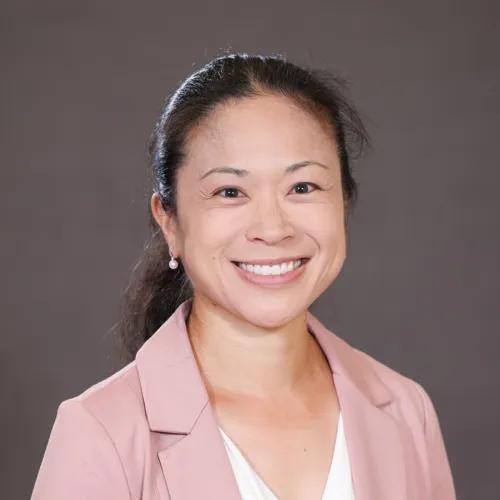
When Juip received his initial scoliosis diagnosis, his family decided they wanted a second opinion and came to G. Ying Li, M.D., a pediatric orthopaedic surgeon at University of Michigan Health C.S. Mott Children’s Hospital.
After seeing Li, care teams and the family decided that the best treatment for Juip would be using a brace to try to prevent his spine from curving more, that would be followed up with a surgical procedure if needed.
However, as time progressed, the curvature of his spine became increasingly worse.
I could see how important this was to Jake, and being able to be on a team in a way that fits kids of different abilities is not only important to their physical health, but also their mental health."
-G. Ying Li, M.D., pediatric orthopaedic surgeon
In the fall of 2022, Li felt it was time for Juip to undergo a surgical procedure to correct the curvature of his spine and stop the progression of his scoliosis.
With a break between cross country and track and field approaching, Juip, his parents, and his team of orthopaedic doctors decided that the winter of 2022 would be the best time to surgically treat his scoliosis.
And the treatment plan lined up with another big goal for the high schooler.
“The Michigan High School Athletic Association had just created an adaptive wheelchair 100-meter dash category that I was determined to compete in that spring,” said Juip.
“I felt that by having the surgery in the winter, I would have enough time to recover and accomplish my goal of winning this 100-meter dash in my school colors.”
Li took Juip’s concerns into consideration when planning out the procedure and worked to make sure he’d be ready to participate in the track season.
“I could see how important this was to Jake, and being able to be on a team in a way that meets kids where they are at is not only important to their physical health, but also their mental health,” said Li.
“I wanted to make sure he could fulfill this goal in a healthy way that worked for him.”
The procedure was a posterior spinal fusion, which involved strategically placing rods and screws in his spine to straighten the spine as well as prevent any curvature of the spine in the future.
“The procedure took about six hours to complete,” said Li.
“But we were able to make a noticeable difference in his posture that should last him for a long time.”
Juip spent eight days at Mott recovering and working with the physical and occupational therapy teams to regain strength after the procedure.
“Looking at the before and after photos, we were shocked by the change Dr. Li was able to make in the curvature of my spine,” said Juip.
Without a brace and fully recovered, Juip was ready to participate in the 100-meter sprint for the first time in the adaptive sports category.
Back on the track
For Juip’s freshman and sophomore years on the track and field team, he used his recumbent trike to compete in events.
By his junior year, the Michigan High School Athletic Association had created a category for adaptive track and field races that would allow Juip to compete in his own category with other wheelchair participants wearing his school colors.
When Juip competed his junior year after his scoliosis procedure, he won the 100-meter sprint in the adaptive wheelchair category. However, there were not any other athletes participating in the category.
“It was great to have the race fit my needs, but I was really hoping to have someone to compete against the following year,” said Juip.
“I was missing having that competition.”
His senior year, Juip’s dream came true. He once again signed up for the adaptive 100-meter dash and had one opponent.
Even though it’s not a cure, it’s a step in the right direction and I’m happy to have been a contributor to getting us here."
-Jake Juip, patient
He was able to win his first race at districts against a competitor and went on to win his first state championship race later that year.
He was able to not only win the race in his school colors but had his team cheering him on from the sidelines as he crossed the finish line and placed first.
“Being the first state champion of the adaptive 100-meter dash feels amazing,” he said.
“It was a goal I had set for myself for years and completing it my senior year with my team to watch and support me was perfect.”
Advocating for others
In addition to finding adaptive ways to participate in sports since his diagnosis, Juip has been participating in clinical trials and advocating for better treatment options for those with Friedreich’s ataxia.
This has included trips to Washington D.C. to meet with legislators.
“I was able to meet with Michigan senators during a trip to Washington DC in eighth grade to discuss legislation regarding Friedreich’s ataxia,” said Juip.
“Since then, I helped secure a Senate resolution recognizing National Ataxia Awareness Day in 2022 to bring attention to the disease to help further treatment advancements. This is something I would like to see every year to help bring awareness to others living with Friedreich’s ataxia.”
With contributions to clinical trials to learn more about Friedreich’s ataxia from kids like Juip, there is now the first ever treatment for the disease. Today, Juip takes three pills once a day that are made to help slow the progression of the disease to keep him active for longer.
“Even though it’s not a cure, it’s a step in the right direction and I’m happy to have been a contributor to getting us here,” said Juip.
Juip graduated from University Liggett School in June 2024.
He is attending the College for Creative Studies in Detroit to major in entertainment arts and minor in game design.
He plans to continue advocating for those with Friedrich’s ataxia while in college and participating in clinical trials when he can.
Sign up for Health Lab newsletters today. Get medical tips from top experts and learn about new scientific discoveries every week.
Sign up for the Health Lab Podcast. Add us wherever you listen to your favorite shows.

Health Lab
Explore a variety of health care news & stories by visiting the Health Lab home page for more articles.
Media Contact

Public Relations
Department of Communication at Michigan Medicine
In This Story
G Ying Li, MD
Clinical Professor
Stay Informed
Want top health & research news weekly? Sign up for Health Lab’s newsletters today!
Featured News & Stories

Rx Kids linked to reductions in preterm births and low birthweights, fewer NICU admissions
Teenage patient receives treatment for papillary thyroid cancer
Teens need private time with doctors, but many aren’t getting it

Psychoactive substances and adverse side effects for patients with multiple sclerosis
A smarter helmet for the smallest patients