A Radiologist Explains What to Expect at Your First Mammogram
A woman might not know what happens during her first mammogram — and if the screening will be painful. To help ease the stress, a Michigan Medicine doctor offers a guide.
7:00 AM
Author |
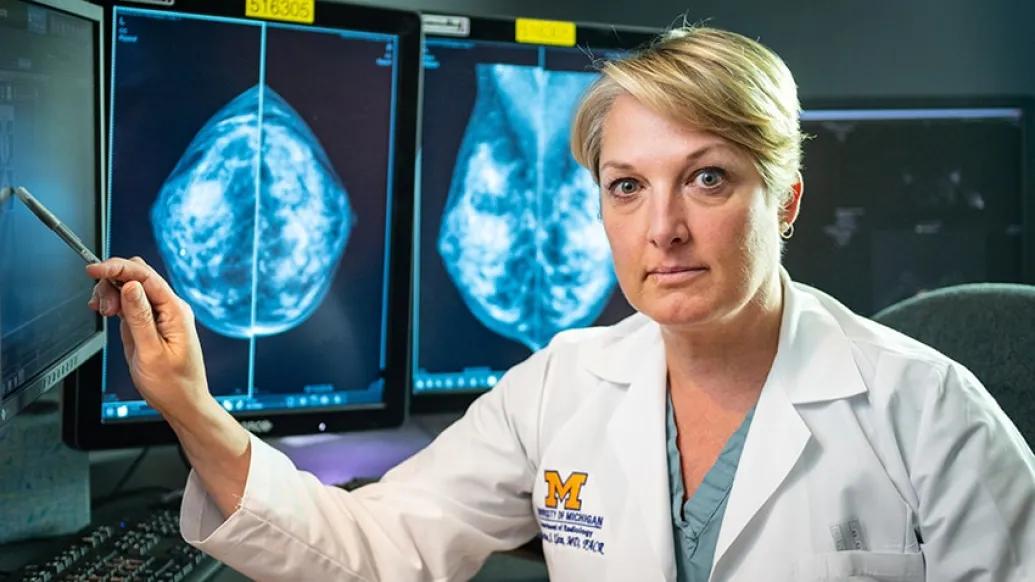
The days leading up to a woman's first mammogram can be intimidating.
The screening, after all, has one purpose: to detect early signs of breast cancer.
LISTEN UP: Add the new Michigan Medicine News Break to your Alexa-enabled device, or subscribe to our daily audio updates on iTunes, Google Play and Stitcher.
But it's a crucial test, says Michigan Medicine radiologist Kate Klein, M.D., FACR. And it often finds no abnormalities: About 2 to 6 screenings in 1,000 test positive for cancer, depending on a recipient's age and risk factors.
Although a first mammogram is more likely to detect false positive results than future screenings — findings that may prompt additional screening and review to confirm a misdiagnosis — the initial visit provides a valuable blueprint over time.
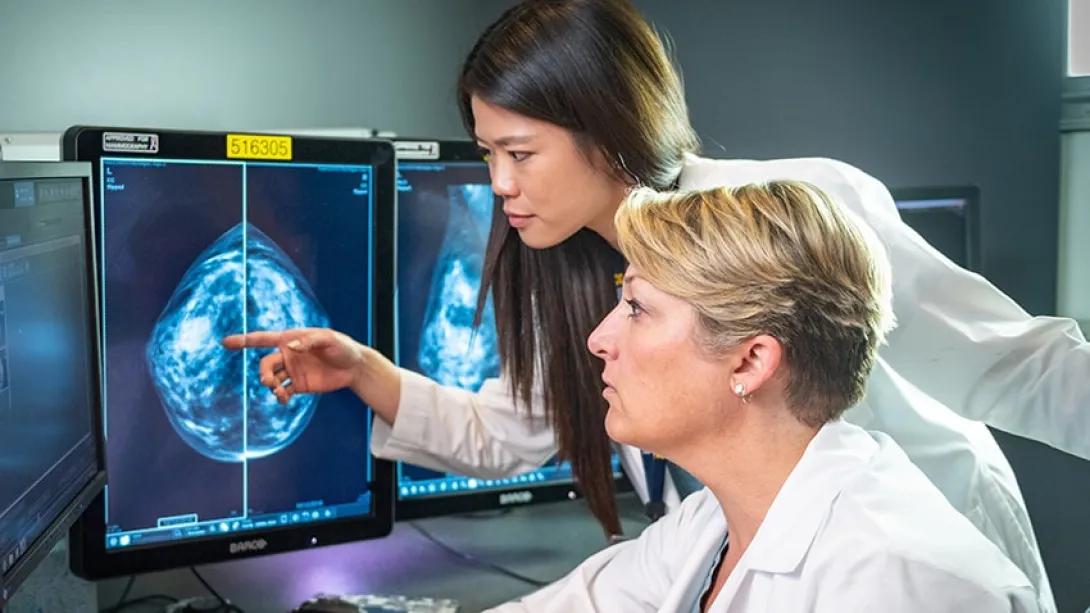
"The first year can be a little more difficult to read because there is nothing to compare," Klein says. "When reading patients' subsequent mammograms, we can compare images side by side and year to year, looking for subtle changes."
Then, if results dictate, timely and preventive action can be taken.
Klein explained what women need to know about the screening process.
Common questions about your first mammogram
What does a mammogram do?
A mammogram is an X-ray of the breast designed to look for early signs of breast cancer.
Flat paddles are used to briefly squeeze each breast "from top to bottom and side to side," Klein says, taking two images of each breast for a clear, complete picture.
How do I prepare for a mammogram?
As far as what not to do before a mammogram, no preparation is required. A patient will wear a gown during the exam and may eat and drink before arrival.
MORE FROM MICHIGAN: Sign up for our weekly newsletter
One caveat: Skip deodorant, perfumes and body powder.
"Deodorant can contain metallic particles that can look like microcalcifications on a mammogram," Klein says. "This can mimic the appearance of early breast cancer."
How painful is a mammogram?
Breast tissue must be spread out to better detect any abnormalities, so the mammogram machine will "compress to the point where it's slightly to moderately uncomfortable," Klein says, noting that the squeezing lasts only five or six seconds twice per breast.
Each woman's pain threshold or experience can be different, she adds.
What if I have a family history or suspect I have cancer?
Those with a strong family history will still receive a screening mammogram.
But if a patient has symptoms such as a lump, nipple discharge or breast pain may receive a diagnostic mammogram from a radiologist, which involves extra views that may lead to a biopsy.
Women with no concerns will meet at a dedicated screening site with a technologist present for a screening mammogram using the same X-ray equipment.
Out of 1,000 screenings, two to three will have a positive result for cancer.Kate Klein, M.D., FACR
Do breast implants affect a mammogram?
Although silicone and saline implants make it harder for a mammogram to detect subtle masses or calcifications, women with breast implants still need mammograms, Klein says.
Inform the office about your implants when booking the appointment; additional images may be needed.
What's the difference between a 2D and 3D mammogram?
A three-dimensional mammogram, also known as digital breast tomosynthesis, uses digital X-rays to create a 3D view across a woman's breasts and creates multiple images of the breast at different thicknesses.
SEE ALSO: What Women Should Know About Breast Density
A 2D mammogram shows all the breast tissue in one image that may have overlapping tissue. Although Klein notes some early studies have found the 3D technique may reduce false positives, both options are valid and reliable diagnostic tools.
How often do mammograms detect cancer?
Roughly 8 to 10 percent of screening mammograms prompt a callback for additional imaging. Within that subgroup, about 10 percent will need a biopsy — but about 70 to 80 percent of the biopsies turn out to be benign.
Put another way, "out of 1,000 screenings, two to three will have a positive result for cancer," Klein says.
How long does it take to get mammogram results?
Screening mammogram results come back in about one week via a mailed letter. Women who need a diagnostic mammogram may receive a phone call from their mammography center 36 to 48 hours later.
SEE ALSO: 7 Ways to Help Prevent Breast Cancer [Infographic]
"We're there for them as a support system in regards to doing what's next," Klein says.
Is it safe to get a mammogram?
Although the X-rays involve radiation, women shouldn't worry about the exposure.
"A standard four-view mammogram is equivalent to about seven weeks of background radiation that we receive every day from our own environment," Klein says. "It's very low-risk."
To schedule a mammogram at Michigan Medicine, call 734-936-4500.
For more information about mammograms, visit the American Cancer Society and Susan G. Komen.

Health Lab
Explore thousands of health news & research stories by visiting the Health Lab homepage for more.
Media Contact

Public Relations
Department of Communication at Michigan Medicine
Stay Informed
Want top health & research news weekly? Sign up for Health Lab’s newsletters today!
Featured News & Stories

Online resources and coaching helped people seek genetic testing for cancer
Comprehensive DNA sequencing reveals hidden drivers of cancer

Liver cancer can be preventable. Do you know the treatable risk factors?
Better prenatal care data could help prevent maternal complications, experts say
PCOS has a new name