
Pumping iron: inhibition of key pathway promotes iron-dependent cell death in pancreatic cancer cells
Cell culture study maps mechanisms underlying a new potential strategy for killing pancreatic cancer cells through a type of cell death known as ferroptosis.
10:17 AM
Author |
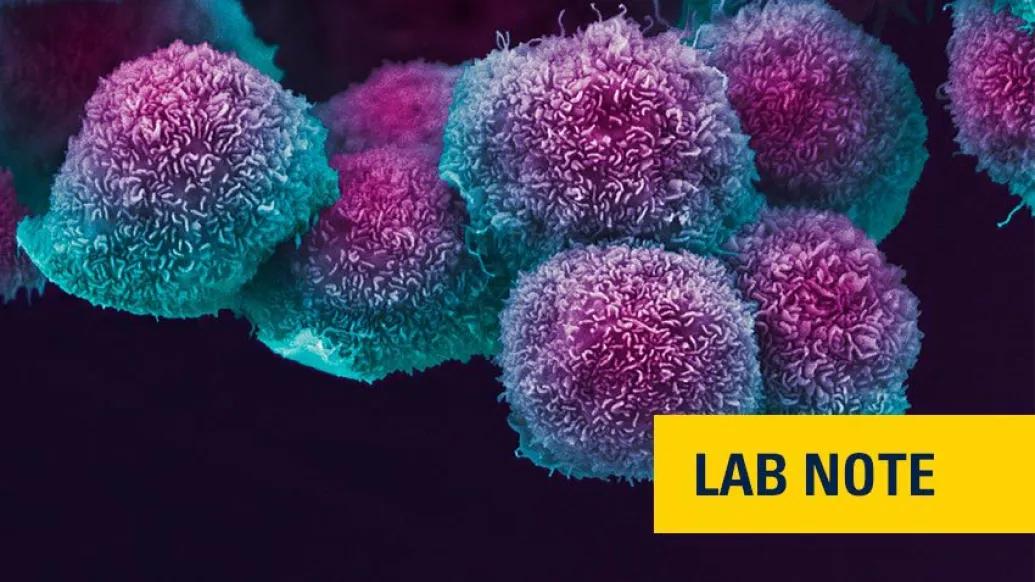
One of the reasons pancreatic cancer remains the most deadly of the major cancers is that it craftily rewires normal cell survival mechanisms to keep itself supplied with nutrients to fuel its expansion.
A new study led by the University of Michigan Rogel Cancer Center demonstrates how inhibiting a key enzyme known as GOT1 can flip a switch in the cancer cells — causing them to shift from using nutrients to fuel growth toward conserving them to maintain energy levels.
In this state, the cancer cells release their iron stores and become vulnerable to a form of programmed, iron-dependent cell death known as ferroptosis, according to findings in cell cultures that appear in Nature Communications.
"If pancreatic cancer's success comes from approaching nutrient metabolism differently than other cancers, our goal is to target aspects of that metabolism for therapeutic benefit," said study senior author Costas Lyssiotis, Ph.D., an associate professor of molecular and integrative physiology and of internal medicine at U-M.
The study was led by first author Daniel Kremer, Ph.D., a recent graduate of U-M Program in Chemical Biology and former member of the Lyssiotis lab.
The GOT1 pathway helps the cancer cells maintain their energy balance, Kremer explained.
"When we inhibit the enzyme, it doesn't kill the cell, but it puts it into a state of energetic stress, so it has to use those nutrients to maintain the cell rather than for growth," he said. "This study describes the mechanisms of that process and how we might be able to exploit it to trigger cell death through ferroptosis."
Key collaborators on the project include Yatrik Shah, Ph.D., of the Rogel Cancer Center and Kenneth Olive, Ph.D., of Columbia University and the Herbert Irving Comprehensive Cancer Center.
Paper cited: "GOT1 inhibition promotes pancreatic cancer cell death by ferroptosis," Nature Communications. DOI: 10.1038/s41467-021-24859-2

Health Lab
Explore thousands of health news & research stories by visiting the Health Lab homepage for more.
Media Contact

Public Relations
Department of Communication at Michigan Medicine
Stay Informed
Want top health & research news weekly? Sign up for Health Lab’s newsletters today!
Featured News & Stories
Cholesterol-carrying protein found to help suppress immune response in pancreatic tumor microenvironment

Understanding family history key to early detection of pancreatic cancer

Intuition pushed mom to keep checking for breast cancer
Immune system protein is a cancer killer on its own, new study shows

Online resources and coaching helped people seek genetic testing for cancer

