Psychedelics and anesthetics create mirror image patterns in the brain
A new study offers a data-driven approach to differentiating conscious states
5:00 AM
Author |
For something so familiar to human experience, consciousness is still a mystery.
Each day, people cycle through wakefulness and sleep, from a higher level of consciousness to a lower one.
What’s more, some people alter their conscious experience with drugs such as psychedelics, or have unconsciousness induced by anesthesia.
Researchers have investigated these altered states of awareness in an attempt to understand how consciousness is organized within the brain.
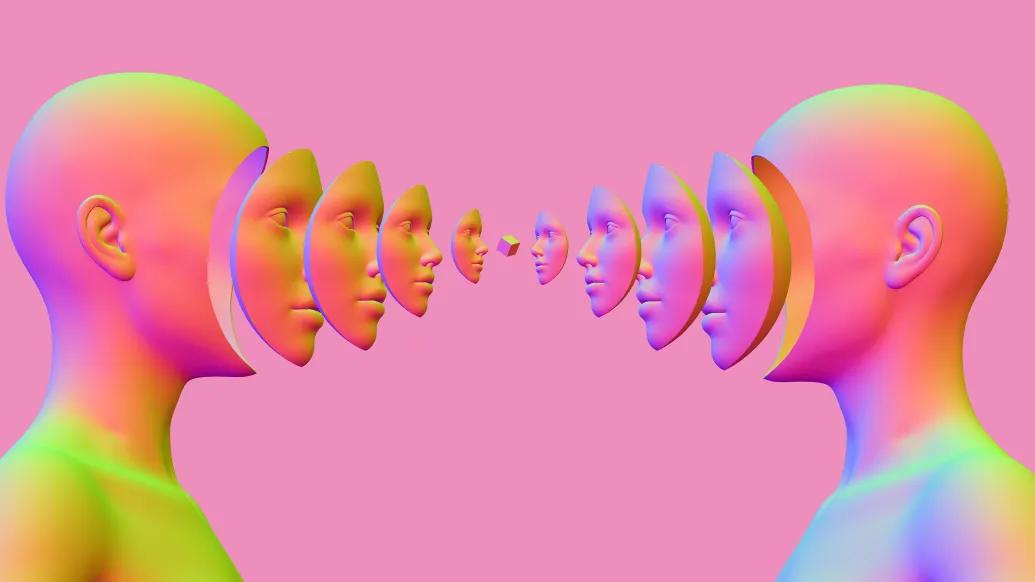
A new Michigan Medicine led study takes a data driven approach and for the first time reveals that psychedelics and anesthetics create “mirror image” patterns of large-scale brain organization, with opposite network features.
The team, led by Rui Dai, Ph.D., and Zirui Huang, Ph.D., of the Department of Anesthesiology and Center for Consciousness Science at Michigan Medicine, analyzed functional MRI data from study participants who were administered psychedelic compounds—LSD, psilocybin and nitrous oxide—and compared them to readouts of MRIs of the brain in a sleeping state or under sedation with propofol.
“In previous literature, each individual drug’s influence on brain connectivity was analyzed separately,” said Dai.
“To our knowledge, no one has systematically assessed these two drug classes to compare network organization compared to waking consciousness.”
Specifically, the team observed that psychedelics increased functional connectivity (how closely two brain regions work together), while sleep and anesthesia reduced it.
The same pattern held for topological integration, meaning how easily information travels across the brain, and for interaction complexity, or the number of different patterns of brain interaction that can be observed.
“Overall, these results mean that during psychedelic states, the brain becomes more globally connected, more efficient in communication and more dynamic, while anesthetic states are the opposite,” said Dai.
Furthermore, their results offer a reliable way to differentiate conscious states using data.
The neural mechanism of consciousness is a longstanding scientific question, adds Huang, who is Director of the Center for Consciousness Science at University of Michigan Medical School.
“We analyze it using drugs because we know they will affect consciousness in some way, but we don’t know how. The mirror-image effect discovered by this study suggests that the integration, efficiency, and complexity of brain activity may be fundamental to consciousness.”
Additional authors: Hyunwoo Jang, Anthony G. Hudetz and George Mashour
Paper cited: “Opposite network patterns of integration-segregation in psychedelic and sedated states of consciousness,” Cell Reports. DOI: 10.1016/j.celrep.2026.117830
Sign up for Health Lab newsletters today. Get medical tips from top experts and learn about new scientific discoveries every week.
Sign up for the Health Lab Podcast. Add us wherever you listen to your favorite shows.

Health Lab
Explore thousands of health news & research stories by visiting the Health Lab homepage for more.
Media Contact

Public Relations
Department of Communication at Michigan Medicine
In This Story

Zirui Huang, PhD
Research Associate Professor
Stay Informed
Want top health & research news weekly? Sign up for Health Lab’s newsletters today!
Featured News & Stories
Comprehensive DNA sequencing reveals hidden drivers of cancer

Many older adults make Medicare decisions quickly and most don’t change plans, poll finds
‘Molecular glue’ stabilizes protein that inhibits development of non-small cell lung cancer and uterine cancer
What’s the latest on 7-OH and kratom availability and addiction care?

Depression in OBGYN residents needs more attention, study suggests