Potential drug treats fatty liver disease in animal models, brings hope for first human treatment
Nonalcoholic steatohepatitis, or NASH, is a severe liver disease and impacts millions of people
11:41 AM
Author |
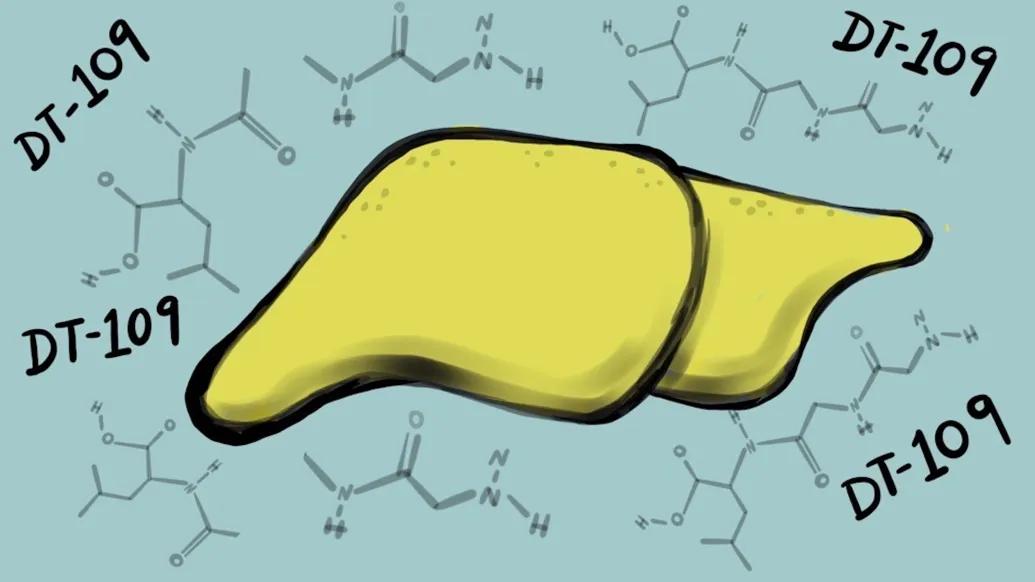
A recently developed amino acid compound successfully treats nonalcoholic fatty liver disease in non-human primates — bringing scientists one step closer to the first human treatment for the condition that is rapidly increasing around the world, a study suggests.
Researchers at Michigan Medicine developed DT-109, a glycine-based tripeptide, to treat the severe form of fatty liver disease called nonalcoholic steatohepatitis. More commonly known as NASH, the disease causes scarring and inflammation in the liver and is estimated to affect up to 6.5% of the global population.
Results reveal that DT-109 reversed fat buildup and prevented scarring in the livers of both mice and primates that had developed NASH. The study, completed in partnership with an international team including the Laboratory Animal Center at Xi’an Jiaotong University Health Science Center and the Institute of Cardiovascular Sciences at Peking University Health Science Center, is published in Cell Metabolism.
NASH is rising at a staggering rate, and successful treatment of non-human primates with our drug candidate, DT-109, brings us closer than ever to treating the millions of people suffering from this condition.”
- Eugene Chen, M.D., Ph.D.
“For years, scientists have been trying to develop a medication that treats NASH, but many attempts have failed to show an improvement or have raised safety concerns in clinical trials,” said Eugene Chen, M.D., Ph.D., senior author of the study and Frederick G. L. Huetwell Professor of Cardiovascular Medicine at University of Michigan Medical School. “NASH is rising at a staggering rate, and successful treatment of non-human primates with our drug candidate, DT-109, brings us closer than ever to treating the millions of people suffering from this condition.”
NASH is the second stage of nonalcoholic fatty liver disease, which is estimated to affect 32% of people worldwide. While fatty liver disease can be treated with exercise and nutritional intervention, the liver damage from NASH is more permanent. It has become the primary cause of chronic liver disease, and NASH-related cirrhosis is now one of the most common reasons for liver transplantation.
SEE ALSO: Amino Acid Connected to Fatty Liver Disease Could Provide Treatment Clues (michiganmedicine.org)
Chen and his team developed DT-109 for treating NASH in non-human primates after reports showed that impaired glycine metabolism emerged as a cause of nonalcoholic fatty liver disease and NASH.
While hundreds of compounds have successfully treated NASH in mice, including DT-109, Chen says mouse NASH models are limited because not all aspects of the human disease are accurately mimicked and, therefore, are not easily translatable to the clinic. The research team’s non-human primate model for NASH, confirmed using multiomics profiling studies, is among the first to accomplish the feat.
In both non-human primates and mice, investigators in the international collaboration found that treatment with DT-109 reverses fat buildup and prevents fibrosis progression by stimulating fatty acid degradation and antioxidant formation. The drug also inhibited the production of lithocholic acid, a toxic secondary bile acid closely linked to nonalcoholic fatty liver disease.
“With this significant breakthrough in preclinical models, we can now consider evaluating DT-109 as a potential drug candidate for the treatment of NASH in future clinical trials,” said Jifeng Zhang, Ph.D., co-corresponding author and research associate professor of cardiovascular medicine at Michigan Medicine. “With millions of people suffering from NASH, the need for an effective treatment is more pressing than ever.”
Additional authors include Oren Rom, Ying Zhao, Chao Xue, Yang Zhao, Bo Wen, Duxin Sun, Jiandie Lin, all of University of Michigan, Pengxiang Qu, Linying Jia, Wenbin Cao, Jinpeng Zhao, Liang Bai, Sihai Zhao, Enqi Liu, all of Xi’an Jiaotong University Health Science Center, Ke Li, Shusi Ding, Beijing Tiantan Hospital, Mingming Zhao, Huiqing Wang, Lemin Zheng, all of Peking University, Xiaojing Gao, Chengshuang Chu, Rong Zeng, all of Shanghai Institute of Biochemistry and Cell Biology, Zhipeng Lui, Purdue University, Shuangshuang Chen and Xuelian Xiong, both of Fudan University, Alexandra C. Finney, Louisiana State University Health Sciences Center-Shreveport, Zuowen Zheng, Spring Biological Technology Development Co., Wanqing Liu, Wayne State University.
Disclosure: Chen is an inventor of the compound DT-109. The University of Michigan has patented it and licensed it to Diapin Therapeutics. Chen and the university have an ownership interest in Diapin. Diapin provided DT-109 for this study. The company is further developing the compound.
All procedures performed in mice were approved by the Institutional Animal Care and Use Committee at the University of Michigan and performed in accordance with the institutional guidelines. All experimental protocols involving non-human primates were approved by the Laboratory Animal Care Committee of Xi'an Jiaotong University (approval number: 20191278) and the Institutional Animal Care and Use Committee of Spring Biological Technology Development Co., Ltd. (approval number: 201901). The study was performed in accordance with the National Institutes of Health Guide for the Care and Use of Laboratory Animals.
Paper cited: “DT-109 Ameliorates Nonalcoholic Steatohepatitis in Non-human Primates,” Cell Metabolism. DOI: 10.1016/j.cmet.2023.03.013

Health Lab
Explore thousands of health news & research stories by visiting the Health Lab homepage for more.
Media Contact

Public Relations
Department of Communication at Michigan Medicine
Stay Informed
Want top health & research news weekly? Sign up for Health Lab’s newsletters today!
Featured News & Stories

Liver cancer can be preventable. Do you know the treatable risk factors?

Better prenatal care data could help prevent maternal complications, experts say

Pain, psychological factors and physical function closely linked in people with systemic sclerosis
Many hospitals still don’t do enough to prevent UTIs from catheters
$3.9 million NIH grant to fuel U-M effort to develop first targeted therapy for fatal childhood brain disorder