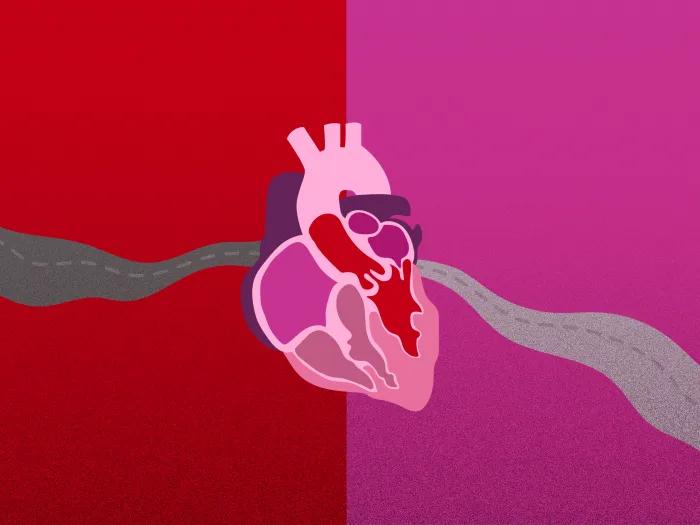
Peripheral artery disease: What to know
PAD affects millions but often goes undiagnosed. Specialists discuss risks, symptoms and treatment options to improve early detection
5:00 AM
Author |
Peripheral artery disease affects nearly 12 million people in the United States, but because its symptoms can be subtle or mistaken for other issues, it frequently goes undiagnosed until it becomes serious.
By learning about PAD — its risk factors, warning signs and treatment options — you can take steps toward earlier detection and prevention of severe complications, including limb loss.
The University of Michigan Health Frankel Cardiovascular Center is a nationally recognized, multidisciplinary team known for its leadership in research, surgery and advanced procedures for PAD.
To help spread knowledge, experts from the center, including interventional radiologist Minhaj Khaja, M.D., M.B.A., interventional cardiologist P. Michael Grossman, M.D., vascular surgeon Nimesh Patel, M.D., and nurse practitioner lead of the U-M Health PAD Clinic and Ann Luciano, N.P., answer questions below about what you should know.
Note: This article is a condensed version of a live stream taping, which took place on Sept. 3, 2025. Watch the video above to get even more information and to see more questions answered on PAD.
What is peripheral artery disease?
Grossman: PAD is essentially buildup of cholesterol or atherosclerotic material in the blood vessels that are feeding blood to our legs. It can be anything from minor buildup all the way to complete occlusion.
The more severe the peripheral arterial disease, the more likely patients are to have symptoms associated with them.
What kind of doctors treat PAD?
Patel: Multiple specialties can treat PAD.
First line therapy for mild disease is just medical therapy and a walking regimen.
A lot of that can be managed by your primary care physician. However, if disease progresses and you get worse symptoms, there are specialties that can help.
For example, we have Dr. Grossman and Dr. Khaja, part of interventional cardiology and interventional radiology, respectively, who can perform advanced maneuvers with endovascular techniques.
And then vascular surgeons, like me, who can do that as well as open surgical techniques like bypasses.
How is PAD diagnosed? How do you test for PAD?
Khaja: We have a wide range of tests that can be used to help diagnose PAD and figure out where that blockage is.
The easiest of which is an ABI, or ankle brachial index. It’s a painless, quick blood pressure test that compares your blood pressure in your arm to that in your legs.
It can show us if there is a blockage somewhere in the legs.
If we feel like there is something there, we can use ultrasound to give us an idea of how severe the disease is.
Again, these are very non-painful, very easy to do tests.
If we want to figure out a little more anatomic information of where the blockage is, how bad it is, and maybe how we’re going to treat it, we can move on to something like a CT scan with dye.
Finally, we can do an MRI.
Can PAD be reversed?
Patel: Unfortunately, PAD cannot be completely cured.
It’s a chronic condition, and it will be something that you continue to manage long term.
You can slow its progression with exercise and medications.
And then, if symptoms get bad enough, it can be treated with procedures and surgery. However, the onus is upon the patient to work through this chronic condition over the long term.
What causes PAD?
Grossman: There are several potential risk factors for PAD.
Probably the most significant is smoking.
Patients who smoke – and that can be tobacco or other products – are at significantly increased risk for PAD.
In addition to that, patients who have high cholesterol, or hypercholesterolemia, are also at increased risk of developing peripheral arterial disease.
Diabetes is not only a risk factor for PAD but can complicate the management of PAD as well.
While these are some of the biggest risk factors that we try to manage, there are other risk factors that maybe aren’t as obvious, such as depression, race and socioeconomic conditions.
What are common symptoms of PAD?
Patel: The early symptoms of PAD are called claudication, which is a long word to say effort-induced pain.
Typically, people will start to notice pain, or cramping, when walking a certain distance.
This is usually felt in the calf muscles, sometimes in the feet.
This pain should get better when a patient rests and then should recur when the patient tries to walk a similar distance or put a similar level of effort into their next activity.
As the disease progresses, patients will develop blood flow that is so poor that they experience pain at rest — particularly at nighttime when they’re lying flat.
If it gets even worse, you can develop wounds, or even infections, that threaten your foot.
How do you treat PAD?
Medical management
Grossman: Medical treatment for PAD is really a multipronged approach and it’s not just from experts in a vascular clinic like ours.
Very importantly, we need to partner with your primary care physicians to manage risk factors for PAD, like smoking.
We have an excellent smoking cessation program as part of our multidisciplinary PAD Program and we work very hard to help patients quit smoking.
Controlling risk factors is very important. That includes medical therapy for cholesterol.
We’re very aggressive in managing cholesterol and the most effective medications are statins.
Most of our patients can tolerate those statins well.
Statins not only will prevent progression of PAD, but they’ll also improve outcomes if patients need a revascularization procedure, like surgery or a balloon-and-stent type procedure.
They’ll also lower the risk of heart attack and stroke.
Management and control of diabetes is incredibly important.
Finally, controlling blood pressure is very important and, again, we want to work with your primary care provider to control blood pressure.
There's a medication that can help improve walking distance called cilostazol.
That medication is very well tolerated, it’s generic and it’s definitely been shown to improve walking distance. It’s something that we very often prescribe to our patients in our clinic.
There has been some recent data that has shown us that low doses of a certain type of anticoagulant can not only improve outcome with PAD, but it can also improve outcome in patients that have had revascularization.
So in many of our patients, we’re giving them a low dose of a medication called XARELTO® based on recent clinical trials.
One of the most important things we do is try to get patients into a structured exercise program. Insurance now covers this for many patients with symptomatic PAD.
It can not only help improve walking distance but also improve functional capability over time.
Foot care
Grossman: We partner very closely with our colleagues in podiatry. Footcare for patients with PAD is extremely important.
We want to prevent patients from developing ulcers or wounds on their foot, or even blisters.
Any patient who has significant PAD should see a podiatrist.
Potentially have a podiatrist help with nail care as well.
Endovascular procedures
Khaja: Endovascular revascularization is a procedure during which you’re sedated.
We map out your arteries by doing an angiogram, which injects dye into your arteries.
Once we figure that out, what we do is an angioplasty, or ballooning the artery open, to create more space.
Sometimes that involves smashing that atherosclerotic disease or cholesterol to the side, increasing the lanes on the highway, as I like to think about it.
Sometimes we place a stent, which is a piece of sterile metal that holds the artery open — I think of that as repaving the road on the highway — and improves blood flow down to the arteries below.
The other approach is to use adjunctive tools.
They can help break up calcium, which is frequently formed on atherosclerotic plaques, or cholesterol.
If you have four lanes on the highway, and the cholesterol takes up two lanes, we can maybe get you back to three or, maybe even, four lanes by doing some of these different techniques.
Our goal is to improve the blood flow down your legs in a minimally invasive way that can improve your health, get you out of the hospital in a quicker fashion so you can get back to your life.
These procedures are frequently done in a couple of hours.
Sometimes we keep you overnight; sometimes you go home the same day.
Surgical options
Patel: When endovascular options fail, or there is no good or durable endovascular option, we turn to surgery.
That can take many forms and that’s dependent on what is blocked, where it’s blocked and how bad it is.
Sometimes we can do something called an endarterectomy, in which we open up a blood vessel itself, remove the plaque and close the blood vessel back up.
Other times we have to do surgical bypass, for which we use a tube of some sort, whether it’s your own vein or a plastic tube, to redirect blood flow around a blockage if it’s too long to endarterectomize.
In addition to that, we can employ hybrid techniques where we form some of the opening as well as employing a stent or a balloon at the same time, to improve flow in multiple regions.
All of these are based on your specific anatomy and your symptoms.
The worse your symptoms, the more aggressive we would be.
The outcomes for these surgeries are greatly impacted by the risk stratification — or risk factor modifications — that you’ve made leading up to this, whether that’s smoking cessation, diabetic control or continued exercise.
Those all help whatever we do to last longer.
Sometimes repeat surgeries or endovascular options are required.
Every time we do another surgery and another stent or balloon, we can lose that option moving forward, burning those bridges.
Good risk factor modification is imperative if we’re going to go down any of these pathways.
Sign up for Health Lab newsletters today. Get medical tips from top experts and learn about new scientific discoveries every week
Sign up for the Health Lab Podcast. Add us wherever you listen to your favorite shows

Health Lab
Explore thousands of health news & research stories by visiting the Health Lab homepage for more.
Media Contact

Public Relations
Department of Communication at Michigan Medicine
In This Story

Nimesh A Patel, MD
Clinical Assistant Professor
Paul Michael Grossman, MD, FACC, FSCAI
Clinical Professor

Minhaj S Khaja, MD, MBA, FSIR, FSVM
Clinical Professor
Stay Informed
Want top health & research news weekly? Sign up for Health Lab’s newsletters today!
Featured News & Stories
Many hospitals still don’t do enough to prevent UTIs from catheters

Digital alerts support timely treatment decisions of critically ill cardiac patients

Is the United States Lagging Behind Europe in Memory Improvement?
Reducing infections after heart surgery could save Medicare $441 million per year
Young father survives aortic dissection after delayed diagnosis