Peripheral Artery Disease Treatment Gives Barber a New Look
A barber was faced with giving up his beloved profession because of severe pain from PAD. How a Michigan Medicine team helped him get back to work.
1:15 PM
Author |
Cutting hair has been a part of Steve Duris' life for 52 years. With a wife and sister-in-law sharing the profession, you could even say it's a family affair.
MORE FROM MICHIGAN: Sign up for our weekly newsletter
So when the 69-year-old barber was faced with giving up his career because of debilitating foot pain, he was determined to find a solution.
"I definitely wasn't ready to retire," says Duris, the owner of Arm-N-Anvil, a barbershop in Ann Arbor, Michigan.
As a barber, however, Duris was on his feet all day — resulting in pain that became an undeniable problem.
"It eventually got so bad that I had to sit down in between customers," he says, noting that the constant discomfort also put the kibosh on his daily walks.
Duris, who had a heart attack in 2005, returned to the University of Michigan Frankel Cardiovascular Center, where cardiologist Kim Eagle, M.D., diagnosed him with blockages in his heart as well as peripheral artery disease (PAD).
He referred Duris to U-M surgeon Richard Prager, M.D., and vascular surgeon Peter Henke, M.D., for treatment.

PAD symptoms and risk factors
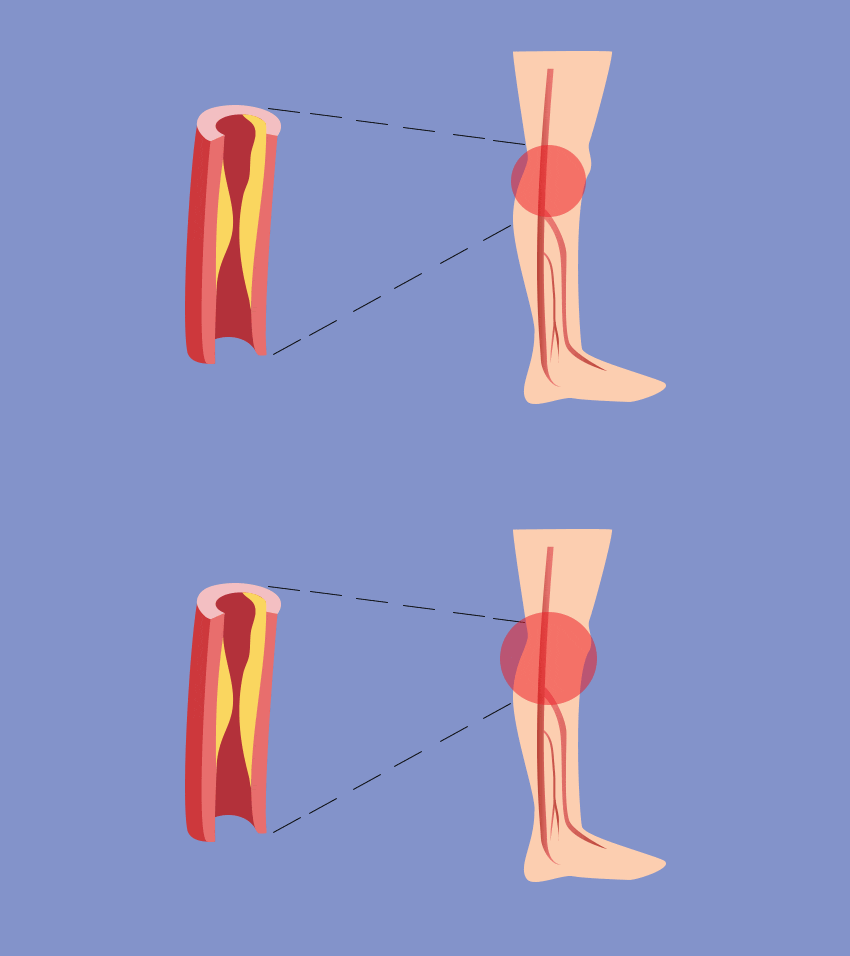
PAD is a vascular arterial disease that causes blockages in the arteries to the legs, says Henke. "The condition often results in leg pain due to the lack of oxygen to the muscle tissue.
"Approximately 12 million Americans over the age of 50 have PAD," Henke says, "and between 12 and 15 percent of Americans age 65 and older suffer from the disease."
Although some patients have no symptoms, others may experience:
-
Chronic lower leg pain (in one or both legs, while walking and sometimes at rest)
-
Numbness in one or both feet or legs
-
Cold feet
-
Blue toes
-
Chronic wounds or ulcers on the legs or feet
Risk factors that contribute to PAD include:
-
Diabetes
-
High cholesterol or triglycerides
-
Family history of vascular disease, such as PAD, aneurysm, heart attack or stroke
-
Personal history of high blood pressure, heart disease or other vascular disease
-
Smoking
-
High levels of homocysteine, an amino acid in the blood
-
Weighing over 30 percent more than your ideal weight
-
Being over age 50 and male
-
Inactive lifestyle
A red-flag warning
While PAD isn't life-threatening, it does greatly affect quality of life and can be a red flag for more serious conditions.
"The disease increases the risk of coronary heart disease, heart attack and stroke," says Henke.
SEE ALSO: How to Avoid a Heart Attack While Shoveling Snow
It's important, he adds, that patients take the right medications, which may include aspirin to thin the blood and statins to lower cholesterol and manage blood pressure.
Duris was treated for his heart blockage in March 2016, when Prager performed a four-way bypass during an open-heart procedure.
Henke then performed a common femoral artery endarterectomy. The procedure — done on one leg in August and the second leg in September — involves removing plaque from the lining of the femoral arteries, the large blood vessels in the groin area.
Enjoying work and leisure
Today, Duris is back to doing what he loves: greeting his customers (which include nearly 70 Michigan Medicine doctors) with a smile, catching up with what's going on in their lives and giving them great haircuts.
Best of all, he's now doing it pain-free.
That allows him to live his best life outside of work, too.
Duris is also dedicated to his rehabilitation routine of daily walks and caring for his 10 acres of property, chopping firewood, building an outdoor waterfall and enjoying his grandchildren.
"The difference is unbelievable," Duris says. "I have no pain at all. I'm still amazed at how it all worked out. I love being here, talking with people — old friends, new friends — making Ann Arbor look beautiful."

Health Lab
Explore thousands of health news & research stories by visiting the Health Lab homepage for more.
Media Contact

Public Relations
Department of Communication at Michigan Medicine
Stay Informed
Want top health & research news weekly? Sign up for Health Lab’s newsletters today!
Featured News & Stories

Peripheral Artery Disease Treatment Has Grandma Back in Action

Exercise Program for Peripheral Artery Disease Patients Now Covered by Medicare
Are You at Risk for Peripheral Artery Disease?
Leg Pain and PAD: Know the Symptoms and Risk Factors

Digital alerts support timely treatment decisions of critically ill cardiac patients