People find medical test results hard to understand, increasing overall worry
A recent law allows patients to see their test results even before clinicians do
11:00 AM
Author |
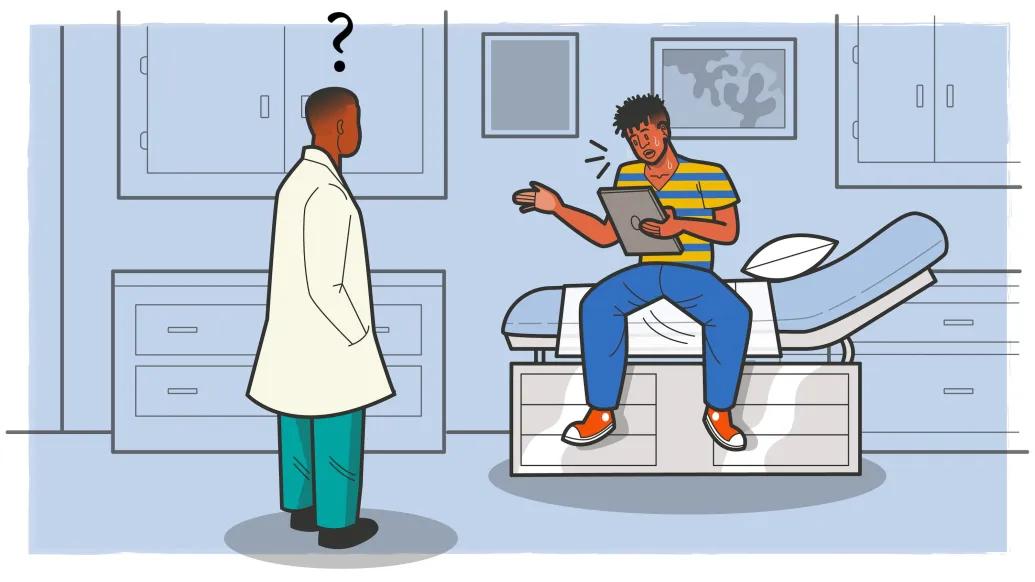
In April 2021, a provision in the 21st Century Cures act took effect which required that all medical test results be released to a patient’s electronic medical record as soon as they become available.
As a result of this newer law, many patients are seeing and reading their test results even before their doctor has.
The problem is that many medical reports aren’t written with patients in mind.
For example, “a standard pathology report is written by a pathologist for a clinical specialist like a surgeon or a cancer doctor or for other pathologists to read,” said Cathryn Lapedis, M.D., M.P.H., of the Department of Pathology at University of Michigan Health.
In a published research letter in JAMA, Lapedis and her colleagues tested whether people could understand standard pathology reports and whether a patient-centered report might improve patient understanding.
“A patient-centered pathology report gives important information on the patient’s diagnosis in a clear format that minimizes medical terminology,” she explained.
“For example, a standard pathology report will include a term like prostatic adenocarcinoma, but the patient-centered report will simply call it prostate cancer."
For the study, the team recruited 2,238 adults, aged 55 to 84, who had a prostate but no history of prostate cancer.
Participants were provided with a hypothetical scenario in which they were seeking care due to troubling urinary symptoms, received a biopsy and then would receive results from that test through their patient portal.
Participants saw one of three types of reports: a standard University report identical to the format used at University of Michigan, a standard VA report identical to the format used at VA Ann Arbor Health system, or a patient-centered pathology report.
Study participants were asked to identify their diagnosis, Gleason score (a number that reports how aggressive prostate cancer is) and their risk level.
They were also asked to report their level of worry based on the results.
“We found that most people cannot get basic information—like whether or not they have prostate cancer from standard pathology reports. For example, in our participants reviewing the standard University report, only 39 percent could accurately identify that the report showed cancer,” said Lapedis.
However, 93%of those who received the patient-centered pathology report accurately identified that the report showed prostate cancer.
Furthermore, participants’ level of worry was more closely associated with their risk level (i.e. high worry with high risk vs. low worry with low risk) with the patient-centered report than the standard reports.
“We recommend that hospital systems consider including patient centered pathology reports with standard reports to improve patient understanding,” said Lapedis, adding that their team plans to study the use of patient centered reports at U-M.
Until then, Lapedis’ advice to patients about medical test results is to talk with their clinicians about what words to look for in their reports even before having the test.
Additional authors: Sophia R. Kurnot, Sarah E. Bergholtz, Scott R. Owens, Sarah T. Hawley, Todd M. Morgan and Brian J. Zikmund-Fisher.
Paper cited: “Knowledge and Worry Following Review of Standard vs Patient-Centered Pathology Reports," JAMA. DOI: 10.1001/jama.2024.25461

Health Lab
Explore thousands of health news & research stories by visiting the Health Lab homepage for more.
Media Contact

Public Relations
Department of Communication at Michigan Medicine
Stay Informed
Want top health & research news weekly? Sign up for Health Lab’s newsletters today!
Featured News & Stories
Rural-urban disparities in head and neck cancer

Study outlines a new framework for direct cell reprogramming

New insight into how lipodystrophy can affect overall health
FDA-approved drug offers hope for patients with polycythemia vera, a rare bone marrow disorder
Engineered nanoparticles sensitize gliomas to radiotherapy