Nursing Homes Cut UTIs in Half Through a Focused Effort on Catheter Care
A collaborative approach with external coaching support makes gains and holds potential to be used for other patient safety issues, researchers say.
3:45 PM
Author |

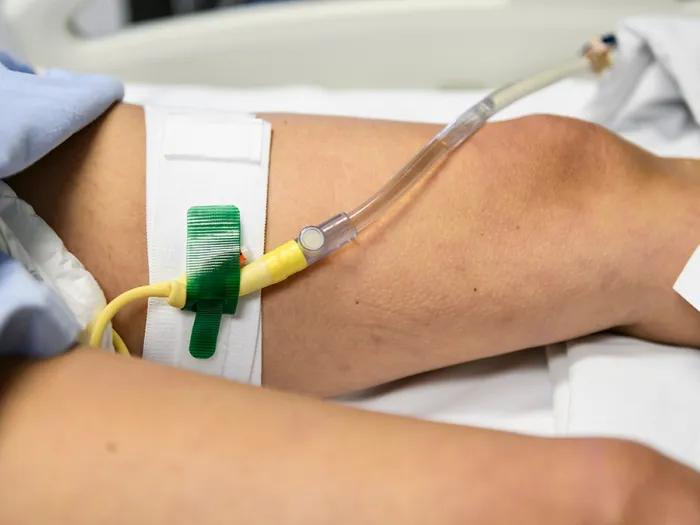
Urinary catheters present a dilemma for nursing home residents and staff: They make it easier and safer to handle a basic bodily function, but they put frail patients in danger of infections that can lead to confusion, falls and death.
A new study shows a way to keep catheters from posing such risks to the 1.4 million Americans in long-term and post-acute care.
After a national patient safety effort, urinary tract infections related to catheters fell by 54 percent in 404 nursing homes in 38 states, the data reveal. The drop in catheter-associated UTI, or CAUTI, happened across the board, with 75 percent of nursing homes seeing at least a 40 percent decrease — even as usage rates held steady (about 4.5 percent of patients in the nursing homes used catheters).
The results are published in JAMA Internal Medicine and were presented at the American Geriatrics Society annual meeting.
Participating facilities used a specially designed toolkit to help staff understand — and effectively and consistently use — proven infection-prevention practices and usage best practices. With help from a broad team of researchers, coaches and content experts, the nursing home teams were empowered to implement changes and engage patients and family members.
The toolkit, developed by a range of subject matter experts, is available online for free from the Agency for Healthcare Research and Quality (AHRQ), the federal agency that funded the study.
As infection rates dropped, the number of lab tests clinicians ordered to check patients for infections decreased 15 percent — indicating that they were using urine culture tests more appropriately.
"When we first looked at the results, we were pleasantly surprised to see that our strategy was so effective," says Lona Mody, M.D., M.Sc., first author of the paper. Mody is a professor of internal medicine at the University of Michigan and the VA Ann Arbor Geriatric Research, Education and Clinical Center.
"Our study shows that with the right thoughtful mix of education, training, coaching and local empowerment, we can apply evidence-based practices consistently, for the benefit of patients and staff alike."
The study reported results from the AHRQ Safety Program for Long-Term Care, which focused on reducing CAUTI and other health care-associated infections. The project adapted principles and methods from AHRQ's Comprehensive Unit-based Safety Program, previously found to be effective in hospitals, to the long-term-care setting. The project enrolled nursing homes over two and a half years and provided a toolkit of materials to help their leaders and staff implement and sustain use of evidence-based practices for infection prevention.
The study built on the previous success of two other efforts to reduce CAUTI. The first was a National Institutes of Health-funded randomized clinical trial that Mody led, which was published in JAMA Internal Medicine in 2015 and showed a 31-percent reduction in CAUTI using a multi-component strategy. The other was a national AHRQ-funded effort to reduce CAUTI in hospitals described in a study led by her U-M colleague, Sanjay Saint, M.D., M.P.H. That effort published results in the New England Journal of Medicine last year, showing a 32-percent drop in CAUTI in non-ICU inpatients in hospitals that used a similar implementation strategy.
This shows the power of behavior-based strategies applied consistently, with empowering education and external support.
More about the results
CAUTIs, Mody notes, are typical of the health care-acquired infections that nursing home residents face. Such infections factor heavily into the "revolving door" that sends 1 in 4 nursing home residents to the hospital for infections each year, costing the health care system $4 billion annually.
SEE ALSO: What It Takes to Protect Hospital Patients from UTIs
Mody notes that public reporting of catheter use rates in nursing homes over the past 15 years has driven down catheter use markedly. The federal government's Nursing Home Compare website allows anyone to see catheter use rates for long-term residents at any nursing home that accepts Medicare.
Urinary catheters stay in patients for prolonged periods. Infections in those patients continue to be a major and costly issue. Before the nursing homes started participating in this study, residents experienced 6.4 CAUTIs per 1,000 catheter-days.
As the nursing homes implemented infection-prevention strategies, that rate dropped to 3.33 per 1,000 catheter-days. This rate adjusts for factors that made the nursing homes different from one another.
Through monthly content training and coaching calls, the project team taught nursing home staff techniques grounded in research about which patients need catheters, how to care for and maintain catheters in people who have them, and which patients are appropriate candidates for lab tests and antibiotics. They also learned how to improve communication, leadership and staff engagement, and they reviewed safety culture to promote consistent use of these practices.
During these calls, the nursing home staff received simplified information sheets, slide sets, interactive activities and more for clinical leaders to use and adapt to their institutions' culture. Importantly, the facilities received personalized monthly data feedback to evaluate whether these strategies were effective.
Urine lab cultures were performed 3.52 times for every 1,000 patient days at the start of the project but went down to 3.09 per 1,000 by the end. Too much testing can lead to false-positive results and the use of unnecessary antibiotics, which can encourage drug-resistant superbugs to evolve and spread.
Instead of relying on urine culture results, staff received education to help them recognize the early symptoms of a UTI, including in people with dementia who cannot always communicate that they are experiencing pain or burning during urination.
This allowed staff to use standardized criteria for defining UTIs in catheterized nursing home patients and rule out other issues such as dehydration, which can also cause the confusion that often accompanies UTIs in older and medically fragile people.
"This shows the power of behavior-based strategies applied consistently, with empowering education and external support," says Mody, who with her U-M co-authors is a member of the U-M Institute for Healthcare Policy and Innovation and the U-M/VA Patient Safety Enhancement Program.
Co-author Sarah Krein, Ph.D., R.N., adds, "Overall, several implementation teams indicated that the program was extremely valuable. It is an industry that so desperately needs these resources. A specific benefit identified was greater staff empowerment. Staff felt more knowledgeable, and thus empowered to speak with physicians and other team members regarding the necessity of catheters and the ordering of urine cultures."
Mody notes that the next horizon is to reduce other health care-associated infections in institutionalized older adults — and that the combination of technical and socio-adaptive tools implemented with external facilitation created for CAUTI reduction could be replicated for other patient safety hazards.
"CAUTI is a model for other adverse events and shows the way to develop an implementation model to enhance safety and reduce harm," she says. "Translating the basic evidence from laboratory-based and patient-oriented research to a full-scale, nationwide implementation is possible."
Conducted by the Health Research and Educational Trust, the research arm of the American Hospital Association, the effort included faculty from U-M and other partners including Abt Associates, the Association for Professionals in Infection Control and Epidemiology, Baylor College of Medicine, Contrast Creative, Qualidigm, and the Society of Hospital Medicine; federal agency partners included the Centers for Disease Control and Prevention.

Health Lab
Explore thousands of health news & research stories by visiting the Health Lab homepage for more.
Media Contact

Public Relations
Department of Communication at Michigan Medicine
Stay Informed
Want top health & research news weekly? Sign up for Health Lab’s newsletters today!
Featured News & Stories

Better prenatal care data could help prevent maternal complications, experts say
Many hospitals still don’t do enough to prevent UTIs from catheters

Digital alerts support timely treatment decisions of critically ill cardiac patients

What’s changing in Medicaid and what can you do?

Reducing infections after heart surgery could save Medicare $441 million per year