New Tools to Help Women with Physical Disabilities Make Decisions about Pregnancy
Two recently awarded grants hope to help women with physical disabilities determine whether or not to become pregnant and reduce the associated stigma.
7:55 AM
Author |
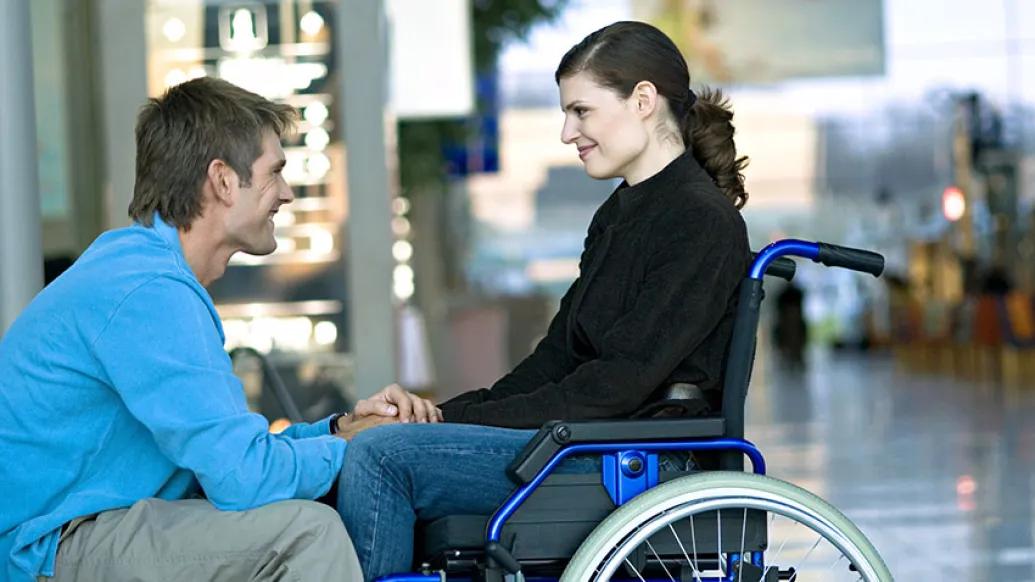
Becoming a mother is often a very personal decision for a woman.
"For a woman with a physical disability, making a decision about whether or not to get pregnant can be very complicated," says Claire Kalpakjian, Ph.D., M.S., associate professor of physical medicine and rehabilitation at Michigan Medicine. "Health care providers are often unsure how to advise their patients and can discourage women from even thinking about it."
Kalpakjian is the lead researcher on two new grants that will support the creation of pregnancy decision-making tools for women with physical disabilities.
Decision-making tools, sometimes called patient decision aids, can help patients facing a health decision to make a high-quality decision — a decision based on as much evidence as possible, as well as one that matches his/her values and preferences.
"Decision-making tools are most common in cancer to help patients make high-quality decisions about treatments," Kalpakjian says. "Now we are seeing more and more of these in other fields of medicine. While pregnancy is not a disease or something that needs a 'treatment,' it is a big decision and sometimes can be very complicated for women with physical disabilities."
LISTEN UP: Add the new Michigan Medicine News Break to your Alexa-enabled device, or subscribe to our daily audio updates on iTunes, Google Play and Stitcher.
Kalpakjian explains that even though there are thousands of women with physical disabilities, such as a spinal cord injury, cerebral palsy or multiple sclerosis, who become pregnant each year, they still deal with stigma.
"Unfortunately there is still a stigma that women with disabilities don't have sex, don't get pregnant and/or don't want to be a parent," she says. "The ultimate goal of these grants is to empower women in their pregnancy decision."
Creating the tools
Both of Kalpakjian's grants have similar goals, but the audiences differ slightly. In her National Institutes of Health Exploratory/Developmental Research Grant Award (R21), the research team will work on a tool for women with any physical disability. In her Craig H. Neilsen Foundation grant award, the same process will be used to specifically target women with spinal cord injury.
The process of creating the decision making tools will first start with background work, and Kalpakjian says the team will involve women with physical disabilities right from the beginning.
"One of the great things about these studies is that there is an advisory group of women with physical disabilities that work with us every step of the project," she says. "This helps us ensure that whatever we create is in line with what women want and need, down to the very details of what the tools look like and how we disseminate them."
MORE FROM MICHIGAN: Sign up for our weekly newsletter
The research group will begin by conducting a survey of the women's decision-making needs and operating focus groups and interviews. They will also perform a systemic review of the literature on pregnancy and physical disability.
"We'll also get input from health care providers and families on what should be included," Kalpakjian says.
After the team has completed a draft of the overall tool, they will go back to their audiences for continued input.
"We'll test out the tool to see if women with physical disabilities like it and if it helps them get closer to making a decision about pregnancy," Kalpakjian says. "Once we have their feedback, we'll analyze if the tool will work as it is, needs some changes, etc. Then we will test it in a larger sample of women throughout the country and make sure the final version is available to any woman who wants help making this important decision."
The project targeting women with spinal cord injury includes support to build a website for the tool to make it easily accessible to anyone.
Unfortunately there is still a stigma that women with disabilities don't have sex, don't get pregnant and/or don't want to be a parent. The ultimate goal of these grants is to empower women in their pregnancy decision.Claire Kalpakjian, Ph.D., M.S.
So how will the tools look and work? According to Kalpakjian, that's the beauty of the research team's approach.
"It's going to be what the women who will use them want them to be," she says. "We aren't starting out with a firm idea of what they should look like.
"We expect the initial tool will have elements such as chapters, because not all topics apply to everyone, and it should be visually appealing, easy to navigate and have printable sections that women could take to their doctors. Whatever form it takes, we expect it's going to help women move closer to making a decision that is right for her about whether or not to get pregnant."
Reducing the stigma
Kalpakjian says some of her past and current projects led her to pursue this new research.
"I did a number of focus groups about gynecological and reproductive health in women with disabilities and I kept hearing stories about women going around in circles about whether or not they should get pregnant," she says. "They were asking was it safe for them? Safe for their baby? What kept them spinning around and around, often for years, was that there weren't a lot of good answers out there.
"Their physicians didn't know what to tell them, or even worse, outright discouraged them without even talking about it or trying to learn more. That was very painful for many of these women, to just be dismissed."
She knew these grant proposals could help.
"There was this sense of urgency I felt that I hadn't felt any other time I'd been writing a proposal, and I've written a lot of them!" Kalpakjian says.
She and her team hope to roll out the first prototype of the decision making tools in late summer 2019.
While the decision of pregnancy varies from person to person, she hopes the tools give women the guidance they need in making their decision and help them have healthy pregnancies, should that be what they choose.
"Ultimately, I hope we reduce the stigma and discrimination that too many women with physical disabilities face about pregnancy," she says.

Health Lab
Explore thousands of health news & research stories by visiting the Health Lab homepage for more.
Media Contact

Public Relations
Department of Communication at Michigan Medicine
Stay Informed
Want top health & research news weekly? Sign up for Health Lab’s newsletters today!
Featured News & Stories

What’s changing in Medicaid and what can you do?

PMOS is the New PCOS
A tragedy and a trial shine a spotlight on new moms’ mental health
Navigating Perimenopause and Menopause

Expanding camp adventure for all