New Clinic Promotes Shared Care to Treat Alcohol-Related Liver Disease
The facility offers multiple types of medical care, all under one roof — and during the same appointment. Learn more about the unique treatment model.
7:00 AM
Author |
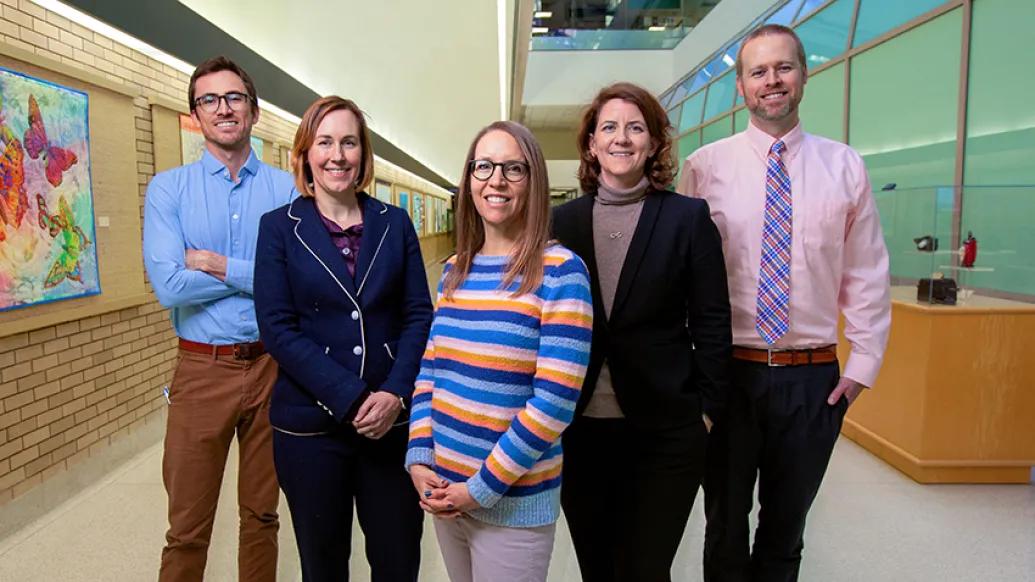
A trio of Michigan Medicine specialists has created a new clinic to help people with liver disease who struggle to stop drinking.
The Michigan Alcohol Improvement Network (MAIN) takes a progressive approach to treating patients with alcohol-related liver disease. The multidisciplinary clinic offers liver care, addiction treatment and psychiatric care in a single appointment.
LISTEN UP: Add the new Michigan Medicine News Break to your Alexa-enabled device, or subscribe to our daily audio updates on iTunes, Google Play and Stitcher.
"You really have to have a holistic approach," says Jessica Mellinger, M.D., who specializes in transplant hepatology, gastroenterology and internal medicine.
She founded the clinic with G. Scott Winder, M.D., a psychiatrist, and Anne Fernandez, Ph.D., an addiction psychologist.
The one-stop shop is by design.
"Liver patients have a lot going on," Winder says. "We want to take care of patients as a whole person rather than take care of this organ or that organ or send them along to this program or that program."
Alcohol's far-reaching effects
When developing the clinic, the Michigan Medicine providers looked to past work and patient interactions. Their research revealed that half of those with severe alcoholic cirrhosis or alcoholic hepatitis were still drinking, despite knowing that it can kill them.
And it found that more than half of patients were unaware of all the tools available to help kick the habit.
MORE FROM MICHIGAN: Sign up for our weekly newsletter
"There is a huge need for this," Mellinger says.
Alcohol-related liver disease accounts for 3.3 million deaths annually worldwide, according to the World Health Organization.
The 2015 National Survey on Drug Use and Health found that 15.1 million U.S. adults have alcohol use disorder (AUD), the medical diagnosis for alcoholism. This includes 9.8 million men and 5.3 million women.
One of the most alarming statistics? Heavy drinkers are increasingly younger.
Winder can think of several patients he's seen at Michigan Medicine younger than 30 who will die soon as a result of severe addiction and medical disease unless they quit drinking.
"Cirrhosis used to be a disease that older people would get," he says.
Liver patients have a lot going on. We want to take care of patients as a whole person rather than take care of this organ or that organ ...G. Scott Winder, M.D.
The appointment agenda
When patients visit the MAIN clinic, they start with a medical assistant to take vitals, get a verified medication list and complete behavioral surveys to gauge depression, anxiety, sleep, alcohol and drug use and other factors.
A typical itinerary might then involve a patient meeting with Mellinger for about 45 minutes. They discuss symptoms, medications, how the liver recovers with alcohol abstinence, a possible transplant or whatever care is needed regarding the liver and other systemic medical issues.
SEE ALSO: Do You Have a Drinking Problem? 11 Warning Signs to Know
When Mellinger leaves, Winder comes in for another 45 minutes to discuss substance use history, personal and family psychiatric history, the environment a patient lives in where alcohol might be present and what stressors are occurring in the patient's life.
It's Fernandez's turn next. She engages patients on what they think about their drinking and what their goals are. She explores AUD treatment options, discovering likes and dislikes, and any barriers to treatment, and she offers constructive coping strategies.
"We're trying to get a detailed backstory and look closely at their drinking," Winder says.
Later, the team comes together to discuss their findings and create a personalized care plan based on where the patient is psychologically and the stage of their liver disease.
The team closely examines how medications, such as those that cut alcohol cravings or reduce insomnia, might be used with an eye on how they impact the liver. Then they collaborate with the patient on the proposed treatment plan and follow-up.
The feedback
Winder knew the trio would be successful when word leaked about the clinic and colleagues began to reach out offline to share support and candid personal stories about loved ones who needed this body-mind treatment and didn't always get it.
"We heard from people on all levels — administrators, physicians, nurses — offering their support and encouragement, and that doesn't always happen in the health care profession," Winder says.
He's ready to be a breath of fresh air for people with liver disease.
"By focusing compassionately on one patient at a time, that person understands that they have nothing but support from us."
Photo by Bryan McCullough
To meet with a Michigan Medicine hepatologist to get a referral to the MAIN clinic, call 844-233-0433.

Health Lab
Explore thousands of health news & research stories by visiting the Health Lab homepage for more.
Media Contact

Public Relations
Department of Communication at Michigan Medicine
Stay Informed
Want top health & research news weekly? Sign up for Health Lab’s newsletters today!
Featured News & Stories

Why Shame Keeps Patients from Alcohol Use Disorder Treatment

Liver cancer can be preventable. Do you know the treatable risk factors?

Pain, psychological factors and physical function closely linked in people with systemic sclerosis

Foundation gift inspires additional gifts to strengthen youth mental health care

How gastroenterology nutrition therapy has evolved